
Book summary
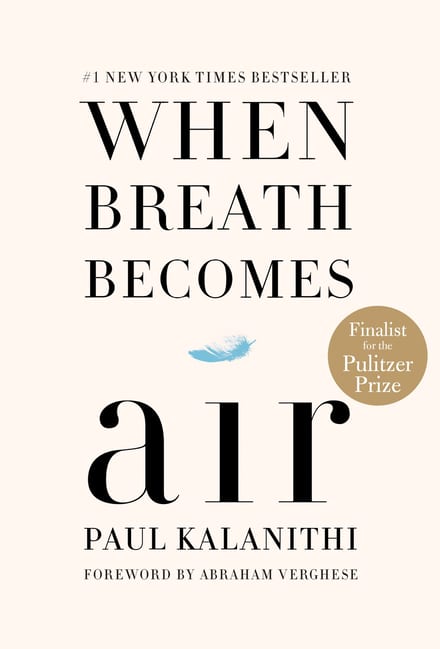
When Breath Becomes Air
The full book runs ~232 pages — roughly 4 hours of reading. You get the key ideas here in 4 minutes.
The key ideas
- Confront mortality without flinching, as doctor and patient alike.
- Pursue neurosurgery where identity, biology, and consciousness intersect.
- Strive toward perfection you'll never reach, still fighting for patients.
- Choose creation over comfort: keep working, have the child, write.
- Find joy in family that asks for nothing more.
- Prioritize meaningful work and love over avoiding suffering.
The summary
A terminal diagnosis strips away the future you were building toward and forces a harder question: what makes a life worth living right now? Paul Kalanithi was in his last year of neurosurgical residency at Stanford — respected, decorated, holding job offers from major universities, looking ahead to finishing training, having children, and time with his wife Lucy — when back pain led to CT scans that showed his lungs full of advanced, stage IV cancer. The hopeful future evaporated in an instant. His answer to the question that replaced it was not to retreat into comfort. It was to keep working, keep loving, and refuse to trade meaning for the mere avoidance of pain.
A life spent chasing what makes life meaningful
Kalanithi came to medicine sideways, through literature. Growing up in Kingman, Arizona, the son of a doctor, he didn’t picture himself as one; his mother’s love of books pushed him toward writing instead. Reading Jeremy Leven’s novel about the mind as a product of the brain’s activity lit his interest in neuroscience, and at Stanford he pursued both English literature and human biology, convinced each offered a different angle on human experience. He started a master’s in English, writing a thesis on Walt Whitman, before realizing his pull toward science didn’t fit the department. So he went to medical school at Yale, where he met Lucy, and learned about death up close through dissecting cadavers and Sherwin Nuland’s book How We Die.
He returned to Stanford for a residency in neurosurgery, drawn by the brain’s role in identity — the place where biology and selfhood meet. The schedule was punishing, thick with paperwork and emergency calls, but he came to see the weight of it, because lives depended on it. When a friend died, Kalanithi resolved to give patients more emotional care, worried he might grow numb to death. He also learned that perfection is unreachable. His colleague Jeff, a doctor, took his own life after losing a patient, and Kalanithi wished he could have passed on the hard-won lesson: “The secret is to know that the deck is stacked, that you will lose, that your hands or judgment will slip, and yet still struggle to win for your patients. You can’t ever reach perfection, but you can believe in an asymptote toward which you are ceaselessly striving.”
Facing death from the other side of the bed
Cancer moved Kalanithi from the doctor’s chair to the patient’s. His oncologist, Emma, laid out treatment but refused to give statistics, unwilling to feed his pessimism. He grew so weak he needed his family’s help with basic functions. Then came a reprieve: a mutation in his tumor meant it could be treated with Tarceva, a drug gentler than standard chemotherapy. Scans came back nearly clear, his cancer stabilized, and he tailored his physical therapy to rebuild the specific strength a surgeon needs and returned to the operating table, refusing to give up his career early.
His marriage had been strained before the diagnosis — Lucy felt he wasn’t confiding in her or making time, and she had moved out for a week — but when he told her about the cancer, she vowed never to leave. They decided to have the child they’d planned. Lucy wondered whether a newborn would steal from their remaining time, whether saying goodbye to a child would make his death more painful. “Wouldn’t it be great if it did?” Paul answered. They both felt life wasn’t about avoiding suffering. Seven months after he went back to surgery, a scan before graduation revealed a new tumor. He worked his final day and wept in the car after his last operation, then began chemotherapy every three weeks, missing his graduation while hospitalized and vomiting. Two days after his release, his daughter Cady was born on the Fourth of July.
What remains
Cady gave Kalanithi a joy he’d never known — the sense of having created something lasting beyond his own life. He closes the book with a message to her: “Do not, I pray, discount that you filled a dying man’s days with a sated joy, a joy unknown to me in all my prior years, a joy that does not hunger for more and more, but rests, satisfied. In this time, right now, that is an enormous thing.” Around Christmas his third treatment failed and the cancer spread to his brain, and only then did Emma give him an estimate of his time. He spent his last days writing this memoir. As his breathing failed and hospitalization loomed, he chose comfort care over life on a permanent ventilator, said goodbye to his family, removed the breathing mask, and slipped away. Lucy notes in the epilogue that the memoir is, in a sense, unfinished, which fits a life cut short — but his goal was always to help people understand death and confront their own mortality with dignity.
The bottom line
Meaning doesn’t require a long future; it requires work that matters and people loved fully, even when time is running out. Read this if you want an honest, unsentimental account of how to live well while you are dying.
Frequently asked questions
What is When Breath Becomes Air about?
Paul Kalanithi was in his last year of neurosurgical residency at Stanford when back pain led to scans showing stage IV cancer, and his memoir asks what makes a life worth living once the future you were building toward evaporates. His answer was not to retreat into comfort but to keep working, keep loving, and refuse to trade meaning for the mere avoidance of pain.
What are the key takeaways from When Breath Becomes Air?
Meaning doesn't require a long future; it requires work that matters and people loved fully, even when time is running out. Kalanithi came to medicine through literature, drawn to the place where biology and selfhood meet. Perfection is unreachable, but you strive toward it anyway, believing "in an asymptote toward which you are ceaselessly striving." And life isn't about avoiding suffering, which is why he and Lucy chose to have their daughter Cady, who gave him "a joy that does not hunger for more and more, but rests, satisfied."
Who should read When Breath Becomes Air?
Read it if you want an honest, unsentimental account of how to live well while you are dying, and how to confront your own mortality with dignity.
Is When Breath Becomes Air worth reading?
Written by a doctor who moved from treating dying patients to being one, it offers a rare, clear-eyed view of mortality from both sides of the bed. It's a memoir left unfinished by his death rather than a guide with tidy answers, so anyone wanting resolution or advice may find its honesty hard, which is also its power.