Book summary
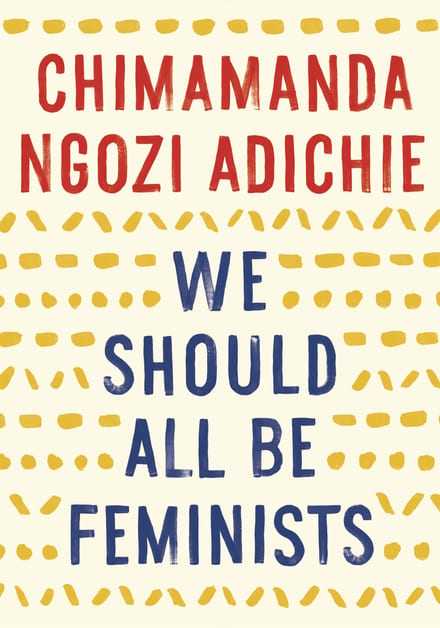
We Should All Be Feminists
The full book runs ~64 pages — roughly 1 hour of reading. You get the key ideas here in 2 minutes.
The key ideas
- Persists: pay gap and glass ceiling despite legal protections
- Punishes: assertive women, while identical male traits earn praise
- Normalizes: submission, purity, and blame dumped onto women
- Outdated: gender roles built for a strength-based survival world
- Traps men too, shaming vulnerability and enforcing stoicism
- Change is possible; cruel cultural norms have ended before
The summary
Laws changed faster than habits. Women won the vote, legal pay equality, and the right to an abortion, and yet a woman can enter any profession and still be talked over, addressed through the man beside her, and penalized for the same assertiveness that reads as leadership in him. Chimamanda Ngozi Adichie wrote this essay because she kept meeting people, including women, who thought feminism had done its job — that the freedoms were now equal, so the argument was over. She answers with a small, exact scene. A friend of hers doubted feminism was still relevant until they went to dinner and she handed the valet a tip; the valet thanked her friend. In one gesture, the invisible became visible: the reflex that treats the man as the one who matters, even when the woman is standing right there doing the thing.
The ceiling and the double standard
Legal protection lets women pursue any career, but the workplace hasn’t followed. The top jobs and salaries still land with men, even in fields coded as feminine like cooking and teaching, and the money gap is plain: in 2014 full-time male workers earned 21% more than women, who made 79 cents on the dollar. The subtler discrimination lives in the standards themselves. The same behavior earns opposite verdicts depending on who performs it — a woman who is assertive, authoritative, or outspoken is called difficult and dismissed, while a man doing exactly the same thing is praised for leadership. You can follow every rule and work twice as hard and still be marked down for the very traits that would promote your male colleague.
Norms that decide who you’re allowed to be
Beyond the office, whole cultures still treat women as second-class through expectations that feel natural until you say them out loud. A woman without children is treated as a failure, and many give up careers and dreams under that unrelenting pressure. Women are expected to be pleasant and submissive, to guard their virginity and stay “pure,” while the same promiscuity that shames them is a point of pride for men. When a woman is assaulted or harassed, the questioning turns on her rather than on the aggression, and the restrictions get concrete: in Nigeria, a woman can’t go to a club alone without being assumed to be a prostitute. These double standards don’t just limit what a woman may do; they narrow who she is permitted to be, shrinking her identity and her desires to fit a script she never wrote.
Biology explains the origin, not the rules
Adichie concedes the obvious biological differences — women give birth, men on average carry more testosterone, size, and strength — but none of that legitimizes inequality. The old pattern of men as leaders made sense when physical strength decided survival in ancient times. It no longer does. The skills that matter now, creativity and innovation, aren’t gender-specific; society evolved while the gender norms stayed frozen, so women are held back by archaic expectations no one can quite see. That’s why she rejects the demand that a woman act masculine to earn respect: you shouldn’t have to put on a suit to be taken seriously, you should be able to wear your dress and be respected all the same.
The trap catches men too. They’re expected to be stoic and to bury any softer feeling, and a system where half the population can’t admit fear or vulnerability without shame injures everyone. The way out isn’t gender blindness, pretending the differences don’t exist; it’s honest conversation about how to dismantle the unfair parts. And cultural norms genuinely can move. A hundred years ago Adichie’s twin nieces would have been killed at birth, because Igbo culture then read twins as an evil omen. That belief ended. Others can end the same way.
The bottom line
Feminism still matters because winning the laws didn’t erase the habits — the invisible standards, assumptions, and penalties women absorb every ordinary day. Read this if you’ve ever wondered whether gender inequality is really still a problem, or if you’ve sensed something off and wanted the language to name it.
Fact check
Popular books repeat findings that later research has complicated. Where We Should All Be Feminists makes a testable claim, here's what the evidence actually shows.
In 2014 full-time male workers earned 21% more than women, who made 79 cents on the dollar.
The 79 cents is right: the Census Bureau reported a female-to-male earnings ratio of 0.79 for full-time, year-round workers in 2014, with median earnings of $39,621 for women against $50,383 for men. The "21% more" does not follow from it — 21% is the gap read from the women's side, while men earning $50,383 against $39,621 is about 27% more. The figure is also a raw comparison of all full-time workers, not the same job: Blau and Kahn found that by 2010 conventional human-capital variables explained little of the gap on their own, with occupation and industry differences carrying most of the explanatory weight.
- DeNavas-Walt C, Proctor BD. Income and Poverty in the United States: 2014. Current Population Reports P60-252. Washington, DC: US Census Bureau; 2015. Source
- Blau FD, Kahn LM. The Gender Wage Gap: Extent, Trends, and Explanations. NBER Working Paper 21913. Cambridge, MA: National Bureau of Economic Research; 2016. Source
Assertive women are penalized for behavior that earns men credit as leadership.
The penalty is real and replicated. A meta-analysis found that behaving dominantly cost women likability relative to men (d = -0.19 across 63 samples) and hit downstream judgments considerably harder, with a hireability gap of d = -0.58 across 20 samples. Heilman and colleagues showed the same pattern from the other direction: women acknowledged as successful in a male-typed job were less liked and more personally derogated than identically successful men, and that dislike carried into overall evaluations and reward recommendations. Two qualifiers sharpen the picture — the hit lands on interpersonal judgment, not competence (d = 0.02), and explicit dominance such as direct demands triggers it (d = -0.28) while implicit forms like eye contact do not (d = 0.03).
- Williams MJ, Tiedens LZ. The subtle suspension of backlash: a meta-analysis of penalties for women's implicit and explicit dominance behavior. Psychol Bull. 2016;142(2):165-197. PubMed
- Heilman ME, Wallen AS, Fuchs D, Tamkins MM. Penalties for success: reactions to women who succeed at male gender-typed tasks. J Appl Psychol. 2004;89(3):416-427. PubMed
The top jobs and salaries still go to men even in fields coded as feminine, such as teaching.
US public schools show the drop-off the essay describes, but not the ceiling. Women were 77% of public school teachers in 2020-21 and only 56% of principals — a 21-point fall between the classroom and the job that runs it — and female principals averaged $111,900 against $115,500 for men. Women are nonetheless a majority of principals, up from 52% in 2011-12, so "the top jobs land with men" is stronger than this field supports even though the thinning and the pay gap are both there.
- National Center for Education Statistics. Characteristics of public school teachers. Condition of Education. US Department of Education, Institute of Education Sciences. Accessed July 30, 2026. Source
- National Center for Education Statistics. Characteristics of public school principals. Condition of Education. US Department of Education, Institute of Education Sciences. Accessed July 30, 2026. Source
Frequently asked questions
What is We Should All Be Feminists about?
Chimamanda Ngozi Adichie wrote this essay because she kept meeting people who thought feminism had done its job. Her argument is that laws changed faster than habits: women won the vote, legal pay equality, and abortion rights, yet are still talked over, penalized for the same assertiveness praised in men, and boxed in by norms that decide who they're allowed to be.
What are the key takeaways from We Should All Be Feminists?
The ceiling and the double standard persist, as top jobs and pay still go to men (in 2014 full-time men earned 21% more than women) and the same behavior reads as "difficult" in a woman but "leadership" in a man. Norms decide who you're allowed to be, treating a childless woman as a failure and demanding purity from women that men take pride in. Biology explains the origin of old patterns, not the rules, since strength no longer decides survival and today's skills aren't gender-specific. And the trap catches men too, who are shamed for showing vulnerability, so the answer is honest conversation, and cultural norms genuinely can change.
Who should read We Should All Be Feminists?
Read it if you've ever wondered whether gender inequality is really still a problem, or if you've sensed something off and wanted the language to name it.
Is We Should All Be Feminists worth reading?
Short and pointed, it turns a large argument into small, exact scenes, like the valet who thanks the man for the woman's tip, that make invisible bias visible. It's a brief essay meant to introduce and persuade, so anyone wanting deep data or policy detail will find it a starting point rather than the whole story.