Book summary
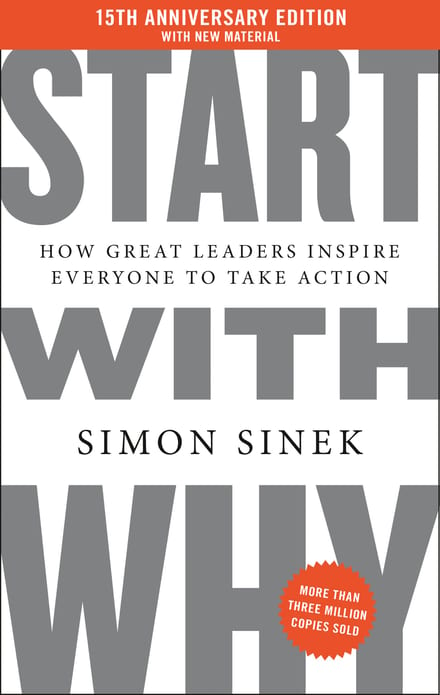
Start with Why: How Great Leaders Inspire Everyone to Take Action
The full book runs ~247 pages — roughly 5 hours of reading. You get the key ideas here in 2 minutes.
The key ideas
- Lead with purpose, not products, features, or discounts.
- Inspire loyalty instead of manipulating short-term action with incentives.
- Organize thinking around the Golden Circle: why, how, what.
- Hire motivated people for attitude, then inspire them.
- Filter every decision through your why using the Celery Test.
- Beware 'the split'—drifting from mission to obsessing over metrics.
The summary
Loyalty follows shared belief, not features or discounts. That single idea sits under everything Simon Sinek argues: the organizations people love are the ones that lead with the conviction behind their work, drawing in customers and employees who already hold that belief. The ones that slide into defending their products and their numbers lose whatever made anyone care in the first place.
There are two ways to move people, manipulation and inspiration. Manipulation pushes behavior with deals, discounts, and marketing hype. It works in the short term, but it never builds loyalty — pull the incentive and the customer walks. Inspiration works differently. Apple sells expensive products with no discounts and still commands legions of devoted fans, because it doesn’t compete on what it makes. It competes on why it exists.
People don’t buy what you do
The heart of it is a line worth sitting with: people don’t buy what you do, they buy why you do it, and what you do simply proves what you believe. Inspiration comes from appealing to people’s values and sense of purpose, so that they see their own beliefs reflected in yours. Get someone to relate to your why and you’ve reached something deeper than any transaction.
Apple’s origin shows the pattern. Northern California in the late 1960s ran on anti-establishment energy, and young men like Steve Jobs and Steve Wozniak absorbed it just as the computer revolution was arriving. For them, personal computers weren’t a way to make money — they were a way to empower individuals and challenge the status quo. “Think Different” captures that founding belief, and the company has kept faith with it ever since.
The Golden Circle
Sinek maps this with the Golden Circle, three rings nested inside one another. The outer ring is what you do — your products and services. The middle ring is how you do it — your process, your differentiator. The inner ring is why you do it — your purpose, cause, or belief. Most organizations work from the outside in: they know what they do, some know how, and few can say why. Great ones reverse the order and start from the center.
Starting with why resonates emotionally, because people are drawn to organizations that share their convictions. It attracts the innovators and early adopters who drive growth, and it attracts employees who don’t need to be pushed. As Sinek puts it, great companies don’t hire skilled people and then motivate them; they hire already-motivated people and inspire them. You hire for attitude, because you can always teach the skills.
Find your why, then say it first
Plenty of founders never articulate their why, even though a business can’t inspire employees or hold loyal customers without one. To find yours, look inward and backward: how were people drawn to you, and what made you distinct? Sinek draws a sharp line here — working hard for something you don’t care about is stress, while working hard for something you love is passion.
Once you know it, communicate it clearly and early, and use the Golden Circle to order the message: why first, then how, then what. When Apple introduced the iPod, it didn’t open with storage specs. It opened with the importance of music and a plan to change how music is distributed and consumed, and only then revealed the device.
The Celery Test and the split
For decisions, Sinek offers the Celery Test. Imagine you’re told to buy candy, cheeseburgers, and celery. With no clear why, you might buy them all, spending time and money with nothing to show for it. With a clear why — say, getting healthy — you buy only what fits, and you reach for the celery. A known why becomes a filter for every choice.
The danger is drift. When a company loses its guiding why and fixates on the what — finances, market share, quarterly results — Sinek calls it “the split,” and companies centered on metrics instead of mission lose their spark and stall. A leader’s real job is to keep the why alive, communicate it constantly to build passion and trust, and let the right people handle the how.
The bottom line
All organizations start with why, but only the great ones keep that why clear year after year — and lasting loyalty, from customers and employees alike, comes from leading with belief rather than product. Read this if you want to build something people follow because they believe in it, not because you bribed them.
Frequently asked questions
What is Start with Why about?
Loyalty comes from shared belief, not features or discounts. The book makes the case that the organizations people love lead with the conviction behind their work rather than defending their products or numbers, drawing in customers and employees who already hold that belief. Its core line: people don't buy what you do, they buy why you do it.
What are the key takeaways from Start with Why?
The central tool is the Golden Circle, three nested rings of what, how, and why, and great organizations communicate from the inside out, saying why first. Around it sit a few related ideas: inspiration beats manipulation, since deals and discounts win in the short term but never build loyalty; you hire already-motivated people for attitude and teach the skills; you use the Celery Test to filter decisions against your why; and you guard against "the split," where a company fixates on metrics and loses its spark.
Who should read Start with Why?
Anyone who wants to build something people follow because they believe in it, not because they were bribed. It speaks most directly to founders and leaders trying to articulate a purpose that outlasts any single product.
Is Start with Why worth reading?
It does one big idea well and hands you memorable tools for applying it, the Golden Circle and the Celery Test among them. If you already lead from a clear sense of purpose, or you want detailed operational steps rather than a mindset shift, it can feel like a single point stretched across a whole book.