Book summary
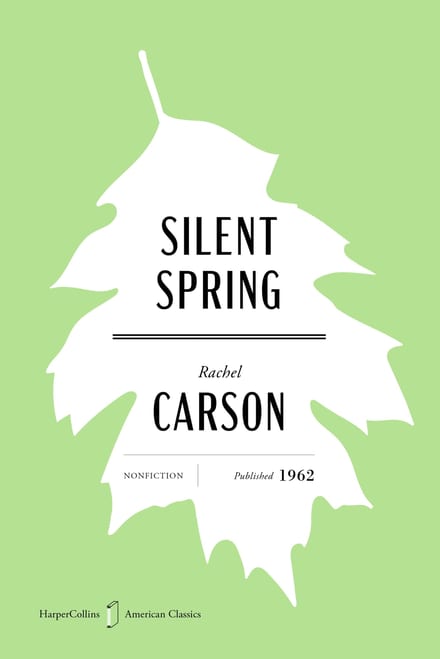
Silent Spring
The full book runs ~336 pages — roughly 6 hours of reading. You get the key ideas here in 3 minutes.
The key ideas
- Flooded: 200+ synthetic pesticides handed out with no regulation or consent
- Spreads: chemicals wash into water and concentrate up food chains
- Accumulates: DDT stores in fat, poisoning bodies never directly sprayed
- Backfires: killing predators unleashes worse pest outbreaks
- Cascades: one targeted spray can collapse an entire ecosystem
- Alternatives: biological controls work with nature, not against it
The summary
For almost all of Earth’s history, living things were shaped by their environment. Only very recently did that reverse, when human beings gained the power to reshape the environment itself — and in the decades after World War II, they began doing it with startling carelessness. Between the mid-1940s and 1960, more than 200 new synthetic pesticides came into use, many of them offshoots of wartime chemical-warfare research, and pesticide production shot up to five times its earlier rate. Rachel Carson’s charge is that these “poisonous and biologically potent chemicals” were placed “indiscriminately into the hands of persons largely or wholly ignorant of their potentials for harm,” and sprayed across millions of acres without the consent, and often without the knowledge, of the people who would end up eating and drinking them.
Chemicals don’t stay where you spray them
The heart of the problem is that nothing sprayed stays put. Aim a chemical at a few insect pests and it washes into streams, slips into groundwater, and climbs the food chain. DDT was the worst offender — it acts slowly, and it concentrates as it rises through the web of life. Sprayed alfalfa feeds a chicken, the chicken lays a contaminated egg, and people who were never sprayed at all end up carrying an average of 5.3 to 7.4 parts per million in their bodies; workers in insecticide plants carried 648. That matters because as little as three to five parts per million can damage heart muscle and liver cells. These synthetics were far more dangerous than older poisons like arsenic, and worse, they slipped straight through water-purification plants undetected, contaminating drinking water to lethal levels while the tools to measure any of it barely existed and regulation was essentially absent.
Everything gets caught in the blast
Because the poisons don’t discriminate, the casualties are rarely the intended target. At Michigan State University in 1954, robins began turning up dead or unable to reproduce — not because anyone sprayed the birds, but because they had eaten earthworms that fed on DDT-treated leaves. In Wyoming’s Bridger National Forest, herbicide meant to clear sage also killed the willow thickets along the streams; the moose lost their habitat, the beavers lost theirs, and when the beaver dams went, the lake they had built drained away and the whole landscape unraveled. In 1956, the Forest Service dumped DDT over 885,000 acres to fight spruce budworms and instead wiped out the natural predators of spider mites — which, suddenly unchecked, exploded into a worldwide forest pest. This is the pattern Carson drives home again and again: pesticides kill pest and predator alike, and in destroying nature’s own system of checks and balances they often make the original problem worse.
Poisoned without being asked
Roughly 500 new chemicals are synthesized in the United States every year, and we take them into our food, our water, and, as Carson puts it, “the very marrow of our bones” — without ever being consulted. The people living downstream of sprayed fields never granted permission, and frequently didn’t even know. The damage went unnoticed partly because medicine wasn’t built to catch it: researchers looked for gross, immediate effects and dismissed everything subtler. “Unless this appears promptly and in such obvious form that it cannot be ignored, we deny the existence of hazard,” she writes, and the absence of delicate enough detection methods meant injury stayed invisible until symptoms were undeniable and the harm already done. Future historians, she suspects, may be amazed at our “distorted sense of proportion” — that intelligent beings would try to control a few unwanted species by contaminating the entire environment and threatening their own kind.
Working with nature instead
Carson is careful to say she isn’t demanding that insecticides never be used; her target is their indiscriminate use, and she points to biological controls as the smarter path. Dr. Edward Knipling’s male-sterilization technique — releasing sterilized males to mate with wild females until only infertile eggs remain — eliminated the screw-worm on the island of Curaçao and then worked again on a far larger scale across the Southeast. Deploying natural predators, parasites, pathogens, and pheromones offers the same advantage: these methods work with nature’s systems rather than blasting through them, and they don’t poison everything downwind. The chemical approach, by contrast, is “as crude a weapon as the cave man’s club,” hurled against a fabric of life that is at once delicate and “miraculously tough and resilient, and capable of striking back in unexpected ways” — wielded by people who brought “no humility before the vast forces with which they tamper.”
The bottom line
Nature does not exist for our convenience and cannot be beaten into submission without consequences; turn these modern weapons against the earth that sustains us and we poison ourselves along with the pests. Read this if you eat food, drink water, or care whether the living world stays livable — it’s the book that launched the modern environmental movement, and its warning hasn’t aged.
Fact check
Popular books repeat findings that later research has complicated. Where Silent Spring makes a testable claim, here's what the evidence actually shows.
DDT concentrates as it climbs the food chain, so animals that were never sprayed absorb damaging doses.
The research that followed Silent Spring confirmed it and found the mechanism Carson had not yet identified. Ratcliffe showed eggshell weight in British birds of prey dropped abruptly around 1946-47 and stayed down; Hickey and Anderson found the same in the United States, with shell thickness in three raptor species falling more than 19% from 1947 onward, and herring gull shells across five states thinning in proportion to their chlorinated hydrocarbon residues. Persistence in the environment and accumulation in fatty tissue were among the EPA's stated grounds for cancelling DDT in 1972.
- Ratcliffe DA. Decrease in eggshell weight in certain birds of prey. Nature. 1967;215(5097):208-10. PubMed
- Hickey JJ, Anderson DW. Chlorinated hydrocarbons and eggshell changes in raptorial and fish-eating birds. Science. 1968;162(3850):271-3. PubMed
- US Environmental Protection Agency. DDT — a brief history and status. Accessed July 30, 2026. Source
Ordinary Americans who were never sprayed carried DDT stored in their body fat, and insecticide workers carried vastly more.
DDT is very persistent and stores in fatty tissue, so dietary exposure reaches people who never handled it and occupational exposure produces far larger burdens — the pattern Carson described. Those burdens have since fallen: an analysis of NHANES data from 2005 to 2016 found significant downward trends in serum p,p'-DDE and p,p'-DDT across the US population, decades after the 1972 cancellation. Carson's specific 1962 survey figures cannot be re-measured now, but nothing since has overturned the picture they painted.
- US Environmental Protection Agency. DDT — a brief history and status. Accessed July 30, 2026. Source
- Li M, Wang R, Su C, Li J, Wu Z. Temporal trends of exposure to organochlorine pesticides in the United States: a population study from 2005 to 2016. Int J Environ Res Public Health. 2022;19(7). PubMed
As little as three to five parts per million of DDT damages heart muscle and liver cells.
This is the weakest link in Carson's human-health case, because those are roughly the same concentrations she reports in the fat of ordinary Americans — so the claim implies the general population of the 1960s was sustaining cardiac and liver cell injury, which the epidemiology that followed did not find. What did hold up is the cancer concern: animals exposed to DDT developed liver tumors, and US and international authorities classify DDT as a probable human carcinogen, a judgement an IARC working group revisited in 2015. Carson's alarm about long-term harm was warranted; this particular dose-response figure was not.
Releasing sterilized males wiped out the screw-worm on Curaçao and then worked at continental scale.
The Curaçao result is documented in the contemporaneous literature: a 1963 WHO Bulletin review records that the screw-worm fly was eradicated from the island in the mid-1950s by releasing large numbers of gamma-irradiated sterile males across it, and that this success launched interest in sterilization for other insects. It then scaled — a retrospective analysis of the North American campaign confirms the fly was driven out of the continent and explains why the method suits this species: females mate only once, so sterile males can push a population to extinction even though the average efficacy of a release is only about 1.7%.
- Smith CN. Prospects for vector control through sterilization procedures. Bull World Health Organ. 1963;29(Suppl):99-106. PubMed
- Gutierrez AP, Ponti L, Arias PA. Deconstructing the eradication of new world screwworm in North America: retrospective analysis and climate warming effects. Med Vet Entomol. 2019;33(2):282-295. PubMed
Frequently asked questions
What is Silent Spring about?
For almost all of history, living things were shaped by their environment — until humans gained the power to reshape the environment itself, and after World War II began doing it with startling carelessness. The book's charge is that potent synthetic pesticides were placed in the hands of people ignorant of their harm and sprayed across millions of acres without the consent, or even the knowledge, of those who would end up eating and drinking them.
What are the key takeaways from Silent Spring?
Nothing sprayed stays put: chemicals wash into streams and groundwater and climb the food chain, with DDT concentrating as it rises until people who were never sprayed carry it in their bodies. The poisons don't discriminate, so they kill pest and predator alike — dead robins at Michigan State, drained beaver lakes in Wyoming, a spider-mite explosion after spraying wiped out its natural enemies — often making the original problem worse. We're being poisoned without being asked, and harm stays invisible because medicine looked only for gross, immediate effects. The smarter path is biological control, like the male-sterilization technique that eliminated the screw-worm, working with nature rather than blasting through it.
Who should read Silent Spring?
Anyone who eats food, drinks water, or cares whether the living world stays livable — it's the book that launched the modern environmental movement.
Is Silent Spring worth reading?
It's carefully evidenced, morally clear, and historically pivotal, and Carson is explicit that she isn't calling for a ban on all insecticides, only an end to their indiscriminate use. The chemistry and case studies are detailed and some data is of its era, so expect a serious, sometimes technical argument rather than a light read — but its warning hasn't aged.