Book summary
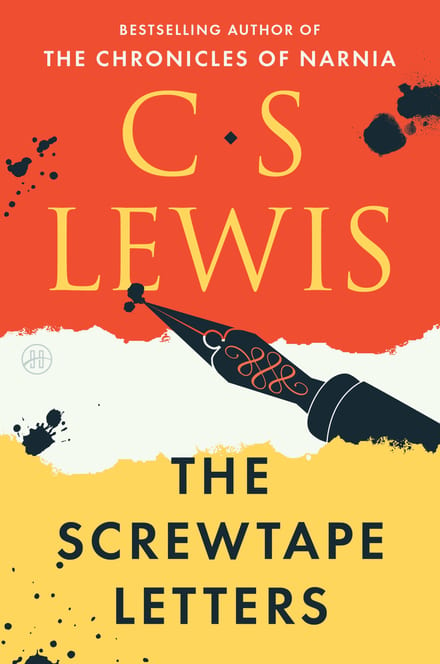
The Screwtape Letters
The full book runs ~224 pages — roughly 4 hours of reading. You get the key ideas here in 5 minutes.
The key ideas
- Reverses everything, so the Enemy is God and advice is warning
- Warns that the safest road to Hell is the gradual one
- Targets domestic pettiness, turning prayer into an audit of Mother's faults
- Explains undulation: troughs and peaks are normal, not spiritual failure
- Renames charity as unselfishness, swapping an active good for a negative
- Ends with the tempter failing and Wormwood eaten by his uncle
The summary
The Screwtape Letters runs backwards, and missing that inverts the entire book. It is thirty-one letters from Screwtape, a senior devil in what Lewis stages as an infernal civil service, to his nephew Wormwood, a junior tempter assigned to one ordinary young man in England under the Blitz. Screwtape calls God “the Enemy” and Satan “Our Father Below.” Every recommendation in it is therefore bad advice on purpose. Lewis’s own word for the method, in the preface he wrote for the 1961 reissue, was “moral inversion—the blacks all white and the whites all black.” The original preface adds a second warning: people go wrong about devils in two opposite directions, disbelieving in them entirely, or taking “an excessive and unhealthy interest” in them.
It is a work of Christian apologetics and never pretends otherwise. But what Screwtape is actually cataloguing — self-deception, distraction, low-grade resentment, drift — reads clearly whether or not you share the theology.
The road down is a gentle slope
Screwtape’s strategic view is that nothing dramatic needs to happen. Particular sins are interchangeable so long as they accumulate: “Murder is no better than cards if cards can do the trick. Indeed the safest road to Hell is the gradual one—the gentle slope, soft underfoot, without sudden turnings, without milestones, without signposts.” Lewis’s design is not to indict card games but to argue that a life gets steered by moves too small to register as decisions.
The tactics follow. In the sixth letter, with the man unsure whether he will be called up, the instruction is to hold him at maximum uncertainty and pin his attention to what he dreads rather than to anything he might do about it. In the twenty-fifth, he wants the man craving novelty and forecasting a future nobody can see, so that he never reaches the plain questions: is it virtuous, is it possible.
The real damage is domestic
The book’s sharpest writing is not about grand vice. The man converts before the second letter, to Screwtape’s fury, and the counter-move is disappointment: he had pictured an exalted spiritual fellowship and found ordinary neighbours singing out of tune. That gap is better material, Screwtape reckons, than any argument against God.
Then the mother. Screwtape’s coaching there is a small masterpiece of observed pettiness: steer the man to pray only about her sins, so prayer becomes a nightly audit of her faults; train him to hear a sour note in her voice that isn’t in it; above all keep the standard asymmetrical, so he judges her by her tone while insisting she judge him only by his words. Later, with a household in prospect, he looks ahead to what he calls the Generous Conflict Illusion — a family competing over who gets to be the self-sacrificing one, nobody saying what they want, everybody quietly aggrieved. His boast is that charity, an active thing you do, has been renamed unselfishness, a mere negative: not being a nuisance rather than willing somebody else’s good.
Dryness is not evidence that anything has gone wrong
The eighth letter holds the idea most often lifted out of the book. Human beings, Screwtape explains, are amphibians, “half spirit and half animal”: as spirits they belong to the eternal world, as animals they live in time, so their nearest approach to constancy is undulation, “a series of troughs and peaks.” Wormwood assumes the low stretches are his opening. Screwtape corrects him — God makes more use of the troughs than the peaks, on his account, because someone who keeps going with no felt encouragement is standing on his own legs.
What a tempter can do with a trough is make it look permanent. Persuade the man that the dryness is the truth and the earlier warmth was a phase, and he writes off his own convictions unargued. The ninth letter adds the appetite version: “An ever increasing craving for an ever diminishing pleasure is the formula.”
How it ends, and what isn’t in it
The plot resolves against Screwtape. The man is killed in an air raid with his soul at peace, and the last letter drops the urbanity: Screwtape calls his nephew “my poppet” and “my pigsnie,” says he cannot wait to eat him, and signs himself “increasingly and ravenously affectionate uncle.” Hell’s justice, spelled out a letter earlier, is simple: bring back food or be food. Wormwood failed, so Wormwood gets eaten.
One piece of the book’s history is routinely misfiled. Lewis had the idea in July 1940 during a church service, and told his brother the same day he would call it As one Devil to Another. The letters ran weekly in The Guardian — a Church of England paper, no relation to the daily — from 2 May to 28 November 1941, at two pounds apiece, which Lewis declined and directed to a fund for the widows of clergymen. Geoffrey Bles published the book on 9 February 1942, dedicated to J. R. R. Tolkien. “Screwtape Proposes a Toast” is not part of it: Lewis wrote that separately for The Saturday Evening Post in 1959, a speech at the Tempters’ Training College aimed at education and social levelling rather than at one man’s soul, and it was bundled in from the 1961 edition onward. Nearly every edition on sale now prints both.
He did not enjoy the work. “Though I had never written anything more easily, I never wrote with less enjoyment,” he said afterwards, describing the strain of speaking through Screwtape as “a sort of spiritual cramp.”
The bottom line
Read it as a manual to be reversed: Screwtape’s advice is a list of the ways Lewis thought a life gets quietly steered off course, and almost none of them involve a choice anyone would notice making. It is apologetics written from inside the opposing camp, and an unusually cold-eyed inventory of self-deception. Read it if you want moral argument that stays funny — and read the preface first, so the inversion never catches you out.
Frequently asked questions
What is The Screwtape Letters about?
It is thirty-one letters from Screwtape, a senior devil in an infernal civil service, to his nephew Wormwood, a junior tempter assigned to one ordinary young man in England under the Blitz. Every word runs backwards: Screwtape calls God "the Enemy," so all his advice is bad advice on purpose. Lewis's own term for the method was moral inversion — the blacks all white and the whites all black.
What are the key takeaways from The Screwtape Letters?
Screwtape's strategy is that nothing dramatic needs to happen — "the safest road to Hell is the gradual one," a gentle slope without milestones or signposts. The sharpest material is domestic: praying only about his mother's sins so prayer becomes an audit of her faults, hearing a sour note in her voice that isn't there, and the Generous Conflict Illusion of a family competing to be the self-sacrificing one. The eighth letter explains undulation — humans are amphibians, living in troughs and peaks — and argues the dry stretches are where someone learns to stand on their own legs. The book resolves against Screwtape: the man dies at peace in an air raid, and Wormwood is eaten.
Who should read The Screwtape Letters?
Read it if you want moral argument that stays funny, and an unusually cold-eyed inventory of self-deception, distraction and drift. It is Christian apologetics and never pretends otherwise, but what Screwtape catalogues reads clearly whether or not you share the theology.
Is The Screwtape Letters worth reading?
Yes, provided you read it as a manual to be reversed — Screwtape's recommendations are a list of the ways Lewis thought a life gets quietly steered off course, almost none of them a choice anyone would notice making. Read the preface first so the inversion never catches you out. Readers who want straightforward theological argument rather than satire may find the sustained irony wearing.