Book summary
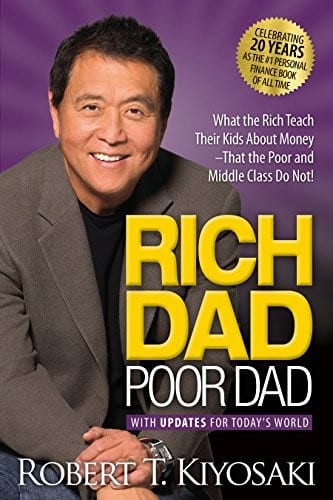
Rich Dad Poor Dad: What the Rich Teach Their Kids About Money That the Poor and Middle Class Do Not
The full book runs ~241 pages — roughly 4 hours of reading. You get the key ideas here in 2 minutes.
The key ideas
- Buy assets that generate cash flow, avoid liabilities that drain money
- Escape the rat race of working for everyone but yourself
- Conquer fear and greed with financial intelligence, not impulse
- Learn how money works since schools never teach it
- Manage risk through education and diversification, don't avoid it
- Pay yourself first and let your profession fund your business
The summary
A salary funds a lifestyle; ownership funds freedom. That distinction is the whole book. Going to school, studying hard, and landing a good job will help you make a living, but it will never make you wealthy — it locks you into what Robert Kiyosaki calls the rat race, the endless routine of working for everyone but yourself while your employer, the bank, and the tax collector take their cut before you see what’s left. Most people spend that remainder on a lifestyle that forces them to keep running, and they route any surplus into possessions that quietly drain value rather than into things that pay them back. We stay on the wheel because it’s normal and stepping off invites disapproval, but normal and wealthy are simply different destinations.
Fear, greed, and the education schools skip
Two emotions run most people’s money decisions, and both are expensive. Greed is what makes you spend a raise on a fancy car; fear is what keeps you out of the market because you might lose. Neither is rational, and both keep you poor. The antidote is financial intelligence — understanding how investments work, what risk really is, and how debt can be a tool instead of a trap — so your choices come from logic rather than impulse. The trouble is that nobody teaches this. Capable, hard-working, talented people end up broke because financial intelligence isn’t taught in school even though it underpins personal and societal prosperity, which is how you end up with 75 to 80% of Americans holding ineffective pensions and half holding none at all. Building that intelligence starts with three habits: appraise your finances honestly (what you make, what you can spend), set concrete goals like a house in five years, and keep educating yourself, because your mind is the best thing you’ll ever invest in. The earlier you begin, the wider the gap grows between you and everyone still guessing.
Assets are employees; your business builds wealth
Here is the book’s central rule, and it’s blunt: only buy assets, never liabilities. Assets put money in your pocket — stocks, bonds, real estate, a business that runs without you. Liabilities take money out — the car, the boat, the things that look like success and cost you every month. When you buy assets, your money becomes a workforce, each one an employee earning income while you sleep, and the more of them you have, the less you need to trade your own hours for dollars.
That’s why Kiyosaki separates your profession from your business: your profession pays the bills, but your business is what creates wealth, and at the start you build the second while still working the first. A chef who works five days a week and puts the extra income toward a rental condo has cooking as his profession and the condo as his business. As the business grows it eventually overtakes the paycheck as the main source of income, and that crossover — when your assets cover your expenses — is financial independence.
Manage the risk instead of avoiding it
You can’t get wealthy leaving everything in a savings account; at some point money has to go into things that generate value, like stocks, bonds, or real estate. The wealthy don’t dodge risk, they manage it — educating themselves first and accepting that higher potential returns usually come with higher risk, but only for people who know what they’re doing. The road is bumpy, so Kiyosaki suggests keeping a list of “wants” (to be debt-free) and “don’t wants” (to not end up like your parents) and returning to it when things go sideways, which they will. A few disciplines hold it together: track your finances so you’re always earning more than you spend, and pay yourself first by funding your assets before the bills, letting the pressure of those unpaid bills push you to earn more rather than coast. Learn the tax code, since filing as a corporation instead of an individual can save real money, and read the stories of successful people — they all struggled, and the difference is only that they didn’t stop. Even the financially smart go broke through laziness or arrogance, where laziness means avoiding what should be done (you can work 60 hours a week and still neglect your family or debts) and arrogance means ignorance plus ego, the exact recipe for a disastrous investment.
The bottom line
Wealth accumulates when you funnel surplus income into assets that pay you back, not into possessions that quietly drain you — build a stack of income-generating assets large enough to replace your paycheck and you buy back your own time. Read this if you’re tired of working hard and staying broke, or you want your kids to understand money before the world teaches them the expensive way.
Fact check
Popular books repeat findings that later research has complicated. Where Rich Dad Poor Dad makes a testable claim, here's what the evidence actually shows.
Around 75 to 80% of Americans hold ineffective pensions and half hold none at all.
The second half is close to right. The Federal Reserve's 2022 Survey of Consumer Finances found 54.3% of U.S. families held a retirement account of any kind, up from 50.5% in 2019 — leaving roughly 46% with none. The "75 to 80% ineffective" figure has no stated benchmark and no traceable source; among families that do hold an account the median balance was $86,900 against a mean of $334,000, a spread wide enough that "ineffective" fits some households and badly misdescribes others.
- Board of Governors of the Federal Reserve System. Changes in U.S. Family Finances from 2019 to 2022: Evidence from the Survey of Consumer Finances. Federal Reserve Bulletin. October 2023. Source
Your home is a liability rather than an asset, because it takes money out of your pocket instead of putting money in.
As cash-flow bookkeeping the point is fair — an owner-occupied home pays no rent while charging mortgage interest, taxes, insurance and upkeep every month. As a description of where household wealth actually sits it does not hold: the Federal Reserve reports that the balance sheet of families in the middle of the net worth distribution is dominated by housing, and median net housing value among homeowners rose 44% between 2019 and 2022, from about $139,100 to $201,000, the largest such gain on record in the survey. With homeownership at 66.1% and a median home worth $323,200, the primary residence is the single largest thing most American families own.
- Board of Governors of the Federal Reserve System. Changes in U.S. Family Finances from 2019 to 2022: Evidence from the Survey of Consumer Finances. Federal Reserve Bulletin. October 2023. Source
Filing as a corporation instead of as an individual saves ordinary earners real money on taxes.
Incorporating does not shelter earned income, and it can cost more. The IRS states that a corporation's profit "is taxed to the corporation when earned, and then is taxed to the shareholders when distributed as dividends," with no corporate deduction for those dividends — a second layer of tax an individual never faces. An owner who works in the business must also draw a reasonable salary: the IRS's definition of an employee for FICA, FUTA and income-tax withholding "includes corporate officers," and courts have consistently held shareholder-officers who provide more than minor services liable for federal employment taxes. Genuine savings exist for business owners with real deductible expenses, not for a wage earner who incorporates.
Frequently asked questions
What is Rich Dad Poor Dad about?
A salary funds a lifestyle; ownership funds freedom — and that distinction is the whole book. A good job helps you make a living but never makes you wealthy, because it locks you into the "rat race" where employer, bank, and tax collector take their cut first. The answer is financial intelligence: understanding assets, risk, and debt so your money decisions come from logic rather than fear and greed.
What are the key takeaways from Rich Dad Poor Dad?
The central rule is blunt — only buy assets (stocks, bonds, real estate, a business that runs without you), never liabilities that drain money each month, like the car or boat that only look like success. Separate your profession, which pays the bills, from your business, which builds wealth, and grow the second while working the first until your assets cover your expenses (financial independence). Fear and greed drive most money mistakes, and financial intelligence — which schools never teach — is the antidote. Manage risk instead of avoiding it, pay yourself first, learn the tax code, and start early so compounding widens the gap.
Who should read Rich Dad Poor Dad?
Anyone tired of working hard and staying broke, or who wants their kids to understand money before the world teaches them the expensive way.
Is Rich Dad Poor Dad worth reading?
Its core reframing — assets as employees that pay you while you sleep — is memorable and has shifted how many people think about money. It's stronger on mindset than on step-by-step method, so readers who want concrete instructions rather than principles and parables may need to pair it with a more practical guide.