Book summary
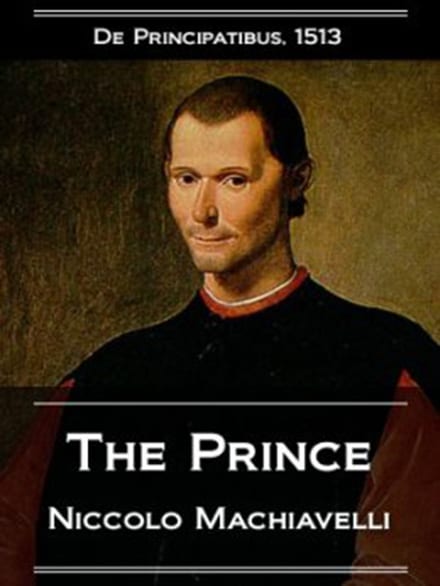
The Prince
The full book runs ~156 pages — roughly 3 hours of reading. You get the key ideas here in 5 minutes.
The key ideas
- Build power on your own ability, not borrowed fortune.
- Choose fear over love, but never earn hatred.
- Inflict cruelty all at once; dole out benefits slowly.
- Combine the lion's force with the fox's cunning.
- Appear virtuous while breaking faith when necessity demands.
- Arm your own citizens; mercenaries betray and ruin you.
The summary
Machiavelli wants to tell you how power actually works, not how moralists wish it worked. Plenty of writers have imagined republics and princes that never existed. He wants the real truth of it, and the real truth is uncomfortable: how people actually live is so far from how they ought to live that a ruler who insists on being good in every situation, surrounded by people who are not, will ruin himself. So a prince has to learn how not to be good, and to use that knowledge or withhold it depending on what the moment demands. Holding a state you inherited is easy enough; you mostly just avoid breaking with your ancestors’ customs. The hard case, the one this book circles, is the new prince building authority from nothing.
Ability beats luck, but plan for luck anyway
Machiavelli splits every rise to power into two sources: your own ability, or fortune. Men who climbed by their own strength, like Moses, Cyrus, Romulus, and Theseus, took the top with difficulty but held it with ease, because the foundations were theirs. Those lifted by luck or another’s army rise without effort and fall at the first storm, having laid no roots. His rule for whether your ideas survive is blunt: armed prophets win, unarmed ones are destroyed. Savonarola is the warning, ruined the moment the crowd stopped believing and he had no force to change their minds.
His great case study is Cesare Borgia, whom the people called Duke Valentino. Borgia rose entirely on his father Pope Alexander’s fortune, yet he built so shrewdly, crushing rival factions and turning enemies into friends, that Machiavelli offers him for imitation to anyone raised by the arms and luck of others. What undid him was double bad luck: Alexander died early and Borgia himself lay near death at the same moment. The one mistake Machiavelli won’t excuse is that Borgia let Julius the Second, a man he had injured, reach the papacy, since new favors don’t make powerful men forget old wounds.
That’s fortune’s role. Machiavelli figures it governs about half of what happens and leaves the other half to us. He compares it to a river in flood that wrecks everything in its path, but only where no one built barriers while the weather was calm. The lesson is to match your temper to the times. Julius the Second succeeded by acting impetuously just when caution would have failed.
Better to be feared than loved
Everyone wants both, but since you rarely get both, feared is the safer bet. Machiavelli’s reasoning is a low opinion of people: they are ungrateful, fickle, and false, yours while you’re useful and gone the moment you need them. Love hangs on a sense of obligation that people drop whenever it suits them; fear hangs on the dread of punishment, which never lets go. But there’s a limit: a feared prince must avoid being hated, which means keeping his hands off his subjects’ property and their women. Men forget a father’s death faster than the loss of their inheritance.
Cruelty, Machiavelli insists, can be used well or badly. Used well, it’s applied at a single stroke, out of necessity, and not repeated. Cesare Borgia sent the harsh Ramiro d’Orco to pacify the lawless Romagna, then, once order was restored and the man had grown hated, had him executed and left one morning in the piazza at Cesena beside a block and a bloody knife. The people were left satisfied and stunned at once. The principle: inflict all your injuries together so they’re felt less, and hand out benefits slowly so they’re savored longer. Hannibal held a huge, mixed army together through sheer feared cruelty; the gentle Scipio saw his troops rebel out of too much leniency.
Be both the lion and the fox
Keeping your word is admirable, Machiavelli grants, and yet the princes who did great things treated their promises lightly. There are two ways to fight, by law and by force, and since law often isn’t enough, a prince must know how to use the beast as well as the man. Pick two beasts: the lion, which frightens off wolves, and the fox, which spots the traps the lion blunders into. A wise ruler breaks faith when keeping it would cost him and the reason he gave his word has passed. He doesn’t need to actually possess mercy, honesty, humanity, and piety, but he badly needs to appear to, because most people judge by the eye, not the hand; they see what you seem to be, and few ever touch what you really are. Alexander the Sixth did nothing but deceive, and always found someone willing to be deceived.
Arm yourself, never rent your army
The foundation of every state is good laws and good arms, and you can’t have the first without the second. Mercenaries and auxiliaries are useless and dangerous, brave among friends and cowards against the enemy, held only by a little pay that no one will die for. Machiavelli blames the ruin of Italy on centuries of leaning on hired soldiers, which is how Charles of France could seize the country “with chalk in hand,” marking billets for his troops rather than fighting for them. Rome and Sparta stood armed and free for ages; the Switzers are armed and free still. A prince founded on his own citizens’ arms stands on solid ground; everyone else is renting.
The bottom line
Power obeys results, not intentions: a prince is judged by whether he wins and holds his state, so he must be willing to act against ordinary morality when survival requires it while keeping the appearance of virtue intact. Build your own foundations, arm your own people, be feared without being hated, and bend with the times. Read it if you want an unsentimental look at how power is actually taken and kept, whether you mean to wield it or just to recognize it used on you.
Frequently asked questions
What is The Prince about?
It sets out how power actually works, not how moralists wish it worked. Machiavelli's uncomfortable truth is that how people live is so far from how they ought to live that a ruler who insists on being good in every situation, surrounded by people who are not, will ruin himself. So a prince has to learn how not to be good, and use or withhold that knowledge as the moment demands. Power is judged by results, by whether you win and hold your state, which means acting against ordinary morality when survival requires it while keeping the appearance of virtue intact.
What are the key takeaways from The Prince?
Every rise comes from your own ability or from fortune, and those who climb by their own strength hold power more easily, which is why armed prophets win and unarmed ones are destroyed. Fortune governs about half of events, so build barriers while the weather is calm and match your temper to the times. Better to be feared than loved, since fear never lets go, but avoid being hated by keeping your hands off subjects' property and their women. Use cruelty well, at a single stroke and not repeated, inflicting injuries all together and doling out benefits slowly. Be both the lion and the fox, and appear merciful and honest even when you break faith. And arm your own people, because mercenaries and auxiliaries are useless and dangerous.
Who should read The Prince?
Read it if you want an unsentimental look at how power is actually taken and kept, whether you mean to wield it or just to recognize it used on you.
Is The Prince worth reading?
Yes if you want a clear-eyed, still-startling account of power stripped of wishful thinking, made vivid by cases like Cesare Borgia and the bloody knife left in the piazza at Cesena. Its logic is deliberately amoral and its examples come from Renaissance Italy, so a reader looking for ethical guidance or a modern management manual will have to translate the lessons, and some will find its low view of human nature hard to stomach.