Book summary
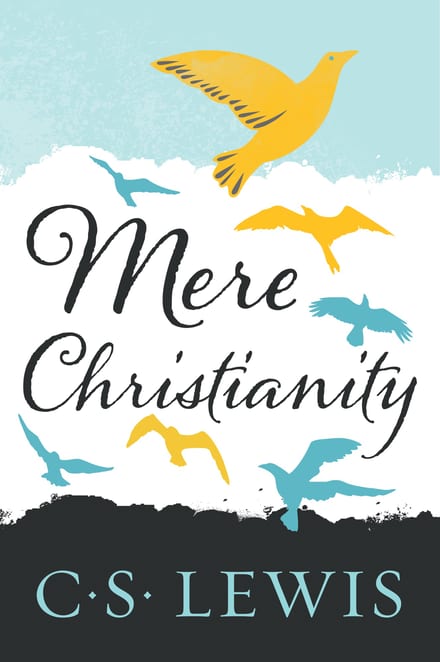
Mere Christianity
The full book runs ~227 pages — roughly 4 hours of reading. You get the key ideas here in 5 minutes.
The key ideas
- Starts from how people quarrel: both sides appeal to a shared rule
- "Mere" means the hall every tradition shares, not any one room
- Instincts are the piano keys; the moral law is the sheet music
- The trilemma — lunatic, worse, or telling the truth — draws the hardest pushback
- Morality has three parts; public argument covers only the first
- Niceness can be temperament; Lewis is asking for a change of kind
The summary
Everything in Mere Christianity rests on an argument Lewis makes before God is mentioned at all. Listen to how people quarrel: nobody in a row announces that fairness is no concern of theirs, and both sides try to show that the other broke a rule they already share — he promised, she went first. Lewis calls it the Law of Human Nature, and on his account it behaves like nothing else we study: it reports not how people do behave but how they ought to, and everyone who appeals to it also breaks it. Follow that oddity honestly, he argues, and you end up somewhere you had not planned to go.
None of it was written as a book. Between August 1941 and April 1944 Lewis gave twenty-five radio talks for the BBC in four series, one of them in ten-minute slots for the armed forces. They came out as three paperbacks — Broadcast Talks (1942, published in America the next year as The Case for Christianity), Christian Behaviour (1943) and Beyond Personality (Britain 1944, America 1945) — and in July 1952 Geoffrey Bles bound them together with light edits and a new preface. George Marsden, who wrote the book’s biography for Princeton, says nobody seems to know whose idea the merger was.
The hall, not a room
“Mere” is borrowed from the seventeenth-century English clergyman Richard Baxter, and it marks a limit. Lewis wants what the traditions hold in common, so he sent the script of what became Book II to four clergymen — Anglican, Methodist, Presbyterian, Roman Catholic — to check it was nobody’s party line, and he says plainly what he leaves out: nothing on contraception, since he is neither a woman, a married man, nor a priest. What he offers is “a hall out of which doors open into several rooms”, and he tells you not to settle in it, because the “fires and chairs and meals” are in the rooms.
A clue in the way people argue
Book I builds everything on that shared rule, and Lewis works through the obvious rebuttals. Herd instinct won’t do, he says, because when the urge to help a stranger and the urge to save your own skin both fire, something judges between them that is neither: the instincts are the piano keys, the moral law is the sheet music. Social conditioning won’t do either, because on his reading moral codes across cultures differ in emphasis rather than in kind. What he thinks is left is a law that prescribes rather than describes, pointing at something behind the universe more like a mind than a fact — a something that cares how you behave, he adds, not yet a church. It is also one of the places the book is most contested: in C. S. Lewis and the Search for Rational Religion (1985), the philosopher John Beversluis argued that the inference does not follow.
Mad, bad, or God
Book II is where the wartime framing shows: on Lewis’s telling this world is “Enemy-occupied territory”, caught in a civil war rather than a duel between equals. He also turns his own former atheism inside out: he had rejected God because the universe seemed cruel and unjust, then asked where the standard came from. “A man does not call a line crooked unless he has some idea of a straight line.”
Then comes the trilemma, the most quoted page he ever wrote. A man who said the things Jesus said, Lewis argues, is not available to us as a great moral teacher; he is a lunatic, on a level with the man “who says he is a poached egg”, or something worse, or he is telling the truth. The objection is that the list is short by one. William Lane Craig, himself a Christian philosopher, adds legend: the divine claims arriving later, from followers. Historians including Bart Ehrman dispute that Jesus made the claims at all. Marsden’s verdict: at once the most celebrated and the most criticised thing in the book.
Morality is not a list of rules
Book III, the section Lewis expanded most for print, argues that we have shrunk morality to a third of its size. Picture humanity as “a fleet of ships sailing in formation”: the voyage works only if the ships avoid collisions, only if each ship is seaworthy, and only if the fleet is going where it was sent. Public moral argument, he says, covers the first and forgets the rest. He works through the cardinal and theological virtues, treats charity as something you do rather than feel, and names pride the great sin, the vice he says feeds on comparison. These chapters have aged worst: Marsden notes how conventional Lewis’s views of the sexes were, and guesses they would have shifted had he lived longer.
Becoming a different kind of thing
Book IV — “Beyond Personality: Or First Steps in the Doctrine of the Trinity” — surprises readers who came for the arguments. Lewis separates the biological life we already have from the other kind he says Christianity offers, and the distance between them is not moral improvement but a change of species: on his analogy, a statue turning into a man. Niceness, on that account, is not the target: being nice can be an accident of temperament, and a world of nice people, he argues, would still need rescuing. Borrowing an image from George MacDonald, he says you expected a decent little cottage and find a palace going up, because the builder means to live in it himself.
The bottom line
Lewis’s claim is that Christianity is not a self-improvement scheme but a proposal to become a different kind of creature, and that the ordinary business of holding people to a standard is the door he thinks leads there. Read it for the shape of the argument and the plainness of the prose, knowing that the trilemma at its centre is where its critics have pushed back hardest.
Fact check
Popular books repeat findings that later research has complicated. Where Mere Christianity makes a testable claim, here's what the evidence actually shows.
The things Jesus said about himself leave only three options — lunatic, something worse, or God — so calling him a great moral teacher and nothing more is not open to us.
The reasoning is valid; what specialists dispute is whether the three options exhaust the field. Writing in Faith and Philosophy, Daniel Howard-Snyder pressed a fourth — that Jesus was sincere and sane but merely mistaken about his own status — and argued it is no less plausible than divinity, which leaves the trilemma unable to reach its conclusion on its own. The premise underneath it is contested too: Bart Ehrman argues the historical Jesus did not talk about himself as a divine being and that explicit divine claims appear only in the Gospel of John, a reading other New Testament scholars reject. The argument does real work for readers who already grant that the sayings are his; Lewis presents the option as closed, and it is not.
Moral codes across cultures differ in emphasis rather than in kind — the same handful of behaviours has counted as good everywhere, with cultures disagreeing over who they apply to and how much they matter.
Cross-cultural coding backs the premise. Curry, Mullins and Whitehouse worked through ethnographic accounts of 60 societies and found that in 961 of 962 recorded judgements (99.9%) seven cooperative behaviours — family values, group loyalty, reciprocity, heroism, deference, fairness and property rights — carried the positive moral valence predicted; the single exception was a case where open theft was admired as a display of dominance. A 2024 machine-reading study extended the analysis to the full 256-society Human Relations Area Files corpus and again found most of the seven in most societies across every cultural region, with regional differences that were statistically detectable but small. What the evidence supports is Lewis's premise about the codes, not the inference he draws from it about what stands behind them.
Frequently asked questions
What is Mere Christianity about?
C. S. Lewis's case for Christian belief, built from twenty-five BBC radio talks broadcast between 1941 and 1944 and collected into one book in 1952. He starts before God is mentioned at all, with the way people quarrel: both sides appeal to a standard of fairness they already share. "Mere" means the ground the traditions hold in common — a hall, in his image, out of which doors open into several rooms.
What are the key takeaways from Mere Christianity?
Book I argues that the moral law prescribes rather than describes, and that neither herd instinct nor social conditioning explains it — the instincts are the piano keys, the moral law the sheet music. Book II contains the trilemma: that a man who said the things Jesus said is not available to us as merely a great moral teacher. Book III argues we have shrunk morality to a third of its size, covering how ships avoid collisions but not whether each is seaworthy or where the fleet is headed. Book IV makes the real proposal — not moral improvement but a change of kind.
Who should read Mere Christianity?
Anyone who wants the classic case for Christian belief argued rather than asserted, and anyone — believer or not — interested in how a careful writer builds a metaphysical argument out of everyday observations.
Is Mere Christianity worth reading?
The prose is famously plain and the argument is genuinely built rather than assumed, which is why it has outlasted almost everything written alongside it. But the trilemma at its centre is where critics have pushed back hardest — the objection being that the list of options is short by one — and the chapters on marriage and the sexes have aged badly. Read it for the shape of the argument, not as a settled proof.