Book summary
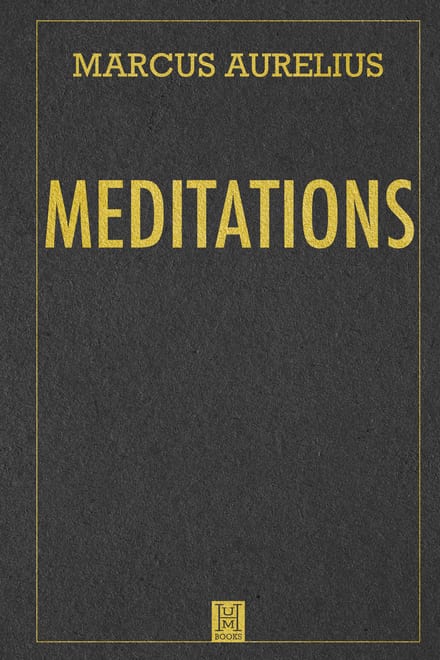
Meditations
The full book runs ~203 pages — roughly 4 hours of reading. You get the key ideas here in 5 minutes.
The key ideas
- Focus only on your own judgments, choices, and actions.
- Turn every obstacle into fuel for the work.
- Brace each morning for difficult people, then refuse anger.
- See yourself as one small part of nature's whole.
- Keep death in view to shrink your worries.
- Do your duty to others; leave the rest alone.
The summary
The most powerful man in the Roman world wrote this book for an audience of one: himself. It was never a book at all, but a private notebook kept at night on military campaign, where a Stoic emperor argued himself back into shape day after day. Some entries carry the place he wrote them, among the Quadi on the river Granua, at Carnuntum near the front. He is not teaching anyone. He is reminding himself of things he already believes and keeps forgetting under pressure, and the same handful of ideas circle back again and again: attend only to what is yours to control, do the work your role demands, and accept the order of nature you are a small part of.
Notice where he starts. Not with a grand theory, but with a long list of people and what he owes each of them: plain speech from one teacher, the habit of not making excuses from another, from his adopted father a way of holding power without being corrupted by it. The whole opening is a ledger of debts, gratitude for the people who shaped him before he reasons about anything at all.
Focus only on what is yours to control
Marcus keeps drawing the same line. On one side sit your judgments, your choices, your own actions, the ruling part of you that decides how to respond. On the other side sits everything else: reputation, your body, wealth, comfort, other people’s behavior, death itself. That second list he calls neither good nor bad. Life and death, honor and dishonor, hard work and pleasure, riches and poverty happen to good and bad people alike, which is exactly why none of them can be the measure of a good life. They are raw material you are handed, nothing more.
What makes this bearable rather than bleak is that the part which matters is never blocked. Nobody can stop you from acting and speaking in line with your nature, so the mind can always adapt. He compares it to a strong fire: throw obstacles at a small flame and you smother it, but a great fire seizes whatever lands on it and turns the obstacle into fuel. When circumstances refuse your first plan, the setback itself becomes the new thing to work on. That is why he can lie in bed at dawn, unwilling to move, and talk himself up with a blunt question: was I made to huddle under warm blankets, or to do a human being’s work? The sparrows, the ants, the bees are already busy at their part. Get up and do yours.
Start the morning braced for difficult people
One of his most practical entries is a rehearsal for the day ahead. Tell yourself first thing, he writes, that today you will run into the meddler, the ungrateful, the arrogant, the liar, the envious, the man who wants nothing to do with anyone. They act this way out of ignorance of what is genuinely good and bad. But you know better, and you know that this person is your relative, not by blood but by sharing the same reason. So none of them can truly harm you, because they cannot force you into anything shameful, and you cannot be angry at someone so close to your own nature. We were made to work together, he says, like the two rows of teeth, like hands and feet and eyelids. To fight each other is to work against the way we are built.
That is the social heart of the book. Do each thing, he reminds himself, with no further aim than to do good for others, because that is what a human being is for.
You are one small part of one nature
Underneath all of it runs a single picture of the world. Everything flows from one source, connected and necessary, and you are a piece of that whole the way a limb belongs to a body. To rage at what happens is to try to secede from the nature you are part of. So whatever lands on you, treat it as assigned to you and therefore useful, and carry your own share honestly. He tests each thing that upsets him: what is this really made of, how long will it last, which virtue does this moment call for, patience, honesty, courage?
To shrink his worries back to size, he zooms out. Borrowing an image from Plato, he looks down as if from a great height on the whole busy scene: flocks and armies, ships on calm and stormy seas, weddings and funerals, courts, festivals, markets, the countless nations who never heard your name and the ones who will forget it the moment you die. From up there, the applause you were chasing looks like nothing.
Remember that you are going to die
Death sits on almost every page, not as morbid dread but as a corrective. A human life is a single point in time, he writes, the body a running stream, everything about it a passing smoke or dream. All things dissolve, bodies back into matter, names into oblivion. The longest life and the shortest lose exactly the same thing when they end, because the only stretch anyone ever holds is the present moment. Fame after death, he says flatly, is no better than being forgotten. So do every action as though it might be your last, without pretense, ready to leave whenever you are called, meanwhile owing nothing and complaining about nothing.
The bottom line
Almost nothing that happens to you is in your control, and none of it can touch the one thing that is: how you choose to meet it. Spend your short life doing your duty to other people and accepting the rest as nature’s business, not yours, and you are already living well. Read it if you want the most honest self-help ever written: a powerful man’s real, unglamorous fight to stay decent and clear-headed under strain.
Frequently asked questions
What is Meditations about?
It's the private notebook of Marcus Aurelius, a Stoic Roman emperor who wrote it at night on military campaign for an audience of one: himself. He isn't teaching anyone; he's reminding himself of things he already believes and keeps forgetting under pressure. The same handful of ideas circle back again and again: attend only to what is yours to control, do the work your role demands, and accept the order of nature you are a small part of.
What are the key takeaways from Meditations?
Focus only on what's yours to control, your judgments and choices, and treat reputation, wealth, comfort, and even death as neither good nor bad. Obstacles become fuel, the way a great fire seizes whatever lands on it, so a setback is just the new thing to work on. Start each morning braced to meet the meddler, the ungrateful, and the arrogant, remembering they act from ignorance and can't force you into anything shameful. See yourself as one small part of one connected nature, so raging at what happens is trying to secede from it. And keep death in view, not as dread but as a corrective, doing each action as though it might be your last.
Who should read Meditations?
Read it if you want the most honest self-help ever written: a powerful man's real, unglamorous fight to stay decent and clear-headed under strain. It suits anyone drawn to Stoicism who prefers raw personal notes to a polished argument.
Is Meditations worth reading?
Its power comes from the fact that it was never meant to be read: these are the genuine reminders of someone wrestling himself back into shape day after day, which gives it a plainness no manufactured self-help matches. Because it's a notebook, it repeats itself and arrives as fragments rather than a built-out system, so a reader wanting a structured argument may find it circular. But that same repetition is exactly what makes its handful of ideas stick.