Book summary
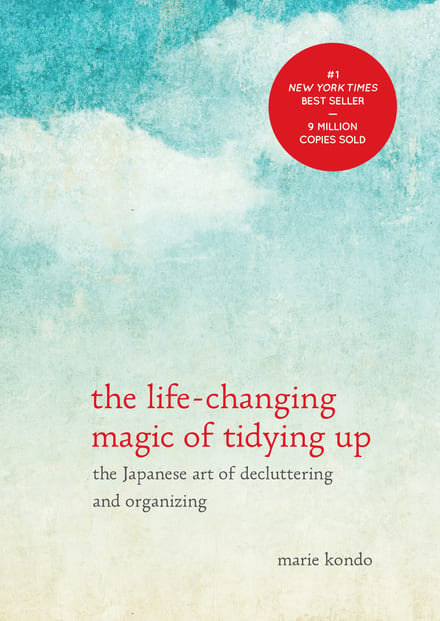
The Life-Changing Magic of Tidying Up: The Japanese Art of Decluttering and Organizing
The full book runs ~192 pages — roughly 4 hours of reading. You get the key ideas here in 2 minutes.
The key ideas
- Ask what deserves to stay, not what to discard
- Visualize your ideal life before touching a single object
- Tidy by category—clothes, books, papers, sentimental—not by room
- Keep only items that spark joy right now
- Thank possessions before releasing them to ease letting go
- Tidy once, thoroughly—it's a reckoning, not a lifelong battle
The summary
The KonMari method turns tidying on its head. Instead of asking what you should throw away, you ask what deserves to stay. You keep only what still belongs in the life you’re trying to have, and you let the rest go with thanks instead of guilt. Done properly, this isn’t just about a cleaner home. Kondo argues it helps you make better decisions, live more healthily, and move toward the life you actually want, because sorting your possessions turns out to be a way of sorting your values.
Start with the life you want, not the pile
Before you touch a single object, picture the space and the life you’re after, and make it concrete. Not vague aspirations but real detail, from what your morning routine looks like to the color of your bedsheets. A tidy space is simply one where you can reach what you need and love without friction, which means the whole project depends on first knowing what you need and love. You can’t decide what to keep until you can see the life those things are meant to serve.
Keep what sparks joy, release the rest with thanks
From there, the rule is to focus on what to keep rather than what to discard. Pick up each item and ask a straightforward question: does it spark joy, or serve a clear purpose? If it does neither, or if it has already served its purpose, thank it for what it gave you and let it go. Kondo has her clients treat their possessions almost as sentient, acknowledging a coat for keeping them warm before parting with it, because that small ritual changes the emotional register from shame or panic to gratitude. It makes it far easier to release the gift you never liked or the clothes that no longer fit the person you’re becoming.
When a decision is hard, a few questions help: Has it served its purpose? Does it make me happy? Why, when, and how did I get it? How often do I actually see or use it? And don’t let fear of regret keep everything in place, since most of what you discard can be replaced later if you truly need it. The cost of hoarding things “just in case” is usually higher than the rare inconvenience of rebuying one.
Easy things first, sentimental things last
Order matters. Start with the categories that are easy to judge, like clothes and documents, and save the hardest for the end, the sentimental items such as old letters and photographs that carry real emotional weight. You need practice making these keep-or-release decisions on low-stakes objects before you can make them clearly on the ones tied to your memories. And when you do let things go, don’t just offload them onto family or friends. Ask whether they genuinely want the item first; if they don’t, release it rather than passing your clutter along.
Tidy once, and meet your future self
The reason to do this thoroughly is that you only have to do it once. Kondo’s clients take about six months on average to work all the way through, but when they finish, they’re finished, and a new way of living begins. The process is almost meditative, a detox for both space and mind, and some clients describe genuine physical relief as the excess clears out. It’s also unavoidably introspective. Going through old belongings forces you to see who you used to be, which dreams you’ve outgrown, and who you’d like to become, so you can remove whatever doesn’t fit that future version of yourself.
This is also why “born messy” is a myth. Kondo has watched clients who were sure they were hopelessly disorganized change that self-image simply by going through the process correctly. Once you’ve chosen what to keep, organize it in whatever way feels natural to you, aiming for simplicity and order so that everything has an obvious home and nothing costs you a second thought to find.
The bottom line
Tidying is really about building the life you want by keeping only what belongs in it and releasing the rest with gratitude rather than guilt. Because it’s a one-time reckoning with your own values, doing it fully changes not just your closets but how you take action and how much you value what remains. Read this if you’ve tried and failed to get organized before, or suspect the clutter around you is tied to confusion about what you actually care about.
Fact check
Popular books repeat findings that later research has complicated. Where The Life-Changing Magic of Tidying Up makes a testable claim, here's what the evidence actually shows.
Nobody is born messy — being disorganized is a self-image rather than a disposition, so anyone can become a tidy person by working through the method properly.
Orderliness is not a blank slate. A meta-analysis of behavior-genetic studies covering more than 100,000 participants put the average heritability of personality traits at .40, rising to .47 in twin designs, and rank-order stability of traits climbs from .31 in childhood to roughly .74 between ages 50 and 70. Traits are not fixed either: a review of 207 intervention studies found personality measures shifted by about d = .37 over an average of 24 weeks and held at follow-up, though the movement concentrated in emotional stability rather than orderliness. Kondo is right that people can change; the flat claim that no dispositional component exists overshoots.
- Vukasović T, Bratko D. Heritability of personality: A meta-analysis of behavior genetic studies. Psychol Bull. 2015;141(4):769-85. PubMed
- Roberts BW, DelVecchio WF. The rank-order consistency of personality traits from childhood to old age: a quantitative review of longitudinal studies. Psychol Bull. 2000;126(1):3-25. PubMed
- Roberts BW, Luo J, Briley DA, Chow PI, Su R, Hill PL. A systematic review of personality trait change through intervention. Psychol Bull. 2017;143(2):117-141. PubMed
A cluttered home is a genuine source of stress, and clearing it out improves health and wellbeing.
The stress link is real but correlational. Among 60 dual-income spouses who narrated self-guided tours of their own homes, the wives whose language scored highest for clutter and unfinished projects had flatter diurnal cortisol slopes — a profile associated with adverse health outcomes — and increasing depressed mood over the course of the day, with the pattern holding after controls for marital satisfaction and neuroticism. Those effects were reported for the women in the sample. No trial has tested whether decluttering itself produces the health gains Kondo describes, so the direction of the arrow is still open.
- Saxbe DE, Repetti R. No place like home: home tours correlate with daily patterns of mood and cortisol. Pers Soc Psychol Bull. 2010;36(1):71-81. PubMed
Frequently asked questions
What is The Life-Changing Magic of Tidying Up about?
It flips tidying on its head: instead of asking what to throw away, you ask what deserves to stay, keeping only what belongs in the life you're trying to have and releasing the rest with thanks instead of guilt. Kondo argues this isn't only about a cleaner home, because sorting your possessions turns out to be a way of sorting your values, helping you make better decisions and move toward the life you actually want.
What are the key takeaways from The Life-Changing Magic of Tidying Up?
The KonMari method runs on a few clear rules. Start with the life you want, imagined in concrete detail, before touching a single object. Then pick up each item and ask whether it sparks joy or serves a clear purpose; if it does neither, thank it and let it go, a ritual that swaps shame for gratitude. Work in order, easy categories like clothes and documents first and sentimental items like letters and photos last, because you need practice on low-stakes objects. And tidy thoroughly once, since finishing completely lets a new way of living begin and proves "born messy" is a myth.
Who should read The Life-Changing Magic of Tidying Up?
Anyone who has tried and failed to get organized before, or who suspects the clutter around them is tied to confusion about what they actually care about. It's for people ready to treat tidying as a one-time reckoning rather than an endless chore.
Is The Life-Changing Magic of Tidying Up worth reading?
Yes, if you want a distinctive philosophy that treats decluttering as introspection, with a concrete method built around the spark-joy question and releasing items with gratitude. Its strength is reframing tidying as a way to meet your future self and clarify your values. Readers put off by treating possessions as almost sentient, or thanking a coat before discarding it, may find the approach too mystical, but that emotional reframing is central to why it works for its fans.