Book summary
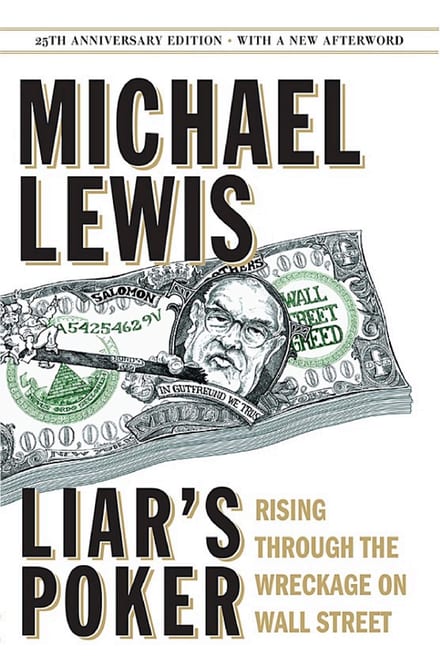
Liar's Poker: Rising Through the Wreckage on Wall Street
Rising Through the Wreckage on Wall Street
The full book runs ~304 pages — roughly 6 hours of reading. You get the key ideas here in 5 minutes.
The key ideas
- Distrust pay as proof of skill — Lewis advised clients with no financial training.
- Watch what a firm measures: revenue produced was the only route to status.
- Trace the mortgage bond fortune to a 1981 tax change, not to genius.
- Profit where you alone know what the paper is actually worth.
- Recognize the customer as inventory — salesmen unloaded Salomon's own positions on trusting clients.
- Expect a cautionary tale to be read as an instruction manual.
The summary
The uncomfortable thing about this book is not that Wall Street was greedy. It’s that the money had come loose from any underlying competence. Michael Lewis was 24, held a Princeton degree in art and archaeology, and had never taken an accounting course or managed savings of his own. Salomon Brothers paid him hundreds of thousands of dollars over three years to tell grown adults where to put their money. Writing about it two decades later, he said the firm’s willingness to do that remained a mystery to him. The memoir is funny about the men on the trading floor, but its argument is colder than the anecdotes: an industry can pay enormous sums for a skill nobody has actually verified, and keep doing it for years, because nothing in the system is set up to check.
The way in had nothing to do with the job
Lewis got hired at a dinner. He was a graduate student at the London School of Economics when a relative who had helped organize a banquet seated him next to the wife of a Salomon Brothers managing director; she was impressed, her husband arranged an interview, and in 1985 Lewis joined the training program at one of the most powerful firms on Wall Street. He had studied art history — his senior thesis was on Donatello — before deciding the field paid too little.
That story is told as comedy, and it works as comedy. But it sets up everything after it. If the entry point to a business rewards social luck rather than any demonstrated aptitude, you should not be surprised by what the business does with your money once you’re inside.
The floor taught you exactly what it valued
Salomon’s training program was the induction. Lewis describes trainees who heckled speakers, threw spitballs, dialed sex lines over the intercom, and made no secret of their contempt for the departments that paid least. The vocabulary was the curriculum: a new trainee was a Geek; a salesman or trader who brought in serious revenue became a Big Swinging Dick. There was no third category and no route to status that ran through anything but money produced.
The lesson underneath is about incentives rather than personalities. When a firm measures one thing, it will get that thing and nothing else — not prudence, not client outcomes, not an honest account of what you actually know. The training class understood this within weeks and behaved accordingly. They were not corrupted by the culture; they were reading it correctly.
The best trade was being the only one who understood it
The book’s most durable chapter is the birth of the mortgage bond, and it is not really a story about invention. Lewis Ranieri had joined Salomon in 1968 in the mail room and ended up running the mortgage desk; he is credited with coining “securitization” for the business of turning home loans into bonds that could be sold anywhere.
What turned that into a fortune was a change in the law. In 1981, on Lewis’s account, Congress gave America’s savings and loans tax relief on their underwater mortgages — but to book the loss, a thrift had to actually sell the loans. A thousand institutions needed to sell at once, and Salomon’s was the only fully staffed mortgage operation on the street. An awkward, expensive little desk became, as Lewis puts it, a thriving monopoly. Later legislation widened the market further: the Secondary Mortgage Market Enhancement Act of 1984 opened the market to privately issued mortgage bonds carrying no government guarantee, and the Tax Reform Act of 1986 added the REMIC structure.
The profit did not come from being smarter in some general way. It came from standing on the only side of a trade where anyone knew what the paper was worth.
Customers were the raw material
This is the part that still stings. Lewis likens thrift managers who kept coming back to be fleeced to ducks on a corporate shoot — birds trained to fly over the same field of hunters until they were shot. The people on the other end of the phone frequently did not know the value of what they were holding or selling, and that ignorance was not a problem to be corrected. It was the margin.
A young salesman’s actual assignment, in Lewis’s telling, was often to move whatever inventory Salomon itself wanted off its books, into an account that trusted him. He was rewarded for it. He also grasped that no rule of the game required his advice to be good — only that it be taken.
The joke he did not intend
The scene that gave the book its title is Salomon’s chairman John Gutfreund challenging his star trader John Meriwether to a single hand for a million dollars, “no tears.” In Lewis’s account Meriwether deflected by saying he would only play for ten million, and Gutfreund backed down; the hand was never dealt. That is the book in miniature — the swagger mattered more than the wager.
Lewis wrote it expecting to put people off. It did the opposite. Young men wrote to him asking how to get in, and he later summed it up flatly: “What I thought of as a cautionary tale became an instruction manual.” He had also assumed he was recording the end of a period of financial madness. He was recording the beginning.
The bottom line
Large sums of money can be paid for expertise that does not exist, and the people paying will not notice, because the system measures revenue rather than understanding. That is a permanent hazard, not a story about the 1980s. Read it if you want the clearest available picture of how an industry’s incentives shape the behavior of everyone inside it — and a warning about how easily a warning gets read as an invitation.
Fact check
Popular books repeat findings that later research has complicated. Where Liar's Poker makes a testable claim, here's what the evidence actually shows.
The book opens with Salomon's chairman challenging his best trader to a single hand of liar's poker for a million dollars.
The challenge is in the book; the wager never was. Even in Lewis's own telling, John Meriwether answers that he will only play for ten million and John Gutfreund drops it, so no hand is dealt. Fortune's retrospective on Gutfreund's death in 2016 restates the point flatly: the game never happened, and Meriwether turning it down was probably what Gutfreund wanted. The scene rests entirely on Lewis's reporting from inside the firm, and what it records is a test of nerve rather than a bet.
- Gandel S. Remembering John Gutfreund, the King of Wall Street. Fortune, 10 March 2016. Source
Lewis wrote the book as a warning about Wall Street and it was read instead as a guide to getting a job there.
Lewis has said this on the record repeatedly and in almost the same words. He expected the book to put Wall Street in its place; in the first months after publication he received roughly a thousand letters, mostly from young men who had loved it and wanted tips on how to get in. His own summary is that what he thought of as a cautionary tale became an instruction manual.
- Three decades after writing "Liar's Poker," Michael Lewis reflects on its impact on Wall Street. CBS News, 7 March 2022. Source
The incentives Lewis describes at Salomon Brothers were left unchecked long enough to catch up with the firm.
Three years after the book appeared, Salomon's government desk was found to have submitted false bids in US Treasury auctions between August 1989 and May 1991 to get around Treasury's per-bidder limits. In May 1992 the Justice Department and the SEC settled with the firm for $290 million — $190 million in fines and forfeitures plus a $100 million restitution fund; prosecutors declined to bring criminal charges, citing Salomon's cooperation. Chairman John Gutfreund, president Thomas Strauss and vice chairman John Meriwether resigned in August 1991, and in December 1992 settled SEC charges of failing to supervise the trader responsible: Gutfreund paid $100,000 and accepted a bar from heading a securities firm, Strauss $75,000 and a six-month suspension, Meriwether $50,000 and three months.
Frequently asked questions
What is Liar's Poker about?
Michael Lewis's memoir of Salomon Brothers in the mid-1980s, where he was hired at 24 with a Princeton degree in art and archaeology, no accounting course, and no experience managing savings of his own — and was paid hundreds of thousands of dollars over three years to tell adults where to put their money. The jokes are about the trading floor, but the argument is colder: an industry can pay enormous sums for a skill nobody has verified, and keep doing it for years, because nothing in the system is set up to check.
What are the key takeaways from Liar's Poker?
When a firm measures one thing, it gets that thing and nothing else — at Salomon the only ladder ran through revenue produced, from Geek at the bottom to Big Swinging Dick at the top, and the training class read that correctly within weeks. The mortgage bond made its fortune less through invention than through a change in the law: a 1981 tax break required thrifts to actually sell their underwater loans to book the loss, and Salomon had the only fully staffed mortgage desk on the street, turning an awkward operation into a monopoly. Customers were the margin, not the point — Lewis likens the thrift managers who kept coming back to be fleeced to ducks flown over the same field of hunters. And his own conclusion about the book's reception: 'What I thought of as a cautionary tale became an instruction manual.'
Who should read Liar's Poker?
Read it if you want the clearest available picture of how an industry's incentives shape the behaviour of everyone inside it. It's the natural starting point for anyone curious about Wall Street culture, the origins of mortgage securitization, or what a first job in a high-paying, badly measured business does to a person.
Is Liar's Poker worth reading?
Yes — it's funny, fast, and its central point about paying for unverified expertise has outlasted the decade it describes. It's a memoir rather than an analysis, so you get the mortgage desk and the training program in vivid detail and very little on the wider economics of the era. Worth knowing before you start that Lewis wrote it to put people off and it did the opposite, and that he assumed he was recording the end of a period of financial madness when he was recording the beginning.