Book summary
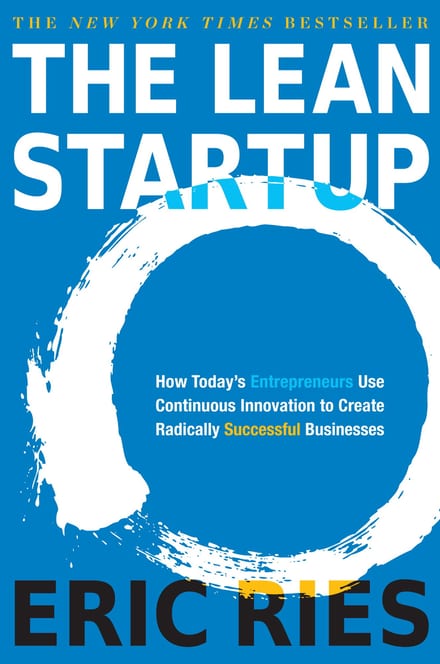
The Lean Startup
How Today's Entrepreneurs Use Continuous Innovation to Create Radically Successful Businesses
The full book runs ~336 pages — roughly 6 hours of reading. You get the key ideas here in 3 minutes.
The key ideas
- Build to learn, not to launch flawlessly
- Test value and growth hypotheses before scaling
- Ship the smallest thing that proves demand
- Pivot fast when evidence contradicts your assumptions
- Focus on one growth engine: sticky, viral, or paid
- Track core metrics, ignore vanity numbers
The summary
A startup is an experiment, not a plan to execute. That single reframing is what separates Eric Ries’s approach from the way most founders operate, which is to write a confident business plan, spend months building a polished product, and only then discover that no one wants it. Traditional management assumes you have history to lean on — established companies can forecast, set milestones, delegate, and measure against them because they already know what worked last quarter. A startup has none of that. Every assumption about the customer, the problem, and the solution is a guess, so the job isn’t to execute a plan but to test those guesses as fast and as cheaply as you can, then act on what you learn.
Validated learning beats a beautiful plan
The real objective is never the launch; it’s answering whether people will pay for what you’re building, and keep paying years from now. Ries calls the method validated learning: treat each assumption as a hypothesis and run small experiments on real potential customers instead of guessing in a conference room. Zappos is the classic example. Rather than stocking a warehouse and betting people would buy shoes online, the founder simply put photographs of shoes in a bare-bones web shop to see whether anyone would actually order — proving demand before spending on inventory.
Underneath every startup sit two leaps of faith worth testing directly. The value hypothesis asks whether early adopters will genuinely embrace the product; the growth hypothesis asks whether it can reach a much larger market. Facebook validated both early, with a user base that stayed unusually active and activation rates that climbed fast enough to convince investors and pull in millions. Most founders skip this step, assuming value and growth rather than checking, and surface a year and a half later with a beautiful product and an empty pipeline.
Ship the crudest thing that tests demand
The tool for this is the minimum viable product, and it’s smaller than you think. An MVP isn’t a tidier beta; it’s the least you can put in front of customers to see whether the core idea holds. It can be a rough prototype or even a smoke test — pretending to sell something that doesn’t exist yet. Dropbox did exactly that, making a short video demonstrating how the product would work before the syncing software was built, and letting the response show whether the demand was real.
Speed is the whole point, and Ries frames it as the build-measure-learn loop. Build something minimal, measure how customers respond by gathering data and talking to individuals, then learn what to change and feed it back into a better version. Each turn of the loop sharpens your read on what people actually want. Split-tests make the measuring concrete: unsure whether a feature earns its keep, ship two versions, one with it and one without, and watch which lifts revenue or retention. Anything that doesn’t move a number tied to survival is waste, however good it looks.
Pivot when the evidence says you’re wrong
The danger is falling in love with your first idea and becoming a “zombie startup” — technically alive, but selling something nobody wants. The remedy is the pivot: a fundamental change of direction when the data contradicts your assumptions. A pivot might redefine the product’s core value, target a different customer segment, or switch the main sales channel. Groupon began as a platform for activism and fundraising, noticed that what people actually loved was the collective-buying mechanic, and pivoted into the e-commerce marketplace it became. That wasn’t a hunch; it was a response to what customers did rather than what the founders hoped. Because it’s easy to drift, Ries suggests holding regular pivot meetings to look honestly at the metrics and ask whether you’re moving toward a sustainable model or just staying busy.
Pick one growth engine and real metrics
To avoid stagnation you need an engine of growth, and there are three. Sticky growth retains existing customers with better features and service; viral growth turns customers into recruiters through word of mouth; paid growth buys expansion through marketing, which only works if a customer’s lifetime value stays above what you spend to acquire them. You can run all three at once, but focusing on one gives you something clean to measure and optimize.
That only works if you’re measuring the right things. Vanity metrics — social media attention, hours worked, raw registered-user counts — feel good and tell you nothing about whether the business works. Core metrics differ by company but always tie to sustainability: paying customers, retention, the rate at which people recommend you. Cohort analysis keeps you honest, comparing how one group of customers behaves against another over time so you can see whether the numbers are truly improving or just accumulating.
The bottom line
Stop treating your idea as a plan to execute and start treating it as a hypothesis: ship the crudest version that lets real customers reveal whether they want it, measure what actually predicts a durable business, and change direction the moment the evidence says your assumptions were wrong. Read this if you’re building something new and want to avoid spending a year perfecting a product no one will buy.
Frequently asked questions
What is The Lean Startup about?
Its core reframing is that a startup is an experiment, not a plan to execute. Most founders write a confident business plan, build a polished product for months, and only then discover no one wants it. Since every assumption about the customer, problem, and solution is a guess, the real job is to test those guesses as fast and cheaply as possible, then act on what you learn.
What are the key takeaways from The Lean Startup?
The book turns on a few concrete tools. Validated learning treats each assumption as a hypothesis to test on real customers, checking both the value hypothesis (will early adopters embrace it) and the growth hypothesis (can it reach a big market). The minimum viable product is the crudest thing that tests demand, like Dropbox's demo video or Zappos photographing shoes before stocking any. The build-measure-learn loop keeps you fast, and the pivot means changing direction when evidence contradicts you, as Groupon did. Finally, pick one engine of growth (sticky, viral, or paid) and track core metrics over vanity metrics, using cohort analysis to stay honest.
Who should read The Lean Startup?
Anyone building something new who wants to avoid spending a year perfecting a product no one will buy. It's aimed at founders and entrepreneurs, but the experiment-first mindset suits anyone launching a project into uncertainty.
Is The Lean Startup worth reading?
Yes, if you want a practical framework for testing ideas before betting big, illustrated with clear cases like Zappos, Dropbox, and Groupon's pivot. Its strength is turning the vague advice to "fail fast" into specific moves: MVPs, split-tests, cohort analysis, and honest metrics. Readers already fluent in startup methodology may find the concepts familiar by now, but the book remains a clean, foundational statement of them.