Book summary
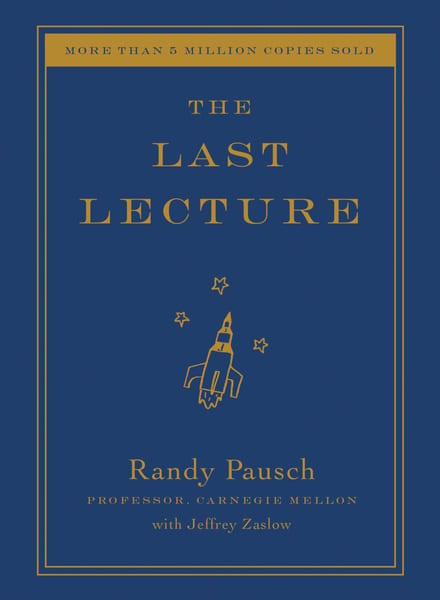
The Last Lecture
The full book runs ~233 pages — roughly 4 hours of reading. You get the key ideas here in 2 minutes.
The key ideas
- Reframe time as a gift, not a countdown
- Pursue childhood dreams through relentless perseverance, not luck
- Treat obstacles as filters separating wanters from doers
- Welcome blunt feedback as a form of respect
- Honor clichés because they hold ignored wisdom
- Prioritize people over things when it truly counts
The summary
Randy Pausch’s doctor could have said “you have three to six months to live.” Instead he said “you have three to six months of good health,” and those two words reorganized how Pausch spent his final year. The diagnosis was terminal pancreatic cancer; the framing was a gift. A dying Carnegie Mellon computer science professor, he did what teachers do with whatever time they have — he prepared one last lesson, built around a single idea: a life worth remembering comes from chasing your childhood dreams, treating every obstacle as the price of admission rather than a verdict, and pouring what you know into other people.
Time is a gift, not a countdown
Pausch could have skipped the lecture to conserve his strength. He chose the opposite, spending weeks building the talk while choosing the most intensive, painful treatment specifically to buy more time with his family. The reframing his doctor handed him — good health remaining, not death approaching — set the tone. You can’t always control how much time you get, but you can decide to treat it as something to use fully rather than something draining away.
Childhood dreams aren’t childish
The heart of the lecture was the list of things he’d wanted since boyhood and actually pulled off. He won the biggest stuffed animal at the carnival. Poor eyesight had barred him from becoming an astronaut, but in 2001 he floated in zero gravity by designing an experiment for NASA’s “Weightless Wonder” plane. A lifelong Star Trek fan, he met William Shatner through his virtual-reality research. He’d dreamed of being a Disney Imagineer, and Disney eventually hired him as a consultant. None of it was luck. Pausch credited parents who encouraged him and his sister to be imaginative, and above all he credited perseverance — the dreams came true because he kept pushing toward them long after the path stopped being obvious.
Obstacles and honest truth are the entry fee
Pausch gave awards to the students with the most spectacular failures, because a big failure meant someone had attempted something ambitious, and ambition eventually pays off. Obstacles, in his telling, aren’t there to stop you; they’re there to sort out how badly you want the thing. He treated blunt criticism the same way. When a mentor told him flatly that his arrogance would hold him back, he didn’t bristle — he was grateful, and spent years working on it, then made honest feedback central to his own teaching. Hard truths delivered with care are a form of respect.
He was also unembarrassed about clichés, arguing they endure because they’re true and most people ignore them anyway. “Work hard” earned him early tenure through late Friday nights when colleagues had gone home. “Fix the disease, not the symptom” showed up when a friend, stressed by debt, meditated every Tuesday; Pausch suggested working a part-time job on Tuesdays instead, and the debt soon disappeared. The wisdom is obvious. Acting on it isn’t.
The lecture was really for his children
Partway through, Pausch revealed the real audience. His daughter Chloe was only eighteen months old and would never remember him; his young sons would lose most of their early memories too. The lecture, and the letters he wrote for Chloe to read one day, were his way of staying present in lives he wouldn’t get to see unfold. “People are more important than things” stopped being a bumper sticker here — it’s the test you fail if you care more about the car seat than the sick nephew who threw up on it. He urged being “a Tigger, not an Eeyore,” looking for what’s good and fun, while balancing that optimism with a clear-eyed acknowledgment of his own prognosis. And he refused to dictate his children’s paths, wanting instead to help them find their own dreams rather than inherit his. His hope reached past his family: through the lecture, and through teaching tools like the programming environment Alice, he wanted to help millions of people chase what they’d once wanted as kids.
The bottom line
Dreams don’t come true because you chase them in the abstract; they come true because you live in a way that makes them possible — working hard, welcoming obstacles and honest criticism, and putting people first. Read this if your own childhood dreams have quietly faded, or if you want to see what a person says when he knows exactly how little time is left and decides to spend it on others.
Frequently asked questions
What is The Last Lecture about?
It's the lesson dying Carnegie Mellon professor Randy Pausch built after his doctor reframed a terminal diagnosis as "three to six months of good health" rather than three to six months to live. The book distills his final talk around one idea: a life worth remembering comes from chasing your childhood dreams, treating every obstacle as the price of admission rather than a verdict, and pouring what you know into other people. Beneath the lecture, its real audience was his young children, who would barely remember him.
What are the key takeaways from The Last Lecture?
Pausch's key ideas: time is a gift to use fully, not a countdown to dread. Childhood dreams aren't childish, and perseverance is what made his come true, from floating in zero gravity to consulting for Disney. Obstacles and honest criticism are the entry fee, which is why he gave awards for spectacular failures and thanked a mentor who called out his arrogance. He defended clichés like "work hard" and "fix the disease, not the symptom" because they're true and mostly ignored. And above all, people are more important than things, which is why the lecture was really for his children.
Who should read The Last Lecture?
Anyone whose childhood dreams have quietly faded, or who wants to see what a person says when he knows exactly how little time is left and decides to spend it on others. It's a short, warm read for anyone in need of perspective.
Is The Last Lecture worth reading?
Yes, if you want a heartfelt, concrete take on living fully that avoids abstraction, grounding each idea in Pausch's own life. Its strength is honesty about mortality paired with practical stories, like suggesting a debt-stressed friend work Tuesdays instead of meditating them away. Readers looking for original, research-backed frameworks may find the advice familiar, since Pausch openly embraces clichés, but his point is that acting on obvious wisdom is the hard part.