Book summary
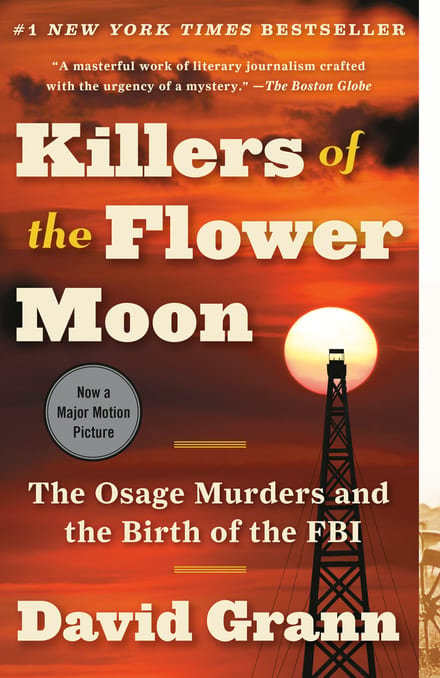
Killers of the Flower Moon
The full book runs ~350 pages — roughly 6 hours of reading. You get the key ideas here in 2 minutes.
The key ideas
- Oil made the Osage America's wealthiest people per capita
- Rigged guardianship let white officials legally drain Osage fortunes
- Mollie Burkhart's family was poisoned, shot, and bombed one by one
- FBI traced the plot to power broker William Hale
- Hale's convictions solved only a fraction of the killings
- Hundreds died over decades in a buried American atrocity
The summary
In the early 1920s, the Osage Nation was the richest group of people per capita on earth. Pushed off their land during America’s westward expansion and resettled on a stretch of Oklahoma nobody else wanted, they’d had the astonishing luck to be sitting on one of the largest oil deposits in the country. It should have been a happy ending. Instead the money marked them for death. White neighbors, court-appointed guardians, and in some cases their own husbands began killing Osage members to seize their share of the oil — a slaughter that ran far deeper than the official record ever admitted.
A legal machine for stealing
The federal government decided most Osage were “incompetent” to handle their own fortunes and assigned white guardians to control their money. Unlike other wealthy Americans, an Osage often couldn’t spend his own wealth as he pleased. Those guardians held legal power over oil headrights worth millions, and many simply looted the estates they were meant to protect. One contemporary called the arrangement “the blackest chapter in the history of this State,” noting that “millions — not thousands — but millions of dollars” had been drained away by the guardians themselves. Newspapers stoked public resentment that Native people had grown so rich. The ground was ready for something worse than theft.
Mollie Burkhart’s family dies one by one
The horror is easiest to see through Mollie Burkhart, an Osage woman married to a white man named Ernest Burkhart. Her sister Minnie died suddenly of a strange wasting illness. Her sister Anna was found shot dead in a ravine; another Osage man turned up executed nearby. Then her mother, Lizzie, died of the same mysterious sickness that took Minnie. Her sister Rita and Rita’s husband Bill were killed when their house exploded. Mollie understood that her family was being hunted and that she might be next — and she was right. The diabetes slowly killing her was actually poison. Officially, 20 to 30 Osage were murdered between 1921 and 1926, a stretch now called the Reign of Terror. As Grann writes, the world’s richest people per capita were becoming the world’s most murdered.
The Bureau’s signature case, and its limits
Investigators from the federal Bureau of Investigation arrived to untangle the killings. J. Edgar Hoover, young and hungry to build his agency’s name, put a former Texas Ranger named Tom White in charge. White’s men went undercover and even enlisted outlaws to expose how deep the corruption ran. The trail led to William K. Hale, Mollie’s uncle-in-law — a former rancher turned deputy sheriff who seemed to control everyone and everything, including a web of Osage fortunes. Hale had engineered the systematic murder of Mollie’s family to funnel their oil money his way, and Mollie’s own husband, Ernest, had been in on the plot the whole time. The guilt eventually broke Ernest into confessing. White confronted Hale with the evidence, and Hale was convicted and sentenced to life. The trial’s ugliness showed in one observer’s question of whether the jury was even weighing a murder — or merely whether “a white man killing an Osage” was murder “or merely cruelty to animals.” Mollie divorced Ernest afterward. White later left the Bureau, soon renamed the FBI, and became warden of the very prison holding Hale.
The real death toll
The tidy version ends with convictions and justice served. The truth is far worse. Digging through archives and interviewing Osage descendants, Grann found that the FBI solved only a fraction of the murders and buried the true scale of the killing. Not 20 to 30 deaths over five years — hundreds, over nearly two decades. Most of the killers were never charged. Most of the deaths were never even investigated. And almost none of it is taught or remembered. “History is a merciless judge,” Grann writes, and though justice can’t always be won, “the blood cries out from the ground.”
The bottom line
Oil turned a displaced nation into millionaires and then into prey, and the government that was supposed to protect them mostly looked away. Read this if you want to understand a deliberately forgotten chapter of American history — and how far people will go, with the law’s help, for money and power.
Fact check
Popular books repeat findings that later research has complicated. Where Killers of the Flower Moon makes a testable claim, here's what the evidence actually shows.
In the early 1920s the Osage were the richest group of people per capita on earth.
The wealth is documented and enormous: the Osage tribe took in more than $30 million in mineral revenue in 1923, the height of the boom, divided into headrights traced to just 2,229 original allottees — over $13,000 per share in a single year. The superlative is shakier. "The richest people on earth" entered the record as a Commissioner of Indian Affairs' description of Osage grazing income back in the 1890s, and the Oklahoma Historical Society says only that by the 1920s the remark "had come closer to the truth." No global per-capita ranking of populations was ever compiled to test it, so the phrase is period rhetoric that the oil money made roughly plausible, not a measured fact.
The official toll of 20 to 30 Osage murdered between 1921 and 1926 was a severe undercount, and the real figure was hundreds of deaths spread over nearly two decades.
The official count is what the standard record still gives: the Oklahoma Historical Society documents approximately twenty-four Osage dying violent or suspicious deaths in the early 1920s, most around Fairfax, with the killings subsiding after William Hale's arrest in 1926. That prosecution stopped far short of the killing is not in dispute — the federal trials of 1926 to 1929 reached Hale and a handful of accomplices, a small fraction even of those two dozen cases, and several convicts were later paroled or, in Ernest Burkhart's case, pardoned. The figure of hundreds over almost twenty years is Grann's own reconstruction from guardianship and agency records rather than a published historical tally, so it is best read as a well-argued estimate of an undercount, not an established number.
- Oklahoma Historical Society. Osage Murders. In: The Encyclopedia of Oklahoma History and Culture. Oklahoma City: Oklahoma Historical Society. Source
Frequently asked questions
What is Killers of the Flower Moon about?
In the early 1920s the Osage Nation, resettled on Oklahoma land that turned out to sit atop huge oil deposits, became the richest people per capita on earth, and the money marked them for death. White guardians, neighbors, and even spouses murdered Osage members to seize their oil headrights in a slaughter now called the Reign of Terror. Grann tells the story through Mollie Burkhart, whose family died one by one, and reveals a death toll far deeper than the official record ever admitted.
What are the key takeaways from Killers of the Flower Moon?
The book exposes a legal machine built for stealing: the government declared most Osage "incompetent" and assigned white guardians who looted the estates they were meant to protect. It follows the fledgling federal Bureau of Investigation, where Tom White's undercover men traced the killings to William K. Hale, who had engineered the murders of Mollie's family with the help of her own husband, Ernest. And its final turn is the real toll: not the official 20 to 30 deaths but hundreds over nearly two decades, most never charged, investigated, or remembered. As Grann writes, "the blood cries out from the ground."
Who should read Killers of the Flower Moon?
Anyone who wants to understand a deliberately forgotten chapter of American history, and how far people will go, with the law's help, for money and power. It suits readers of true crime and history who want the record set straight.
Is Killers of the Flower Moon worth reading?
Yes, if you want a meticulously researched true-crime history that refuses the tidy ending. Grann builds the horror through Mollie Burkhart's vanishing family and the Bureau's signature case against Hale, then delivers a gut-punch by showing how many murders were never solved or even investigated. Readers who prefer a story that closes with justice fully served may find the real, unresolved death toll bleak, but that unfinished reckoning is the book's point.