Book summary
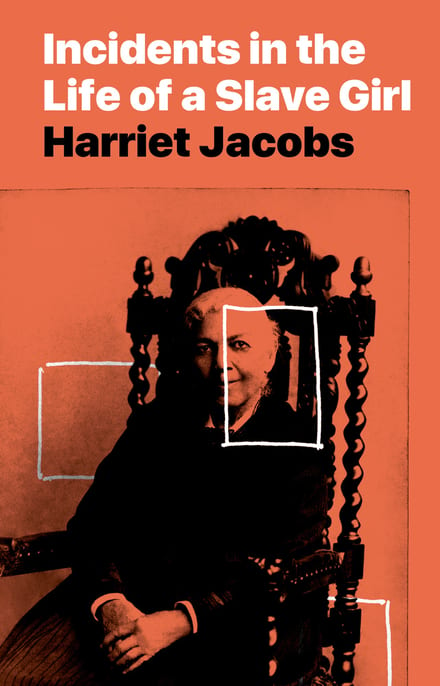
Incidents in the Life of a Slave Girl: Written by Herself
Written by Herself
The full book runs ~306 pages — roughly 6 hours of reading. You get the key ideas here in 5 minutes.
The key ideas
- Slavery inflicted sexual wrongs on women that men's stories omit
- Chose a white lover as calculated defiance against her master
- Hid nearly seven years in a cramped garret above town
- Watched her children through a gimlet-bored peephole
- Even the decent white father never freed his children
- Dismissed as fiction for a century until archives proved it true
The summary
Harriet Jacobs wrote for one reader, and names her in the first pages: the free woman of the North. Her preface asks that reader to grasp the condition of two million enslaved women in the South; a sentence at the book’s center says why sympathy for men in bondage will not stretch to cover it. Slavery is terrible for men, she writes, but “far more terrible for women” — on top of the burden everyone carries, women have wrongs and mortifications peculiarly their own. What she means is sexual, and the argument she builds from it goes straight at her reader’s idea of virtue.
A slave woman cannot be judged by your standard
In her fifteenth year, her master began whispering obscenities to her. He is Dr. Flint in the book; scholars identify him as Dr. James Norcom of Edenton, North Carolina. Years of coaxing, threats and surveillance followed, and Jacobs dates the start of her long war with him to that stretch of her girlhood.
Her counter-move was to take a lover, an unmarried white man she calls Mr. Sands, presented as calculation rather than passion: “It seems less degrading to give one’s self, than to submit to compulsion.” A lover has no legal power over her, she reasons — something like freedom. Two children followed, Benny and Ellen.
Then she turns to the reader, asks to be pitied and pardoned — and in the next breath declines the verdict. Looking back calmly, she writes, “the slave woman ought not to be judged by the same standard as others.” That is the book’s central claim, not a plea for leniency. On Jacobs’s premise, the virtue her reader prizes assumes a woman who can refuse and be obeyed.
Escape meant hiding in town, not running north
In 1835 Jacobs ran, but not away. A shed on her free grandmother’s house had a garret between its ceiling boards and the shingles: nine feet long, seven wide, three feet high at the peak, no way in for light or air. Her uncle, a carpenter, cut a concealed trap door. She lived up there for nearly seven years — a claim she expects readers to reject, and says so before they can.
In the dark she found the gimlet her uncle had left in the trap door and turned it on the wall facing the street: three rows of holes, the gaps bored out, an opening about an inch square. Through it she watched Benny and Ellen in the street. The first person she saw was Flint. Her escape, in her telling, is not a road north but a decision to stay in town, immobile, within earshot of the man hunting her, until her children were out. She left Edenton by boat in 1842.
The decent white man is the harder indictment
Flint costs the reader nothing to condemn. Sands is the difficult one. He bought the children through a speculator after Flint jailed them, then never freed them: if he died, they passed to his heirs. He runs for Congress, Flint spends his liquor trying to beat him, and fails. Scholars identify Sands as Samuel Tredwell Sawyer, who by the House’s own record served as a Whig in the Twenty-fifth Congress, 1837 to 1839.
The night before he left for Washington, Jacobs hauled herself out of the garret — so stiff her ankles gave way — crawled to the storeroom window and waited behind a barrel. When he passed she said, “Stop one moment, and let me speak for my children.” He started, hesitated, and walked out the gate.
Disbelieved for a century
The book appeared in Boston in 1861, published for the author under the pseudonym Linda Brent, with L. Maria Child named as editor on the title page. Child’s introduction sets out her role: she revised for condensation and orderly arrangement, added nothing to the incidents, and says she “pruned excrescences a little” but otherwise left the telling alone. Jacobs’s own preface opens flatly — “READER, be assured this narrative is no fiction.”
Readers took the other view for a century, widely assuming the book was Child’s fiction. In 1972 the historian John Blassingame called it “not credible” in The Slave Community — too orderly, too melodramatic to believe. The verdict stuck; the book came off syllabi.
Jean Fagan Yellin overturned that with archives. At the University of Rochester she found Jacobs’s letters about trying to publish; one, written from Edenton, put her twelve feet from the spot where she had suffered all the crushing weight of slavery. That gave Yellin a town to search. With George Stevenson at the North Carolina state archives, a skeptic who set himself a test and identified Jacobs’s father, she corroborated the narrative event by event. Even the seven years held: a runaway advertisement in Norfolk’s American Beacon on 4 July 1835 fixed one end, a letter placing Jacobs in Philadelphia seven years later fixed the other. Yellin published her findings in 1981, her Harvard University Press edition in 1987. Blassingame’s response, quoted in The Chronicle of Higher Education: “What Jean Yellin has done has erased any doubts I had.”
The bottom line
Jacobs argues that a woman held as property cannot be measured by the moral standard her reader brings, and the book’s reception made the point twice over: a first-hand account of sexual coercion was dismissed as too shapely to be true until the archives forced the issue. She refuses the ending her reader expects, too: “Reader, my story ends with freedom; not in the usual way, with marriage.” Her freedom was bought in 1852 for three hundred dollars, arranged without her knowledge and paid to a man she despised for demanding payment at all.
Read it for the half of American slavery the men’s narratives leave out, then read it beside Narrative of the Life of Frederick Douglass and notice what changes when the narrator is a woman.
Fact check
Popular books repeat findings that later research has complicated. Where Incidents in the Life of a Slave Girl makes a testable claim, here's what the evidence actually shows.
Jacobs really did hide for close to seven years in a garret nine feet long, seven wide and three feet high at its peak — the episode is autobiography, not a novelist's device.
Doubt fell hardest on the seven years, and that is the part the record settles. James Norcom's $100 advertisement for the capture of Jacobs ran in the American Beacon of Norfolk on 4 July 1835, and the original survives in the North Carolina Office of Archives and History. UNC's Documenting the American South dates her move into the crawl space above her grandmother's storeroom to the summer of 1835 and her escape north by boat to 1842, which brackets the concealment at close to seven years. The measurements of the space rest on Jacobs's own account; the chronology around them is documented.
- Andrews WL. Harriet A. Jacobs (Harriet Ann), 1813-1897. Documenting the American South, University Library, University of North Carolina at Chapel Hill. Source
- Running for Freedom. On the Move: Stories of African American Migration and Mobility. University Libraries, University of North Carolina at Chapel Hill. Reproduces the "$100 reward" advertisement for the capture of Harriet Jacobs, originally published in the American Beacon (Norfolk, Va.), July 4, 1835; original held by the North Carolina Office of Archives and History. Source
Jacobs wrote the book herself, as its title page claims; Lydia Maria Child edited it rather than composing it.
For more than a century most readers took the opposite view, and the book's standing as a slave narrative suffered for it — the historian John Blassingame was among the doubters. Jean Fagan Yellin's 1981 article in American Literature, built on Jacobs's own letters, established Jacobs as the author, and the full documentary case appeared in Yellin's 1987 Harvard University Press edition. Child's surviving correspondence describes the same role she claimed in her introduction: condensing and arranging, adding nothing to the incidents.
- Yellin JF. Written by Herself: Harriet Jacobs' Slave Narrative. American Literature. 1981;53(3):479. Source
- Smith SA. Harriet Jacobs: a case history of authentication. In: The Cambridge Companion to the African American Slave Narrative. Cambridge University Press; 2007:189-200. Source
- Andrews WL. Harriet A. Jacobs (Harriet Ann), 1813-1897. Documenting the American South, University Library, University of North Carolina at Chapel Hill. Source
"Mr. Sands" — the white man who fathered Jacobs's children, bought them and then failed to free them — was a real Edenton lawyer who won a seat in Congress while she was in hiding.
Scholars identify Sands as Samuel Tredwell Sawyer, and the congressional record matches the book. The House's own biographical directory has Sawyer elected from North Carolina as a Whig to the Twenty-fifth Congress, serving 4 March 1837 to 3 March 1839, chairing the Committee on Expenditures on Public Buildings, and losing his bid for the Twenty-sixth. Documenting the American South records that Sawyer had bought the two children but moved to Washington without emancipating either — which is what the narrative says of Sands.
- History, Art & Archives, U.S. House of Representatives. SAWYER, Samuel Tredwell (1800-1865). Biographical Directory of the United States Congress. Source
- Andrews WL. Harriet A. Jacobs (Harriet Ann), 1813-1897. Documenting the American South, University Library, University of North Carolina at Chapel Hill. Source
Frequently asked questions
What is Incidents in the Life of a Slave Girl about?
Harriet Jacobs wrote her 1861 narrative for one reader, the free woman of the North, and told her that slavery, terrible for men, was "far more terrible for women," who carried wrongs and mortifications of their own. Those wrongs are sexual, and the argument she builds from them goes at her reader's idea of virtue: a woman held as property cannot be measured by the standard of a woman who can refuse and be obeyed.
What are the key takeaways from Incidents in the Life of a Slave Girl?
Her master, called Dr. Flint in the book, began whispering obscenities to her in her fifteenth year, and her counter-move was to take a white lover, Mr. Sands, presented as calculation rather than passion: "It seems less degrading to give one's self, than to submit to compulsion." In 1835 she escaped by not leaving, hiding for nearly seven years in a garret above her free grandmother's shed, nine feet long and seven wide and three feet high at the peak, watching her children through an opening about an inch square that she bored with a gimlet. Sands is the harder indictment than Flint: he bought the children through a speculator and then never freed them, so they would have passed to his heirs. The book was widely dismissed as fiction for a century, until Jean Fagan Yellin corroborated it in the archives event by event and published her findings in 1981.
Who should read Incidents in the Life of a Slave Girl?
Readers who want the half of American slavery the men's narratives leave out. It pairs well with Frederick Douglass's Narrative, where you can see what changes when the narrator is a woman.
Is Incidents in the Life of a Slave Girl worth reading?
It is a rare first-hand account of sexual coercion under slavery, and its reception doubles the argument: the shapeliness that led the historian John Blassingame to call it "not credible" in 1972 held up, corroborated down to a runaway advertisement printed on 4 July 1835. The 1861 style takes some adjusting to, with its direct appeals to the reader, and the subject matter is unsparing. Read it for the argument rather than for a triumphant escape, since Jacobs ends with freedom bought for three hundred dollars instead of the ending her reader expects.