Book summary
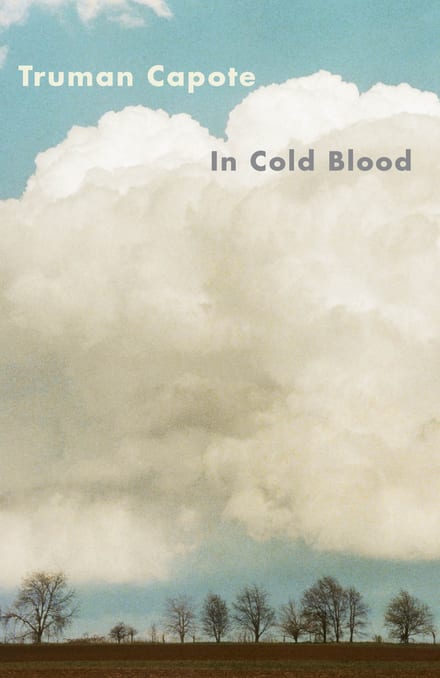
In Cold Blood: A True Account of a Multiple Murder and Its Consequences
A True Account of a Multiple Murder and Its Consequences
The full book runs ~368 pages — roughly 7 hours of reading. You get the key ideas here in 5 minutes.
The key ideas
- Note the choice: he picked a murder because the subject would not go stale.
- Watch the rule that shapes every page — the author never appears in it.
- Follow the method: no notebook, no tape recorder, six years of trained recall.
- Remember what the plan rested on — a safe that was not in that house.
- Read the closing cemetery scene knowing Dewey later said it never happened.
- Ask what got checked — dates, distances, name spellings; no sign of the dialogue.
The summary
Truman Capote had the theory before he had the crime. He told George Plimpton, in a New York Times interview published on January 16, 1966, that he had held it for over twenty years: journalism “could be forced to yield a serious new art form: the ’nonfiction novel,’ as I thought of it” — a narrative using every novelistic technique while staying, in his phrase, “immaculately factual.” He needed material that would not go stale. One November morning in 1959, deep inside the Times, he found a few paragraphs headlined “Wealthy Farmer, 3 of Family Slain.”
The people in it were real. Herbert Clutter, 48, his wife Bonnie, 45, and their children Nancy, 16, and Kenyon, 15, were killed at their farm outside Holcomb, in Finney County, Kansas, on the night of November 14–15, 1959. Richard Eugene Hickock and Perry Edward Smith were convicted and hanged. Two arguments run through the book Capote made of it: what he did to reporting, and what the reporting established.
A theory looking for a crime
Choosing a murder was, he said, “altogether literary” — he reckoned that “the human heart being what it is, murder was a theme not likely to darken and yellow with time.” Then he set the rule that shapes every page: the author had to vanish. The hardest technical problem, he told Plimpton, was “to write it without ever appearing myself, and yet, at the same time, create total credibility.”
That is the bet: no narrator, no notebook in the frame, and you are asked to trust that scene after scene was gathered rather than imagined. The New Yorker ran it as four Annals of Crime installments between September 25 and October 16, 1965; Random House published the book the next year. Ralph F. Voss, whose University of Alabama Press study traces the line to Wolfe, Mailer and Ellroy, reads it as a gothic novel as much as reportage.
Six years, no notebook
The method still makes working reporters wince. Capote went to Kansas with Harper Lee, who had just finished To Kill a Mockingbird and came along as his “assistant researchist” for about two months. It took a month before Garden City would talk; nobody there, he said, had ever heard of him.
He used no tape recorder and took no notes, because “even note-taking artificializes the atmosphere of an interview.” Twelve years earlier he had begun training for exactly this: a friend read passages aloud, he wrote them down afterwards and checked himself, until by his own account he could get “within 95 percent of absolute accuracy, which is as close as you need.” That figure is his, and unverifiable. The surrounding numbers make their own case: 80 percent of his research never reached the page, his files nearly filled a room. He also had one genuine check: for the first months Smith and Hickock could not speak to each other, so he crossed their accounts and kept what matched.
The safe was in the other house
Both men had recently left the Kansas State Penitentiary at Lansing — Smith on parole in July 1959, on condition he stay out of Kansas, Hickock that August. The plan came from Floyd Wells, a former cellmate of Hickock’s who had worked for Herb Clutter and described an office safe holding thousands in cash. Writing in Federal Probation from the Kansas Bureau of Investigation’s own case notes, probation officer Sally J. Keglovits caught what Wells’s statement makes plain: the office he remembered was in the old house on the property, around the time the Clutters’ new one was completed. Hickock and Smith broke into the new house. There was no safe and no $10,000. They left with binoculars, a Zenith portable radio, four silver dollars and about $40.
Wells eventually told the KBI. The two were picked up in Las Vegas on December 30, 1959, in a Chevrolet stolen in Iowa, tried in Garden City that March, convicted by a jury that deliberated forty minutes, and hanged at Lansing shortly after midnight on April 14, 1965.
Why they did it is Capote’s reading, and he was candid about that. He believed Smith acted for the reasons Smith himself gave — that a life of accumulated reverses had left him, that night, in what Capote called “a psychological cul-de-sac” — and thought Hickock could plan a murder but not commit one. He also named the mechanism: “I make my own comment by what I choose to tell and how I choose to tell it.”
Where the seams show
The clearest failure is the last scene. The book closes with the lead investigator, Alvin Dewey, meeting Nancy Clutter’s friend Susan Kidwell in the cemetery; the journalist Van Jensen reported in the Lawrence Journal-World in 2005 that Dewey later said it never happened.
In February 2013, Kevin Helliker reported in The Wall Street Journal on KBI files a since-deceased agent, Harold Nye, had taken home. Where the book has the bureau acting on Wells’s tip at once, the records show a five-day wait before anyone reached the Hickock farm; where the book sends one agent, four went — three KBI agents and a deputy, at midday. Helliker also reported that Capote’s own contract with Columbia Pictures required the studio to hire Dewey’s wife, Marie, as a consultant on the film, while the book makes Dewey its haunted hero. Sandy Campbell’s fact-check file for the serialization covers dates, distances and the spelling of names; nothing in it suggests he checked the dialogue or the action.
The bottom line
Capote showed that reporting can carry the weight of a novel, and in the same book exposed the cost: a form that hides its author also hides its seams, so you cannot tell six years of verified interviewing from a scene invented to end well. The achievement is real; so is the warning about what a beautifully shaped narrative will talk you into.
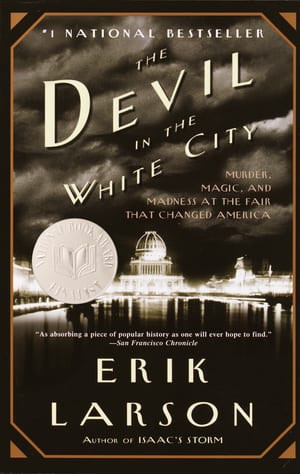
Worth your time if you care how nonfiction gets built. Pair it with The Devil in the White City, where Erik Larson works a real murder case under stricter rules.
Fact check
Popular books repeat findings that later research has complicated. Where In Cold Blood makes a testable claim, here's what the evidence actually shows.
Capote could reconstruct interviews from memory to within 95 percent of absolute accuracy, so notes and a tape recorder were unnecessary.
Exact wording is the first thing memory drops. In a recognition study with delays of 1 to 23 seconds, listeners had already stopped noticing paraphrases of sentences they had just heard while still catching changes in meaning. Over a longer span the gap widens: when pairs of adults recalled a real conversation a week later, only 4.7% of its details were recalled by both participants, and writing notes at the time increased how much each remembered without making it more accurate. Capote's 95 percent came from a private drill on book passages read aloud rather than from unrecorded interviews, and no recording of those interviews survives to check him against — though crossing Smith's and Hickock's separately held accounts, while the two were kept apart, was a genuine control.
The book invents nothing — every scene in it was reported rather than imagined.
Most of the reporting holds up in unusual detail, but the closing scene does not: Alvin Dewey's graveyard conversation with Nancy Clutter's friend Susan Kidwell was invented, which Dewey said outright and Capote conceded before his death in 1984. KBI case files kept by agent Harold Nye show the bureau waited five days after Floyd Wells named the suspects before going to the Hickock farm, and that four lawmen arrived at midday rather than the single agent the book sends that same evening. The New Yorker's own checking file for the serialization covers dates, distances and the spelling of proper names, with nothing in it to suggest the dialogue or the action was verified.
- Yagoda B. Fact-Checking "In Cold Blood": What The New Yorker's fact checker missed. Slate, 20 March 2013. Source
- Hittle S. Documents cast doubt on accuracy of "In Cold Blood". Lawrence Journal-World, 10 February 2013. Source
- Jensen V. Writing history: Capote's novel has lasting effect on journalism. Lawrence Journal-World, 3 April 2005. Source
Perry Smith killed because a lifetime of accumulated damage and disappointment left him with no other exit that night.
Childhood harm does raise the odds of later violence, but modestly. A meta-analysis of 18 prospective studies covering 39,271 people put the odds of a violent outcome after childhood maltreatment at 1.8 times higher (95% CI 1.4-2.3), with substantial disagreement between studies. That is a population-level association rather than a way to identify individuals: tools built specifically to predict violent offending, tested across 73 samples, had a median positive predictive value of 41%, so most people they flag never offend. Capote did not invent the reading — he pointed to Dr. Satten of the Menninger Clinic, co-author of a 1960 study of murder without apparent motive, as having reached it independently.
- Fitton L, Yu R, Fazel S. Childhood Maltreatment and Violent Outcomes: A Systematic Review and Meta-Analysis of Prospective Studies. Trauma Violence Abuse. 2020;21(4):754-768. PubMed
- Fazel S, Singh JP, Doll H, Grann M. Use of risk assessment instruments to predict violence and antisocial behaviour in 73 samples involving 24 827 people: systematic review and meta-analysis. BMJ. 2012;345:e4692. PubMed
- Satten J, Menninger K, Rosen I, Mayman M. Murder without apparent motive: a study in personality disorganization. Am J Psychiatry. 1960;117:48-53. PubMed
Frequently asked questions
What is In Cold Blood about?
The murder of the four members of the Clutter family at their farm outside Holcomb, Kansas, in November 1959, and the two men convicted and hanged for it. Capote reported it for six years and wrote it as what he called a nonfiction novel — a book using every technique available to a novelist while staying, in his phrase, immaculately factual. It is as much an argument about how reporting can be written as it is an account of a crime.
What are the key takeaways from In Cold Blood?
Capote chose a murder for literary reasons, not moral ones — he wanted a subject that would not go stale over the years he expected to spend on it. He set himself the rule that the author must vanish from the page, which is what gives the book its authority and also hides its seams. The killers' plan rested on a safe that was not there, so four people died for about forty dollars and a radio. And the method that produced the book — no notes, no tape recorder, trained recall — is the part later documents called into question.
Who should read In Cold Blood?
Anyone interested in how nonfiction gets built, and anyone who wants the founding document of modern true crime read with its own record open beside it. It is also simply one of the most influential prose styles of the twentieth century.
Is In Cold Blood worth reading?
Yes, with your eyes open. The reporting is extraordinary in scale and the writing has shaped every true-crime book since. But the form that hides its author also hides where verification stopped: the closing cemetery scene did not happen, and the New Yorker's fact-checking covered dates, distances and names rather than dialogue or action. Read it as an achievement and a warning about how much a well-shaped narrative can persuade you of.