Book summary
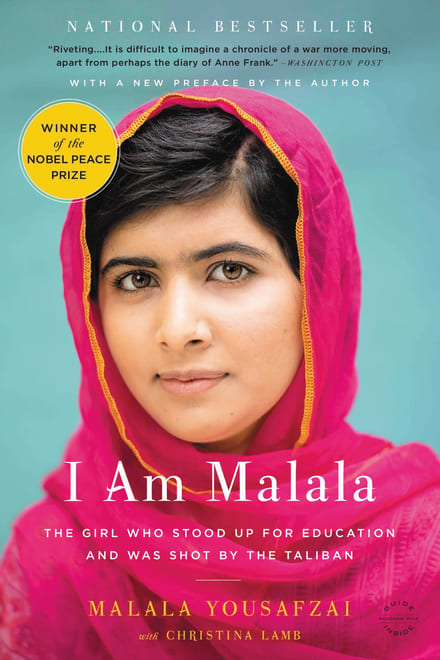
I Am Malala: The Girl Who Stood Up for Education and Was Shot by the Taliban
The Girl Who Stood Up for Education and Was Shot by the Taliban
The full book runs ~336 pages — roughly 6 hours of reading. You get the key ideas here in 5 minutes.
The key ideas
- Banning girls' schools targeted public presence, not the syllabus.
- A pen name, Gul Makai, let an eleven-year-old report from inside Swat.
- Her father refused to hide her, choosing exposure over protection.
- Refusing revenge keeps the fight about schools, not power.
- Grounding Swat as a real place makes the ban read as theft.
- In her telling, education went from a right to a crime.
The summary
The Pakistani Taliban claimed the shooting within a day, and the statement Dawn carried on 10 October 2012 was oddly insistent on one point: this was not about girls going to school. Malala had been targeted, the group said, for “preaching secularism”. Their quarrel was with co-education and a secular system, they claimed — not with education itself.
I Am Malala is a book-length refusal of that distinction. Written with Christina Lamb, chief foreign correspondent of the Sunday Times, it argues that in Swat the two could never come apart: a girl who learns in public becomes a public person, and that, not the syllabus, is what the edict existed to prevent.
The ban was never about what girls were learning
The prologue makes its case by describing an ordinary Tuesday. On 9 October 2012 Malala was fifteen, midway through exams at the Khushal School her father founded before she was born. Lessons that year ran to chemical equations, Urdu grammar, diagrams of blood circulation; most of her classmates wanted to be doctors. She remarks on how hard it is to imagine anyone seeing that as a threat. And yet, she writes, since the Taliban came the school had carried no sign — just a brass door in a white wall, giving no hint of what lay beyond.
Her own summary of what happened to the valley is one sentence, delivered in Oslo the year after the book appeared: “Education went from being a right to being a crime.” She was ten, she said in that lecture, when more than 400 schools were destroyed.
A pen name was the first tactic, not a flourish
In 2008 BBC Urdu wanted a diary from inside Swat written by a schoolgirl — a first-hand account rather than a security bulletin. Its reporter Abdul Hai Kakar asked his friend Ziauddin Yousafzai, who ran a school there, to find him one. Kakar told RFE/RL in 2012 that Ziauddin tried for days, came back to say nobody was willing because everyone was afraid, and then hesitantly offered his own daughter. She was eleven. Kakar phoned her from his wife’s number, took half an hour of notes a night, and filed.
The entries the BBC published in January 2009 are still online, and they are small. The first, under the heading “I am afraid”, records that eleven of twenty-seven students turned up to class; three friends had left for Peshawar, Lahore and Rawalpindi. On 14 January the principal announced the winter holiday without naming a reopening date — the first time that had happened. Leaving, Malala wrote, “I looked at the building as if I would not come here again.” The Taliban’s deadline fell the next day.
She wrote as Gul Makai, a heroine from Pashtun folklore, chosen so the diary would read as local rather than imported. Her mother liked the name enough to suggest making it permanent. Her father, handed a printout by someone praising the writing, smiled and didn’t let on it was his daughter’s.
What her father did was decline to hide her
The book gives Ziauddin nearly as much room as it gives Malala, and its claim about him is narrower than supportive parent. Little, Brown’s own jacket copy puts the family in a society that prizes sons; his sisters, he has said, could not go to school. When a cousin brought him the Yousafzai family tree days after Malala was born — three centuries of it, every name a man’s — he drew a line from his own and wrote hers.
What that commits him to is not protection but exposure. She began speaking at campaign events alongside him, and journalists started coming to the school. In Oslo she thanked him “for not clipping my wings and for letting me fly” — close to his own account of his method.
The book doesn’t pretend the arrangement was free. Malala describes daydreaming in class about a man jumping out to shoot her on the steps up to her house, and working out in advance what she would do. Hitting him was out, she reasoned, because then there would be no difference between her and a terrorist. She settled on asking him to listen first.
Refusing revenge is load-bearing, not decorative
In that rehearsal she lands on a plea: shoot me if you must, but hear me out — what you’re doing is wrong, I’m not against you personally, I just want every girl to go to school. Nine months after the attack, on her sixteenth birthday, she told the UN much the same thing: she did not hate the Talib who shot her, and would not shoot him even with a gun in her hand and him standing in front of her.
Read as sentiment that’s soft. Read as argument it holds the structure up. On her logic, meeting the Taliban with revenge would concede that the fight is about power and who is better armed; keeping it about schools keeps it on ground where her side has the better case. It also explains why the book lingers on snow-topped mountains and green fields before any gunman appears — Swat has to register as a real place with a normal life for the ban to read as theft.
The argument did not land smoothly at home. A month after publication, the All Pakistan Private Schools Federation barred the book from its member schools, its chairman telling reporters she had become an instrument of Western powers.
The bottom line
Malala’s case is that education isn’t a gentle cause sitting below politics — it’s what the armed men took most seriously, which is why they stopped a bus for a fifteen-year-old. The book earns that by staying small: one valley, one household, one class register falling from twenty-seven to eleven.
Read it if you want girls’ education argued from inside a family rather than from a podium, or if you know the headline version and have never read what she actually said.
Fact check
Popular books repeat findings that later research has complicated. Where I Am Malala makes a testable claim, here's what the evidence actually shows.
The Pakistani Taliban's own explanation of the shooting — that Malala was targeted for preaching secularism, not for going to school — draws a distinction that does not survive contact with what the group had already done in Swat.
The statement is real and says exactly that: the group insisted its "crime wasn't that they banned education for girls", only that it wanted schooling "for both boys and girls under shariah", and that it was "deadly against co-education and secular education". The record from the same valley undercuts the disclaimer. By the first days of January 2009 the Taliban had, as Yousafzai's diary records, "issued an edict banning all girls from attending schools" — 11 of the 27 girls in her class turned up that day — and the BBC put the toll at over 150 schools destroyed in 2008 alone. The Nobel Foundation's biography of Yousafzai describes opposition to girls' education as "a cornerstone of its terror campaign".
- Roggio B. Mullah Fazlullah ordered assassination of Pakistani schoolgirl. FDD's Long War Journal. October 12, 2012. (Reproduces the full text of the TTP statement claiming the attack.) Source
- Malala Yousafzai: Portrait of the girl blogger. BBC News. October 10, 2012. Source
- Malala Yousafzai - Biographical. The Nobel Foundation; 2014. Source
More than 400 schools had been destroyed in Malala's part of Pakistan by the time she was ten.
A figure in that range is well attested, but not for the year it gets pinned to. The Nobel Foundation's own biography of Yousafzai puts it at "some 400 schools" destroyed by the end of 2008 — and she turned eleven in July 2008, so that count belongs to the year after she was ten. The BBC, reporting at the time, put it lower and narrower: over 150 schools destroyed in 2008 alone. Human Rights Watch, citing a Swat teachers' association, counts at least 393 destroyed in Swat, but only by the time the 2009 military operation had pushed the Taliban back. The destruction was real and large; the specific pairing of "more than 400" with age ten is looser than it sounds.
- Malala Yousafzai - Biographical. The Nobel Foundation; 2014. Source
- Malala Yousafzai: Portrait of the girl blogger. BBC News. October 10, 2012. Source
- Human Rights Watch. Dreams Turned into Nightmares: Attacks on Students, Teachers, and Schools in Pakistan. New York: Human Rights Watch; March 27, 2017. Source
The BBC's Swat diary happened the way it did because no other family would let a daughter write it, so Malala's father put his eleven-year-old forward.
The checkable parts hold: Yousafzai was eleven, and the first entry ran under the heading "I am afraid" on 3 January 2009. The search that produced her rests on one participant's account. Abdul Hai Kakar told RFE/RL in 2012 that Ziauddin Yousafzai "tried for days", reported back that "nobody was ready to talk because everyone was afraid of the Taliban", and then "hesitantly" offered his own daughter — and no second person involved has confirmed that sequence on the record. The BBC's own profile, published the day after the shooting, gives a different origin for the project entirely: "The idea for the blog was even that of her father Ziauddin." Both can't be the whole story, and the version that circulates most is the one told by the journalist who commissioned it.
Frequently asked questions
What is I Am Malala about?
The Pakistani Taliban claimed the 2012 shooting was about "preaching secularism" rather than about girls going to school, and the book is a book-length refusal of that distinction. Malala's account of the Swat Valley argues that a girl who learns in public becomes a public person, and that, not anything in the syllabus, is what the ban existed to prevent.
What are the key takeaways from I Am Malala?
Education in Swat stopped being a right and became a crime: more than 400 schools were destroyed while she was ten. At eleven she wrote a diary for BBC Urdu from inside the valley under the pen name Gul Makai, a heroine from Pashtun folklore chosen so the account would read as local rather than imported; the first entry recorded eleven of twenty-seven students turning up to class. Her father Ziauddin's contribution was not protection but exposure, from writing her name onto a three-century family tree of men to bringing her along to campaign events as journalists began arriving at the school. Her refusal of revenge is load-bearing rather than decorative: meeting the Taliban with violence would concede that the fight is about power, while keeping it about schools keeps it on ground where her case is stronger.
Who should read I Am Malala?
Readers who want girls' education argued from inside a family rather than from a podium, and anyone who knows the headline version of the story but has never read what Malala actually said.
Is I Am Malala worth reading?
It earns its case by staying small, on one valley, one household, and one class register falling from twenty-seven to eleven, and it is specific about tactics, from the pen name to the answer she rehearsed in advance for a gunman. Readers wanting a broad political account of Pakistan or of the Taliban will find the frame is deliberately one family's. It also drew fire at home: a month after publication the All Pakistan Private Schools Federation barred it from its member schools.