Book summary
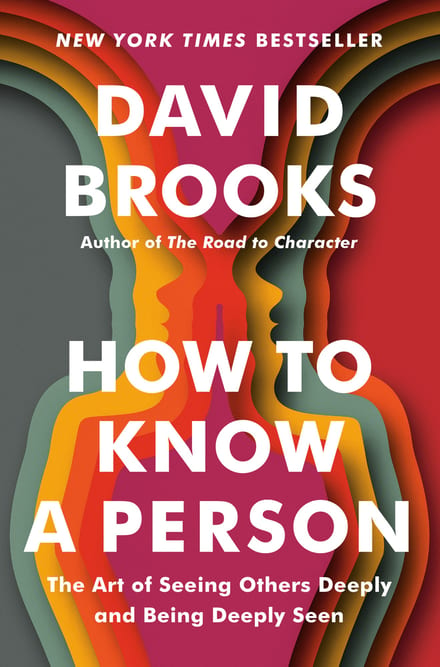
How to Know a Person
The Art of Seeing Others Deeply and Being Deeply Seen
The full book runs ~432 pages — roughly 8 hours of reading. You get the key ideas here in 7 minutes.
The key ideas
- Choose to be an Illuminator, not a Diminisher of people
- Assume everyone carries infinite dignity and complexity
- Build trust through unhurried presence before seeking intimacy
- Ask open questions that make speakers authors of experience
- Accompany suffering people; don't fix or reframe them
- Understand someone's story, life stage, and cultural lens
The summary
Every person is building their own version of reality, moment by moment, and that changes what it means to understand them. It’s not about collecting facts on someone’s background; it’s about asking how they perceive their situation—what it’s like to be them right now. Brooks calls the people who can do this Illuminators, and the people who can’t Diminishers. Diminishers make others feel small, usually because they’re trapped in their own heads: too self-centered, too anxious, too sure everyone sees the world as they do. They fall into the Lesser-Minds Problem—because you know all of your own thoughts but only a sliver of anyone else’s, you quietly assume you’re more complex than the people around you. Illuminators reverse that. The Bell Labs researcher Harry Nyquist made his colleagues measurably more productive not through brilliance but because he really listened to their challenges, got inside their heads, asked good questions, and drew out their best.
Underneath the skill is a stance. Brooks’s friend Jimmy can lift someone’s mood just by greeting them, because he treats the person before him as having “an immortal soul… of infinite value and dignity.” That echoes Tolstoy, who mocked our habit of filing everyone under one label: a man is more often kind than cruel, “but it could never be true to say of one man that he is kind or wise, and of another that he is wicked or stupid.” Iris Murdoch put it in a line: “Love is knowledge of the individual.”
Knowing someone takes unhurried presence
Real understanding doesn’t come from rushing at intimacy. Brooks describes an earlier stage he calls accompaniment—doing ordinary things side by side until trust builds. It runs on playfulness, which lowers people’s defenses, and above all on presence. When a professor’s husband died, her former students came to her class not to learn but simply to offer “a simple human connection between the one who suffers and one who would heal.” This patience makes sense once you accept that a person is not a fixed set of traits but an evolving point of view, shaped by their experiences and wounds. Brooks leans on constructionism, the finding from decades of brain research that we don’t passively absorb reality—each of us actively constructs a perception of it, with only subjective access to what’s really out there. As Milton wrote, “The mind is its own place, and in itself / Can make a Heaven of Hell, a Hell of Heaven.” To see someone, you have to grasp how they’re building their heaven or hell right now.
Conversation is a skill you can learn
Good conversation isn’t two people trading monologues; it’s a shared exploration whose moves can be practiced. Brooks treats attention like an on/off switch set to full, and rewards being a “loud listener”—the verbal affirmations Oprah Winfrey scatters through an interview to show she’s tracking. The best questions make the speaker the author of their experience rather than a witness to it: “How did you come to believe that?” opens a person up where a closed or evaluating question shuts them down. The biggest questions break routine altogether—“What crossroads are you at?” or “If you died tonight, what would you regret not doing?” When people disagree, he urges finding the values conflict underneath the practical one; when a conversation goes wrong, clarify your motive: I wasn’t trying to silence you, I was trying to include your point of view.
When someone is suffering, accompany—don’t fix
Brooks writes about his oldest friend, Pete, who suffered severe depression and eventually took his own life. Early on he offered advice and positive reframing, and only later understood the damage: “When you give a depressed person advice on how they can get better, there’s a good chance all you are doing is telling the person that you just don’t get it.” Depression builds a nightmarish alternate reality, so accompaniment there takes a leap of faith and a humility before the fact that none of it makes sense. Your job is to acknowledge their reality and give the comfort of being seen. This is where empathy becomes concrete, in three skills: mirroring, reading another’s emotion with enough granularity to name it precisely; mentalizing, working out why they feel it, so you see not “woman crying” but “woman who has suffered a professional setback and a public humiliation”; and caring, recognizing that they may need a completely different response than you would want in their place. Childhood environments program defenses that follow us into adulthood, and Brooks notes that the most empathetic people have usually suffered themselves and chosen to become more vulnerable rather than harder.
Story, stage, and cultural lens
Because we construct our identities as narratives, knowing someone means asking for their life story and listening to how they tell it—their inner voice, the idealized figure they measure themselves against, the plot they think they’re living. Good therapists act as “story editors,” helping people correct the self-blaming versions they’ve written. It helps to notice which life task someone is working on: the self-centered Imperial task of building competence, the Interpersonal task of fitting in, the achievement-driven Career Consolidation, and the Generative turn toward serving others. Culture is the final lens. Zora Neale Hurston drew her power from the folklore of her community while insisting on each character’s individuality, and Brooks warns that research done only on WEIRD subjects—Western, Educated, Industrialized, Rich, Democratic—can’t be stretched into claims about human nature, since our “normal” patterns are rare worldwide.
The bottom line
The modern epidemic of loneliness, depression, and political bitterness is, at root, a moral failure—we’ve lost the everyday social skills of making one another feel seen. As Brooks puts it, morality is mostly about the small, daily acts of building connection, and truly seeing another person as they see themselves is something you can learn to do. Read this if you want to become an Illuminator, the kind of person who leaves others feeling bigger instead of smaller.
Fact check
Popular books repeat findings that later research has complicated. Where How to Know a Person makes a testable claim, here's what the evidence actually shows.
We are living through a modern epidemic of loneliness.
Loneliness has risen, but gradually. A preregistered meta-analysis of 449 means from 345 studies and 124,855 young adults surveyed between 1976 and 2019 found scores climbing steadily across the period — a total shift of 0.56 standard deviations over 43 years — and its authors concluded the phrase "loneliness epidemic" is exaggerated even as they argued the trend deserves attention. Brooks's larger point about the stakes survives: a meta-analysis of the mortality literature put the increased likelihood of death at 26% for loneliness, 29% for social isolation and 32% for living alone.
- Buecker S, Mund M, Chwastek S, Sostmann M, Luhmann M. Is loneliness in emerging adults increasing over time? A preregistered cross-temporal meta-analysis and systematic review. Psychol Bull. 2021;147(8):787-805. PubMed
- Holt-Lunstad J, Smith TB, Baker M, Harris T, Stephenson D. Loneliness and social isolation as risk factors for mortality: a meta-analytic review. Perspect Psychol Sci. 2015;10(2):227-37. PubMed
Psychology built on WEIRD subjects — Western, Educated, Industrialized, Rich, Democratic — cannot be stretched into claims about human nature.
This restates the 2010 review that named the problem, and the review holds up. Surveying comparative data on visual perception, fairness, cooperation, spatial reasoning, categorisation, moral reasoning, self-concept and the heritability of IQ, the authors found substantial variation across populations, with Western subjects turning up as frequent outliers — among the least representative people available for generalising about the species. The paper's own conclusion is Brooks's: there are no a priori grounds for calling a behavioural finding universal on the strength of one unusual subpopulation.
- Henrich J, Heine SJ, Norenzayan A. The weirdest people in the world? Behav Brain Sci. 2010;33(2-3):61-83. PubMed
The most empathetic people have usually suffered themselves and chosen vulnerability over hardness.
The direction is supported. Across two studies, the severity of a person's past adversity predicted higher empathy, which in turn predicted a stable disposition toward compassion and concrete helping — charitable giving and assisting a stranger. Three later studies with 350 participants replicated the adversity-to-compassion link and identified guilt as the mechanism carrying it. The evidence is a small set of modest studies rather than a meta-analysis, and it describes an average tendency across people, not a rule about who ends up empathetic.
Frequently asked questions
What is How to Know a Person about?
Brooks argues that truly understanding someone means grasping how they perceive their situation — what it's like to be them right now — not collecting facts about their background. He splits people into Illuminators, who make others feel seen, and Diminishers, who make others feel small. The skill of becoming an Illuminator, he says, is one anyone can learn.
What are the key takeaways from How to Know a Person?
Knowing someone takes unhurried presence — what Brooks calls accompaniment — and treating every person as an evolving point of view rather than a fixed set of traits. Conversation is a learnable skill: be a 'loud listener,' ask questions that make people the author of their experience, and find the values conflict under a disagreement. When someone suffers, accompany rather than fix, using the empathy skills of mirroring, mentalizing, and caring. Ask for people's life story, and stay aware of cultural lenses.
Who should read How to Know a Person?
Read it if you want to become an Illuminator — the kind of person who leaves others feeling bigger instead of smaller. It suits anyone who wants to build deeper everyday connection.
Is How to Know a Person worth reading?
It does well at turning a vague ideal — 'really seeing' someone — into concrete moves, from specific question types to the three parts of empathy, illustrated with figures like Bell Labs' Harry Nyquist and Brooks's own friendships. Its most affecting material, including his friend Pete's depression and suicide, grounds the advice in hard experience. Readers wanting a quick technique manual may find its reflective, moral framing slower than expected.