Book summary
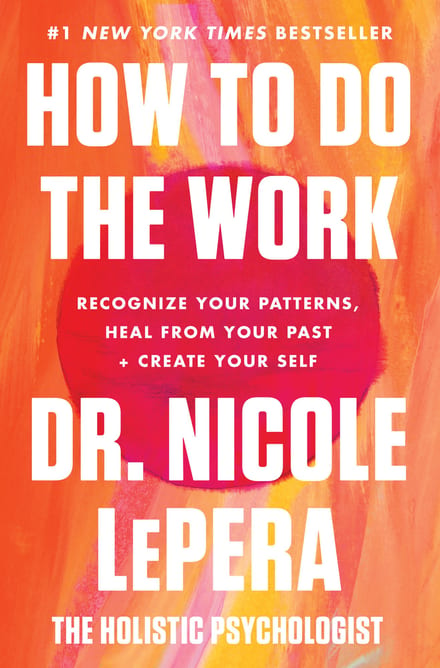
How to Do the Work
Recognize Your Patterns, Heal from Your Past, and Create Your Self
The full book runs ~288 pages — roughly 5 hours of reading. You get the key ideas here in 6 minutes.
The key ideas
- Trauma is anything that forced self-betrayal to earn love.
- Stress embeds in your body, not just your mind.
- Childhood inner-child archetypes secretly drive adult behavior.
- Observe your ego stories to rewire limiting beliefs.
- Reparent yourself by meeting unmet childhood needs now.
- Emotions physically last 90 seconds; rumination prolongs them.
The summary
Your body remembers what your mind would rather forget. The reason you keep picking unavailable partners, snapping over dirty dishes, or agreeing to things you don’t want isn’t weak willpower. It’s a nervous system running programs installed in childhood, before you could consent to them. This is why insight rarely fixes anything: understanding your patterns intellectually doesn’t reach the place where they actually live. Nicole LePera’s argument is that real change is physical and incremental. It comes from meeting the needs nobody met for you, through small choices repeated every single day.
Trauma is what you had to betray to survive
Most people reserve the word “trauma” for catastrophes, but LePera defines it as anything that overwhelmed your ability to cope. A parent who denied your reality, lived through you, ignored your boundaries, or couldn’t manage their own emotions can do it as surely as any disaster. Trauma, in her framing, is the point where you learned you had to betray who you were in order to be loved, and that betrayal severs you from your authentic self and teaches your nervous system that the world is unsafe. The damage doesn’t stay in your head. A body locked in fight, flight, or freeze embeds that stress in its tissues, showing up as chronic pain, fatigue, digestive trouble, and immune problems. You’re not broken; you’re responding exactly as you were trained to. And you’re not doomed either: the science of epigenetics shows genes respond to environment and choice, which means you can take part in your own healing rather than wait to be fixed.
Your inner child still runs the show
The proof that small choices work is people like Ally Bazely, who had multiple sclerosis and depression and started with one promise: a glass of water every morning. She added journaling, then a nutrition program, and her MS went into remission and she regained abilities she’d given up on. Nobody rescued her; she showed up for herself daily. Most of us, though, are still being run by an “inner child” carrying old wounds through one of a handful of survival roles—the caretaker who earns love by neglecting herself, the overachiever chasing worth through success, the underachiever staying small to dodge criticism, the yes-person who can’t refuse. Attachment theory explains where these come from. The bond you formed with your earliest caregiver became a template: secure attachment produces adults who can trust and recover from conflict, while anxious, avoidant, or disorganized attachment leaves you clingy, walled off, or without any coherent strategy at all.
You are the thinker, not the thought
Underneath the patterns sits the ego, a narrator that builds stories out of old pain to protect you—“I’m shy,” “I don’t matter,” “I’m unlovable.” These feel like facts but are limiting beliefs absorbed before you could question them. LePera describes flying into a rage over dirty dishes and realizing the dishes weren’t the point; they touched an old wound of being overlooked as a child. The shift that changes things is small but profound: you are the thinker of your thoughts, not the thoughts themselves. When you watch an ego story without collapsing into it, you make room for new wiring. This is where present-moment practices earn their place. Meditation and yoga physically restructure the brain, forging new neural pathways that loosen the grip of default patterns, and tools like affirmations and visualization help train those pathways toward safety instead of threat.
Reparent yourself, and hold your boundaries
Healing eventually requires two hard skills. The first is boundaries—physical, emotional, and around your time and energy—because without them you stay trapped in trauma bonds, those addictive relationship cycles where chaos feels like love simply because it’s familiar. Boundaries will provoke resistance, especially from people who benefited when you had none. The second skill is reparenting: becoming the attuned, loving parent you needed, swapping “you’re too sensitive” for “your feelings make sense,” and consciously giving yourself the security and validation you missed. For LePera that meant moving to California to put distance between herself and her family. “You have to love yourself in order to give yourself what you weren’t able to get from others.” None of this depends on age—emotional maturity is a skill, the capacity to sit with a hard feeling instead of lashing out or shutting down. It helps to know that the physical wave of an emotion lasts about ninety seconds; everything after that is rumination you’re adding yourself. The aim is interdependence, mutual support without losing yourself, rather than codependence, and a community of people who see the real you, not the role you built to survive.
The bottom line
Insight is not healing; daily choices are. You change by meeting your own unmet needs, holding boundaries, and gradually teaching a nervous system stuck in survival that it’s finally safe. Read this if you’ve long understood what’s wrong and been frustrated that understanding it never seemed to be enough.
Fact check
Popular books repeat findings that later research has complicated. Where How to Do the Work makes a testable claim, here's what the evidence actually shows.
The physical wave of an emotion lasts about ninety seconds, and everything after that is rumination you add yourself.
Studies that actually time emotion episodes find they run for minutes to hours, not ninety seconds, and duration scales with how important the triggering event was and how intense the feeling was at onset. The second half of the claim holds up better: mentally replaying the trigger reliably extends the episode, and reviews of worry and rumination show that perseverative thinking prolongs cardiovascular, endocrine and immune activation well past the event itself. So rumination really does stretch emotion out — there is just no fixed ninety-second physiological window it stretches from.
- Verduyn P, Delvaux E, Van Coillie H, Tuerlinckx F, Van Mechelen I. Predicting the duration of emotional experience: two experience sampling studies. Emotion. 2009;9(1):83-91. PubMed
- Brosschot JF, Gerin W, Thayer JF. The perseverative cognition hypothesis: a review of worry, prolonged stress-related physiological activation, and health. J Psychosom Res. 2006;60(2):113-24. PubMed
Meditation and yoga physically restructure the brain, forging new neural pathways that loosen old patterns.
A meta-analysis of 21 neuroimaging studies covering roughly 300 meditators found eight brain regions consistently different in practitioners, at a global effect size of about d = 0.46 — medium, not a rebuild. The same authors flagged strong publication bias and methodological limits, and most included studies compared long-term practitioners with non-meditators rather than showing that practice caused the difference. A later 15-author review of the field reached the same verdict: the imaging literature is underpowered and the construct itself inconsistently defined.
- Fox KC, Nijeboer S, Dixon ML, et al. Is meditation associated with altered brain structure? A systematic review and meta-analysis of morphometric neuroimaging in meditation practitioners. Neurosci Biobehav Rev. 2014;43:48-73. PubMed
- Van Dam NT, van Vugt MK, Vago DR, et al. Mind the Hype: A Critical Evaluation and Prescriptive Agenda for Research on Mindfulness and Meditation. Perspect Psychol Sci. 2018;13(1):36-61. PubMed
Unresolved childhood trauma embeds itself in the body's tissues and later surfaces as chronic pain, fatigue, digestive trouble and immune disease.
The association is real and in places large. Pooling 37 studies and 253,719 adults, people reporting four or more adverse childhood experiences had two-to-three-fold odds of cancer, heart disease and respiratory disease, and more than six-fold odds of problematic alcohol and drug use — though links to obesity, inactivity and diabetes were weak. A 15,357-person cohort found that two or more adverse experiences raised the risk of later hospitalisation for autoimmune disease by 70 to 100%. What the evidence does not establish is the stated mechanism: these are observational associations resting largely on retrospective self-report, not a demonstration that trauma is held in tissue.
- Hughes K, Bellis MA, Hardcastle KA, et al. The effect of multiple adverse childhood experiences on health: a systematic review and meta-analysis. Lancet Public Health. 2017;2(8):e356-e366. PubMed
- Dube SR, Fairweather D, Pearson WS, Felitti VJ, Anda RF, Croft JB. Cumulative childhood stress and autoimmune diseases in adults. Psychosom Med. 2009;71(2):243-50. PubMed
The bond you formed with your earliest caregiver becomes the template for how you relate as an adult.
Attachment security is moderately stable rather than fixed. A meta-analysis of 127 papers covering 21,072 attachments and intervals from half a month to 29 years found an overall stability of r = 0.39 — but no significant stability across gaps longer than 15 years, and weaker stability in at-risk samples. Early security does predict social functioning in childhood: across 80 samples it was associated with better peer competence at d = 0.39. The pattern is a durable tendency that later relationships and circumstances can revise, not a template set once in infancy.
- Pinquart M, Feussner C, Ahnert L. Meta-analytic evidence for stability in attachments from infancy to early adulthood. Attach Hum Dev. 2013;15(2):189-218. PubMed
- Groh AM, Fearon RP, Bakermans-Kranenburg MJ, van Ijzendoorn MH, Steele RD, Roisman GI. The significance of attachment security for children's social competence with peers: a meta-analytic study. Attach Hum Dev. 2014;16(2):103-36. PubMed
Frequently asked questions
What is How to Do the Work about?
It argues that the patterns you keep repeating — picking unavailable partners, over-agreeing, snapping over small things — come from a nervous system shaped in childhood, not weak willpower. Because those patterns live in the body rather than the intellect, insight alone won't fix them. Real change is physical and incremental, built from small choices you make for yourself every day.
What are the key takeaways from How to Do the Work?
Trauma is anything that overwhelmed your ability to cope and taught you to betray your authentic self to be loved. An inner child running survival roles — caretaker, overachiever, yes-person — plus your early attachment style still shapes adult relationships. You are the thinker of your thoughts, not the thoughts themselves, and present-moment practices like meditation and yoga rewire the brain. Healing then takes two hard skills: holding boundaries and reparenting, becoming the attuned parent you needed.
Who should read How to Do the Work?
Read it if you've long understood what's wrong with your patterns and been frustrated that understanding never seemed to be enough. It's for people ready to trade insight for daily practice.
Is How to Do the Work worth reading?
Its strength is reframing change as physical and repeatable — small daily acts like Ally Bazely's morning glass of water — rather than a single breakthrough, backed by ideas from epigenetics and attachment theory. It also gives concrete tools: boundaries, reparenting, watching an ego story without collapsing into it, and knowing an emotion's physical wave lasts about ninety seconds. If you want quick fixes or clinical detachment, its self-directed, do-the-work approach may feel demanding.