Book summary
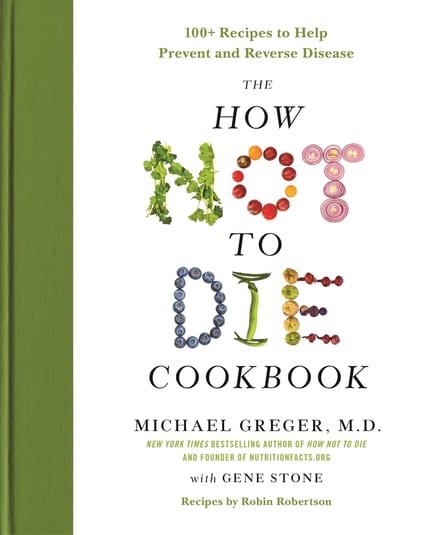
How Not to Die
Discover the Foods Scientifically Proven to Prevent and Reverse Disease
The full book runs ~576 pages — roughly 11 hours of reading. You get the key ideas here in 4 minutes.
The key ideas
- Trace: heart disease, diabetes, cancer back to the standard American diet
- Reverse advanced heart disease by switching to plant-based eating
- Eat the daily dozen: berries, greens, beans, whole grains, nuts, spices
- Distrust a medical system that manages symptoms with drugs, not prevention
- Choose whole fruit over juice, whole beans over processed forms
- Move daily and sit less; sitting six-plus hours raises death risk 20%
The summary
The chronic illnesses that kill most people begin on the plate. Heart disease, diabetes, and many cancers aren’t the inevitable price of getting older; they develop out of the typical American diet — heavy on meat, dairy, eggs, and processed food — and they often reverse when you shift toward whole plants. A poor diet is the leading cause of premature death, yet a medical system trained in pharmacology tends to manage the results with prescriptions instead of addressing the cause.
Food is the medicine
The evidence that diet drives disease is hard to wave away. Autopsy studies show that many people who lived past 100 died of disease rather than old age, looking healthy while their bodies failed from the inside. Populations that eat mostly plants have dramatically lower rates of the illnesses that plague modern America. The long-running China-Cornell-Oxford Project tracked rural Chinese communities and found an inverse relationship between plant-based eating and heart disease; in Guizhou province, where animal foods were rare, not a single man under 65 died of coronary disease.
The body heals itself under the right conditions. Within about fifteen years of quitting smoking, your lungs can be as healthy as a never-smoker’s, and the same logic applies to food. When researchers put patients with advanced heart disease on plant-based diets, hoping merely to slow the decline, the disease reversed — arterial plaque actually dissolved. The effect is measurable elsewhere too: vegetarians of twelve years who start eating meat just once a week lose 3.6 years of life expectancy.
Why your doctor may not mention it
If this is so well documented, why is it so rarely prescribed? Only about a quarter of U.S. medical schools offer a nutrition course, a share that has declined over the decades, and efforts to add nutritional training for physicians have met resistance. Doctors reach for what they know, which is drugs. The United States accounts for a third of the world’s prescription spending, and roughly 70% of Americans take prescription medication regularly. The system is built to manage disease, not prevent it.
What to put on your plate
The prescription here is whole plant food, in variety. Fruit, especially berries, boosts immunity and protects the liver and brain; berries trail only herbs and spices in antioxidant content, and a serving of blackberries carries more than ten times the antioxidants of a serving of apples. Eat the whole fruit rather than juice, which strips the fiber and concentrates sugar. Vegetables matter most in their whole form: dark leafy greens pack the most nutrients per calorie of any food, and cruciferous vegetables like broccoli and cabbage contain sulforaphane, a powerful anti-inflammatory and cancer-fighting compound best preserved by eating them raw. In one ten-day experiment, smokers who ate far more broccoli than average showed 41% fewer DNA mutations, and daily kale juice over three months meaningfully lowered bad cholesterol while raising the good kind.
A few more staples round it out:
- Beans and legumes with every meal, for animal-free protein, fiber, and lower cholesterol; favor whole beans and tempeh over heavily processed forms.
- Whole grains, which cut the risk of heart disease, diabetes, obesity, and stroke — but “multi-grain” and “stone-ground” labels don’t mean whole grain.
- Nuts and seeds, whose scarcity in the diet is the third leading dietary risk for death and disability; a serving of Brazil nuts can lower cholesterol more effectively than statins, and despite being calorie-dense, nuts don’t cause weight gain.
- Herbs and spices, the most antioxidant-rich foods of all. Pair turmeric with black pepper to boost absorption; Indian women, who eat both regularly in curry powder, have roughly 10 times lower rates of colorectal cancer and 17 times lower rates of lung cancer than American women.
For drinks, make water your default. Coffee in moderation benefits the liver and brain, and hibiscus tea lowers blood pressure, but skip soda, beer, and milk — milk is linked to prostate cancer.
Move, and don’t just sit
Diet isn’t the whole story. Being sedentary for six hours or more raises your risk of death by 20%, and America’s sitting habit has helped leave two-thirds of adults overweight and tripled childhood obesity in thirty years. Aim for about 90 minutes of moderate activity like brisk walking or swimming, or 40 minutes of something intense like weight training or tennis. Sleep and stress management belong on the list too.
The bottom line
The standard American diet is the leading cause of premature death, and the medical system mostly treats the symptoms rather than the cause. Whole plant foods — greens, beans, berries, whole grains, nuts, and spices — can prevent and even reverse chronic disease. Read this if you want to live longer and healthier, or if you doubt that food can work as medicine.
Fact check
Popular books repeat findings that later research has complicated. Where How Not to Die makes a testable claim, here's what the evidence actually shows.
Sitting six or more hours a day raises your risk of death by about 20%, regardless of how much you exercise.
The size of the association is roughly right: in an American Cancer Society cohort of 123,216 adults followed 14 years, sitting six or more hours a day versus under three carried a 34% higher mortality risk in women and 17% in men. The "regardless of activity" part is where the literature splits. A harmonised meta-analysis pooling 1,005,791 people found no significant excess risk among those who sat more than eight hours a day but also got over 35.5 MET-hours of activity per week (HR 1.04, 95% CI 0.99-1.10), while people who sat the least but were in the lowest activity quartile still had a 27% higher risk.
- Patel AV, Bernstein L, Deka A, et al. Leisure time spent sitting in relation to total mortality in a prospective cohort of US adults. Am J Epidemiol. 2010;172(4):419-29. PubMed
- Ekelund U, Steene-Johannessen J, Brown WJ, et al. Does physical activity attenuate, or even eliminate, the detrimental association of sitting time with mortality? A harmonised meta-analysis of data from more than 1 million men and women. Lancet. 2016;388(10051):1302-10. PubMed
A twelve-year vegetarian who starts eating meat once a week gives up 3.6 years of life expectancy.
The 3.6-year figure is real but describes a different comparison. A review of six prospective cohorts reported that in two of them, sustaining a very low meat intake for two decades or more was associated with a 3.6-year longer life expectancy (95% CI 1.4-5.8) — long-term vegetarians measured against shorter-term ones, not a penalty triggered by resuming meat at twelve years. The same authors cautioned that the survival advantage varied widely across studies because of healthy-volunteer effects, inconsistent definitions of "vegetarian," and differing adjustment for confounders, and that the protection appeared to fade after the ninth decade.
- Singh PN, Sabaté J, Fraser GE. Does low meat consumption increase life expectancy in humans? Am J Clin Nutr. 2003;78(3 Suppl):526S-532S. PubMed
A serving of Brazil nuts lowers cholesterol more effectively than statins do.
The study behind this never involved statins. Ten healthy volunteers ate 0, 5, 20 or 50 g of Brazil nuts in a crossover design; LDL was significantly lower nine hours after the 20 g and 50 g servings — an acute post-meal shift in ten people, not a sustained reduction. Across 61 controlled trials in 2,582 adults, a daily one-ounce serving of tree nuts lowered LDL by 4.8 mg/dL (95% CI -5.5 to -4.2), with no significant difference by nut type, so Brazil nuts are not special. Statin trials routinely move LDL by around 1 mmol/L (roughly 39 mg/dL), about eight times as much.
- Colpo E, Vilanova CD, Brenner Reetz LG, et al. A single consumption of high amounts of the Brazil nuts improves lipid profile of healthy volunteers. J Nutr Metab. 2013;2013:653185. PubMed
- Del Gobbo LC, Falk MC, Feldman R, Lewis K, Mozaffarian D. Effects of tree nuts on blood lipids, apolipoproteins, and blood pressure: systematic review, meta-analysis, and dose-response of 61 controlled intervention trials. Am J Clin Nutr. 2015;102(6):1347-56. PubMed
- Cholesterol Treatment Trialists' (CTT) Collaboration, Baigent C, Blackwell L, et al. Efficacy and safety of more intensive lowering of LDL cholesterol: a meta-analysis of data from 170,000 participants in 26 randomised trials. Lancet. 2010;376(9753):1670-81. PubMed
Advanced coronary heart disease reverses on a plant-based diet, with arterial plaque actually dissolving.
Regression is real but modest, and the trials were small. The Lifestyle Heart Trial randomised 48 patients; after one year average diameter stenosis fell from 40.0% to 37.8% in the intervention group while controls progressed from 42.7% to 46.1%, and at five years the intervention group improved 3.1 percentage points against 11.8 points of worsening in controls, with cardiac events about 2.5 times more frequent among controls. Esselstyn's follow-up of 198 patients found one recurrent event among the 177 who stuck with the diet, but it had no control group. Both interventions bundled exercise, stress management, group support and smoking cessation with the food changes, so the diet's own contribution was never isolated.
- Ornish D, Brown SE, Scherwitz LW, et al. Can lifestyle changes reverse coronary heart disease? The Lifestyle Heart Trial. Lancet. 1990;336(8708):129-33. PubMed
- Ornish D, Scherwitz LW, Billings JH, et al. Intensive lifestyle changes for reversal of coronary heart disease. JAMA. 1998;280(23):2001-7. PubMed
- Esselstyn CB Jr, Gendy G, Doyle J, Golubic M, Roizen MF. A way to reverse CAD? J Fam Pract. 2014;63(7):356-364b. PubMed
Frequently asked questions
What is How Not to Die about?
Michael Greger argues that the chronic illnesses killing most people, heart disease, diabetes, and many cancers, begin on the plate, growing out of the typical American diet and often reversing when you shift toward whole plants. A companion argument is that a medical system trained in pharmacology tends to manage these results with prescriptions instead of addressing the dietary cause.
What are the key takeaways from How Not to Die?
Food works as medicine: populations eating mostly plants have far lower disease rates, and studies show plant-based diets can actually reverse advanced heart disease, dissolving arterial plaque. The prescription is whole plant food in variety, dark leafy greens (the most nutrients per calorie), berries and other fruit eaten whole, cruciferous vegetables for sulforaphane, beans with every meal, whole grains, nuts and seeds, and antioxidant-rich herbs and spices like turmeric paired with black pepper. It also stresses moving your body and not sitting for six-plus hours, since being sedentary raises death risk by 20%.
Who should read How Not to Die?
Read it if you want to live longer and healthier, or if you doubt that food can work as medicine. It's for anyone ready to treat diet as prevention rather than waiting for prescriptions to manage disease.
Is How Not to Die worth reading?
It's densely packed with studies and gives specific, actionable guidance on exactly what to eat, which makes the case for whole-food, plant-based eating hard to dismiss. Its firmly plant-forward stance is one-sided by design, so readers wanting a balanced survey of every dietary view should look elsewhere, but if you want evidence that diet can prevent and even reverse chronic disease, it delivers.