Book summary
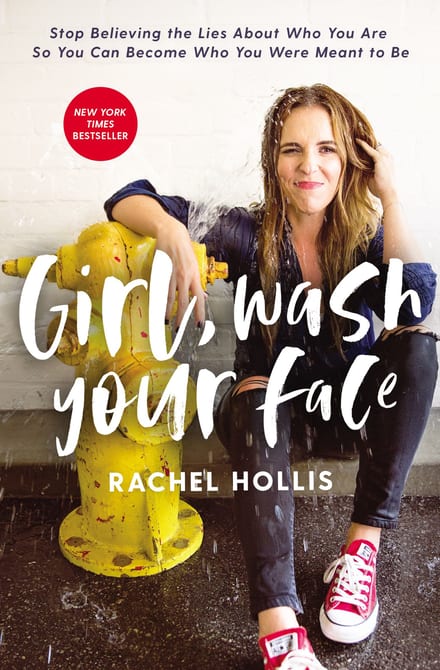
Girl, Wash Your Face: Stop Believing the Lies About Who You Are So You Can Become Who You Were Meant to Be
The full book runs ~240 pages — roughly 4 hours of reading. You get the key ideas here in 3 minutes.
The key ideas
- Build self-respect by keeping small promises to yourself
- Treat rejection as information about mismatch, not a verdict on worth
- Rewire body-shame lies to reclaim your sex life
- Accept chaos as weather, not proof of personal failure
- Compare only to yesterday's self, then prepare instead of relying on willpower
- Make goals specific and tangible so your brain pursues them
The summary
The things you believe hold you back — that you’re not good enough, won’t land the dream job, can’t have a great marriage or a good sex life, aren’t a good mom — are lies you’ve been telling yourself. They feel like verdicts, but they’re mostly inherited stories, and everyone has the power to take control of their life and reach their goals once they stop treating the stories as fact.
Self-respect is built from promises you keep
Picture a friend who swears she’ll go running with you every evening and then bails at the last minute because something good is on TV. You’d lose patience with her fast. Now notice how often you do exactly that to yourself. Every promise you break to yourself teaches your mind that you can’t be trusted, and self-respect quietly erodes. Keeping those promises does the opposite: it builds self-respect and trains you to hit bigger targets later. The trick is to make the promises realistic and start small, honoring little commitments before you take on the large ones. Each one you keep becomes proof you can keep the next.
Rejection is information, not a verdict
People will doubt you — parents, friends, colleagues — but the only person who has to believe in you is you. When no publisher would take Hollis’s first novel, Party Girl, without changes she couldn’t accept, she self-published it herself, and it became a success. The “no” wasn’t a judgment on her worth; it was a mismatch she refused to let define her. Success also takes patience. Julia Child spent a decade writing Mastering the Art of French Cooking, and James Cameron took fifteen years to make Avatar. Most people quit before the waiting is over, mistaking slow progress for failure.
Your body and your sex life reflect the lies too
Self-image issues quietly wreck intimacy. Many women spend sex worrying about their supposed flaws, when the truth is their partner isn’t cataloging imperfections — he’s simply thrilled to be there. Hollis fought this with positive self-talk, repeating that she was sexy until she believed it, and she pushed back on the assumption that women shouldn’t expect to orgasm. Make climaxing the goal, she argues, and a loving partner will happily rise to it. One experiment she suggests is having sex every day for a month, which invites experimentation and turns up new things you enjoy; she was surprised to find her husband wanted it even more afterward.
The same clear-eyed honesty applies to health. Your weight doesn’t define your identity, but if it’s genuinely unhealthy, you should work to change it, and the mechanics are simple: burn more calories than you consume. Two practical moves help more than willpower. Edit your social media and unfollow anyone selling unrealistic beauty standards, and prepare rigorously — cook your healthy meals for the week in one sitting, lay out your workout clothes in advance. And stop measuring yourself against other people, a habit that guarantees misery. The only useful comparison is to who you were yesterday.
Chaos isn’t failure
Life breaks down at the worst moments — the dryer dies on laundry day, the heat quits on a freezing night. These aren’t signs you’ve failed; they’re the inevitable fallout of circumstances beyond your control. The mistake is treating chaos as a referendum on your competence and then despairing. Instead, embrace it. Laugh at the absurdity, and accept help, no matter how small the offer. Fighting the current only wears you out.
Widen your world and make the goal tangible
A rich life needs people who aren’t like you. Hollis grew up sheltered in a small, conservative, religious town, and a childhood trip to Disneyland stunned her — she stared at the variety of people as if she were at a zoo. Now one of her closest friends, an African-Mexican American gay woman, has taught her to recognize her own unconscious biases and learn from other people’s stories. If life were a book, it would be unbearably dull with every character the same. Building a supportive, diverse community is both the right thing and the way you grow.
Then give your ambition something concrete to chase. Vague goals don’t move anyone; the more tangible and detailed the target, the harder your mind pulls toward it, so try to feel what reaching it will be like. Hollis promised herself a Louis Vuitton purse the day she billed a client $10,000 in consulting fees. The purse was specific, visible, and easy to picture, and that clarity kept her focused and driven.
The bottom line
Self-respect comes from keeping small promises to yourself, refusing to accept other people’s doubt, and recognizing that most of your limits are inherited stories rather than truths. Read this if you’re stuck believing you’re not capable of more.
Fact check
Popular books repeat findings that later research has complicated. Where Girl, Wash Your Face makes a testable claim, here's what the evidence actually shows.
Repeating a positive statement about yourself until you believe it improves how you see yourself.
In two experiments, participants with low self-esteem who repeated "I'm a lovable person" ended up in a worse mood than those who did not repeat it, while participants with high self-esteem felt better but only slightly. A survey in the same paper confirmed most people use positive self-statements and believe they work. So the technique helps people who already feel reasonably good about themselves and tends to backfire for the readers the advice is aimed at.
- Wood JV, Perunovic WQ, Lee JW. Positive self-statements: power for some, peril for others. Psychol Sci. 2009;20(7):860-6. PubMed
Losing weight is simple mechanics: burn more calories than you consume.
Energy balance holds as accounting, but intake and expenditure move together rather than independently, so the arithmetic is not a lever you can hold steady. Six years after "The Biggest Loser", 14 contestants had regained 41 of the 58 kg they lost, and their resting metabolic rate sat 704 kcal/day below baseline — about 499 kcal/day lower than their body composition and age predicted. The direction of the advice is right; the implied simplicity is not.
- Fothergill E, Guo J, Howard L, et al. Persistent metabolic adaptation 6 years after "The Biggest Loser" competition. Obesity (Silver Spring). 2016;24(8):1612-9. PubMed
- Hall KD, Heymsfield SB, Kemnitz JW, Klein S, Schoeller DA, Speakman JR. Energy balance and its components: implications for body weight regulation. Am J Clin Nutr. 2012;95(4):989-94. PubMed
Making a goal specific and tangible, and vividly picturing how reaching it will feel, pulls you toward it.
The specificity half is one of the better-replicated findings in work psychology: 35 years of goal-setting research shows specific, difficult goals produce higher performance than vague "do your best" ones. The vivid-picturing half runs the other way. Across four studies — job seekers, students with a crush, undergraduates facing an exam, and hip-replacement patients — positive expectations that a desired future was likely predicted more effort and better outcomes, while positively experiencing mental images of that future predicted less effort and worse outcomes, measured up to two years later.
- Locke EA, Latham GP. Building a practically useful theory of goal setting and task motivation. A 35-year odyssey. Am Psychol. 2002;57(9):705-17. PubMed
- Oettingen G, Mayer D. The motivating function of thinking about the future: expectations versus fantasies. J Pers Soc Psychol. 2002;83(5):1198-212. PubMed
Frequently asked questions
What is Girl, Wash Your Face about?
The limiting things you believe about yourself, that you're not good enough or can't have a great marriage, feel like verdicts but are mostly inherited stories. Rachel Hollis's claim is that everyone has the power to take control of their life once they stop treating those stories as fact.
What are the key takeaways from Girl, Wash Your Face?
Self-respect is built from small promises you keep to yourself, because every broken one teaches your mind you can't be trusted. Rejection is information, not a verdict, as when Hollis self-published Party Girl after publishers passed, and success takes patience. Your body and sex life reflect the same lies, so edit your social feed and stop comparing yourself to anyone but who you were yesterday. Chaos isn't failure, a diverse community helps you grow, and vague goals don't move you, so make the target tangible enough to picture.
Who should read Girl, Wash Your Face?
Read it if you're stuck believing you're not capable of more.
Is Girl, Wash Your Face worth reading?
It's frank, personal, and encouraging, with specific stories that make the advice stick, like the promise of a Louis Vuitton purse tied to a concrete goal. The tone is casual and the lessons are familiar self-help staples rather than new research, so readers wanting depth or nuance may find it thin, but as a motivating pep talk it delivers.