Book summary
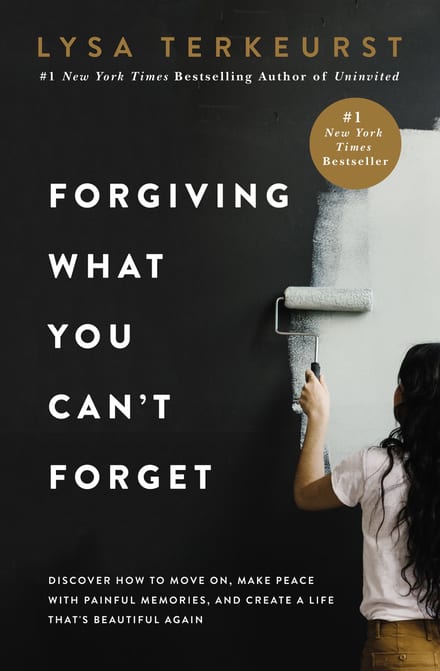
Forgiving What You Can't Forget
Discover How to Move On, Make Peace with Painful Memories, and Create a Life That's Beautiful Again
The full book runs ~256 pages — roughly 5 hours of reading. You get the key ideas here in 3 minutes.
The key ideas
- Choose forgiveness for yourself, without their apology or awareness
- Separate redemption from reconciliation—freedom needn't restore the relationship
- Heal now; your recovery can't wait on your offender's remorse
- Examine childhood scripts that still drive today's triggers
- Set boundaries to forgive without enabling or becoming a doormat
- Grieve the hidden hurt beneath bitterness; forgive as daily bread
The summary
When you refuse to forgive someone, you feel like you’re holding them accountable. You’re not. You’re holding yourself hostage. The cynicism, bitterness, and resentment that grow around an unhealed wound pose as armor, but all they really do is isolate you and keep you chained to the person who hurt you. Lysa TerKeurst’s central claim is that forgiveness was never about them. It doesn’t require their apology, their remorse, or even their awareness. It’s a choice you make for your own freedom — and you remake it daily until the injury stops running your life.
Redemption isn’t reconciliation
The most damaging myth about forgiveness is that it means letting the person back in. It doesn’t. Redemption and reconciliation are two different things. You can forgive someone completely and still keep them out of your life. Redemption means you surrender the right to demand payment for what they did — you stop collecting evidence, stop rehearsing the case, stop clutching proof of how you were wronged. As TerKeurst puts it, “the proof doesn’t serve you; building a case won’t heal you.” Holding onto the hurt only steals what could still be beautiful ahead of you.
People resist all this for understandable reasons. They fear the offense will happen again, that their pain won’t be acknowledged, or that forgiving somehow declares the harm didn’t matter. Those fears are real, but clinging to them keeps you frozen — either hyperspiritualizing the wound by insisting you’re fine, or denying it outright. Both leave it to fester.
Your healing can’t depend on their apology
At the pool of Bethesda, a man had waited years for someone to help him into the healing water. Jesus healed him anyway, without waiting for the crowd to cooperate or the situation to become fair. TerKeurst reads your own healing the same way. It cannot hinge on your offender’s remorse or on things finally evening out. The person who hurt you does not get to decide whether you recover. Your ability to move forward rests only on your willingness to forgive, never on their willingness to ask.
That’s hard because forgiveness is both a decision and a process. You decide once, then manage the emotions and triggers that keep resurfacing long after. When your feelings refuse to line up with your choice — and they will — that gap is where faith carries the weight. “Whatever my feelings don’t yet allow for,” she writes, “the blood of Jesus will surely cover.”
Stop building the case, and rewrite the old scripts
The events of your childhood don’t just tell a story; they teach you the story you tell yourself. The beliefs formed back then — about trust, safety, whether people stay — quietly drive how you react now. If you were betrayed or abandoned young, those patterns resurface in adult relationships in ways you may not recognize, which is why certain triggers hit far harder than the moment seems to warrant.
Healing means going back to examine those scripts and connecting old wounds to present behavior. Like a canary sent down a mine to detect poison gas, you have to learn to sniff out the distorted thoughts that make you take everything personally and read the present through the lens of past pain. TerKeurst offers a simple three-step move: collecting (acknowledge the pain), connecting (accept that the past can’t be changed), and correcting (choose a healthier perspective). What you look for is what you’ll see, and what you see becomes your reality.
Boundaries protect you; bitterness hides grief
Forgiving someone doesn’t mean handing them another chance to hurt you. Because you can’t control another person, you need boundaries to guard your own stability. And boundaries aren’t cruelty — they’re compassion pointed in a sustainable direction. When you work harder on someone’s problems than they do, or keep shielding them from consequences, you’re enabling dysfunction and quietly becoming a casualty of their choices.
Underneath the hardness, bitterness is usually grief that was never processed. “Bitterness doesn’t have a core of hate but rather a core of hurt,” she writes; it just wears the disguises of other, easier emotions. The way through is to let yourself actually grieve, again and again as the loss resurfaces, and to meet it with humility — because “humanity without humility makes true forgiveness impossible.” That’s also why forgiveness sits in the Lord’s Prayer, right beside daily bread: it’s not a one-time event but a daily practice. The best time to forgive is before you’re ever offended. The next best time is now.
The bottom line
Withholding forgiveness only punishes you, keeping you tethered to your wound while the person who caused it walks free in your head. Forgiveness is the daily decision to cancel the debt, trust God with the justice, and reclaim your own life. Read this if you’re stuck in bitterness and ready to stop letting the past steal your future.
Fact check
Popular books repeat findings that later research has complicated. Where Forgiving What You Can't Forget makes a testable claim, here's what the evidence actually shows.
Choosing to forgive improves the forgiver's own mental health, and it works without the offender's apology, remorse, or even awareness.
Forgiveness interventions work on the injured party alone, and they help. A meta-analysis of 54 studies found people in forgiveness-focused therapy became more forgiving than untreated controls (d = 0.56, 53 comparisons, 2,323 participants) and more forgiving than people given an alternative treatment (d = 0.45), with larger gains in depression, anxiety and hope than no-treatment conditions. A separate meta-analysis restricted to randomized trials found reductions in depression (SMD -0.37), anger and hostility (SMD -0.49) and stress and distress (SMD -0.66). Individual formats outperformed group ones, and longer interventions did better than brief ones.
- Wade NG, Hoyt WT, Kidwell JE, Worthington EL. Efficacy of psychotherapeutic interventions to promote forgiveness: a meta-analysis. J Consult Clin Psychol. 2014;82(1):154-70. PubMed
- Akhtar S, Barlow J. Forgiveness therapy for the promotion of mental well-being: a systematic review and meta-analysis. Trauma Violence Abuse. 2018;19(1):107-122. PubMed
Holding on to bitterness and refusing to forgive measurably damages your physical health.
The link exists but is small and correlational. Pooling 128 studies and 58,531 participants, forgiveness of others correlated with physical health at r = 0.14 (95% CI 0.11 to 0.17) — roughly 2% of the variance — and the authors stated plainly that the results cannot establish cause, calling for intervention studies to settle the direction. A second meta-analysis of 103 samples and 26,043 participants across 17 countries found forgiveness tied more strongly to psychological health than to physical health, though the associations with heart rate and blood pressure were robust. The mental-health case for forgiving is far better evidenced than the bodily one.
- Lee YR, Enright RD. A meta-analysis of the association between forgiveness of others and physical health. Psychol Health. 2019;34(5):626-643. PubMed
- Rasmussen KR, Stackhouse M, Boon SD, Comstock K, Ross R. Meta-analytic connections between forgiveness and health: the moderating effects of forgiveness-related distinctions. Psychol Health. 2019;34(5):515-534. PubMed
Frequently asked questions
What is Forgiving What You Can't Forget about?
Refusing to forgive feels like holding the other person accountable, but it only holds you hostage. Lysa TerKeurst's central claim is that forgiveness was never about them, doesn't require their apology or even their awareness, and is a choice you make for your own freedom, remade daily until the injury stops running your life.
What are the key takeaways from Forgiving What You Can't Forget?
Redemption isn't reconciliation: you can forgive someone completely and still keep them out of your life. Your healing can't hinge on their remorse or on things evening out. Stop building the case against them, and rewrite the childhood scripts that make certain triggers hit harder than the moment warrants, using a three-step move of collecting, connecting, and correcting. Boundaries are compassion, not cruelty, and bitterness is usually unprocessed grief with "a core of hurt" rather than hate, so forgiveness becomes a daily practice.
Who should read Forgiving What You Can't Forget?
Read it if you're stuck in bitterness and ready to stop letting the past steal your future.
Is Forgiving What You Can't Forget worth reading?
For readers open to its Christian framing, it's a warm, honest guide that cleanly separates forgiveness from reconciliation and offers usable steps. The heavy scriptural grounding, from the pool of Bethesda to the Lord's Prayer, will resonate less with secular readers, so how much you take from it depends on that fit.