Book summary
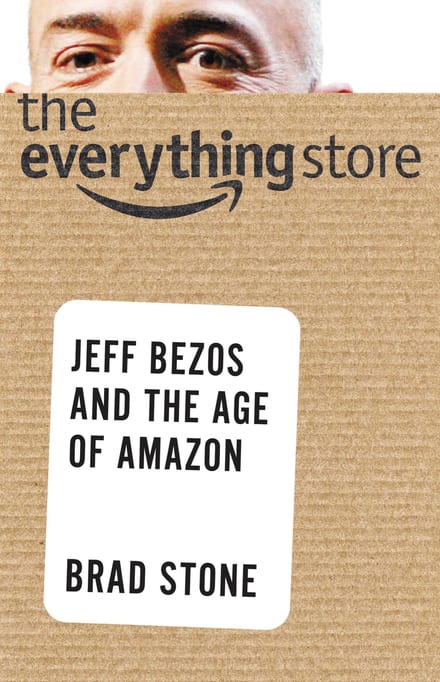
The Everything Store: Jeff Bezos and the Age of Amazon
The full book runs ~416 pages — roughly 8 hours of reading. You get the key ideas here in 3 minutes.
The key ideas
- Treat customer satisfaction as the only immovable constraint
- Sacrifice short-term profit to build unmatched long-term scale
- Reward experiments, tolerate failure, invent rather than predict
- Slash overhead ruthlessly, pouring savings into logistics and tech
- Replace bureaucracy with small teams and six-page memos
- Expect a brutal human cost behind the customer love
The summary
Amazon runs on a single fixed point: the customer experience is non-negotiable, and everything else bends around it. Margins, quarterly earnings, employee comfort, workplace perks, the patience of investors, all of it is treated as adjustable. What never moves is the question of whether a decision makes customers better off years from now. Jeff Bezos left a lucrative job at the hedge fund D.E. Shaw in 1994, drove west with his then-wife MacKenzie, and started an online bookseller out of a Seattle garage on his savings and family loans. One of the domain names he considered was Relentless.com, and it still redirects to Amazon today. It’s the right word for what followed.
Customer obsession as the operating system
Bezos didn’t just say customers come first. He wired it into how the company behaves. Complaints would land in an employee’s inbox forwarded straight from Bezos with a single character attached: “?” That question mark meant drop everything and explain. Amazon added customer reviews and listings for used goods over the loud objections of sellers, because buyers wanted them. It studied every click to sharpen its recommendations and rebuilt its distribution to shave time off delivery, culminating in Prime’s two-day shipping in 2004, a promise expensive to keep and hard for shoppers to give up once they had it. “Don’t be worried about our competitors,” Bezos told his team, “because they’re never going to send us any money anyway. Let’s be worried about our customers and stay heads-down focused.” The goal of becoming “Earth’s most customer-centric company” wasn’t a slogan; it was the filter every decision passed through.
Betting on the decade, not the quarter
Most companies manage to the next earnings report. Bezos managed to the next ten years, and he was willing to lose money in the meantime. Amazon went public in 1997 and spent years pursuing a “Get Big Fast” strategy, expanding into new categories and burning investor cash to build a scale no rival could match. When the dot-com bubble burst in 2000, the company survived largely by raising money overseas through convertible bonds, and it didn’t turn its first profitable quarter until 2002. Bezos wasn’t rattled, because he was buying infrastructure, not chasing income.
That patience paired with a genuine appetite for risk. Amazon handed out basketball shoes to employees whose experiments flopped, rewarding the attempt itself. “Some of these investments will pay off, others will not, and we will have learned another valuable lesson in either case.” The biggest of those bets was Amazon Web Services in 2005, a pivot into cloud computing that reinvented Amazon as a technology company and now runs the infrastructure of startups, corporations, and governments alike. Two years later the Kindle did to books something like what the iPod did to music. As the computer scientist Alan Kay put it, “It’s easier to invent the future than to predict it.” Bezos took that literally, going so far as to finance the Clock of the Long Now, an underground clock in Texas engineered to tick for 10,000 years with almost no maintenance, a monument to thinking past your own lifetime.
Small teams, hard numbers, and no frills
Bezos distrusted big groups and middle-management bloat, so he pushed authority down into small, fast teams. The “two pizza rule” captured the ceiling: if a meeting can’t be fed by two large pizzas, it’s too big. He also banished slide decks. Instead, employees write six-page memos, and everyone in the room, Bezos included, reads them in silence for up to half an hour before anyone speaks, so ideas stand on their own before persuasion or charisma enters. Arguments have to be backed by real data and key metrics, not intuition. The same austerity runs through the whole culture, where employees pay for their own parking and travel and expect no perks, with the savings poured back into logistics and technology.
The cost hidden behind the convenience
That relentlessness has a darker side, and the book doesn’t look away from it. The frugality that keeps prices low also produces harsh conditions in the fulfillment centers, where poorly paid workers walk extreme distances in near silence under constant threat of termination. Amazon repeatedly hires and discards tens of thousands of temporary, low-wage workers from economically depressed areas to cover seasonal demand, and it moved aggressively to quash attempts to unionize. The contradiction is stark: obsess over the person placing the order, squeeze nearly everyone involved in filling it. Facing public criticism, Bezos said he wanted Amazon to be more loved than feared, though the people packing the boxes were not the ones feeling the love.
The bottom line
Amazon’s rise comes down to two commitments Bezos refused to compromise: the customer matters more than anything else, and the long term matters more than this quarter. That clarity let a garage bookstore outlast the dot-com crash, undercut giant retailers, and grow into cloud computing and e-readers, because he genuinely liked to invent and was willing to wait. Read this if you want to understand how the everything store was built, and what it demanded from everyone who wasn’t a customer.
Frequently asked questions
What is The Everything Store about?
It's the story of how Jeff Bezos built Amazon on two commitments he refused to compromise: the customer experience comes before everything else, and the long term matters more than the next quarter. That clarity carried a Seattle garage bookseller through the dot-com crash and into cloud computing and e-readers.
What are the key takeaways from The Everything Store?
Customer obsession runs as the operating system: complaints forwarded with a single "?", reviews added over sellers' objections, and Prime's two-day shipping. Bezos managed to the decade, not the quarter, pursuing a "Get Big Fast" strategy, turning a first profit only in 2002, and betting on AWS in 2005. He favored small, fast teams (the "two pizza rule"), banned slide decks for six-page memos read in silence, and demanded decisions backed by data. The book also shows the cost: harsh fulfillment-center conditions and disposable low-wage labor.
Who should read The Everything Store?
Read it if you want to understand how the everything store was built, and what it demanded from everyone who wasn't a customer.
Is The Everything Store worth reading?
It's a clear, even-handed account that credits Bezos's inventiveness and patience while refusing to look away from the human cost behind the convenience. If you want a step-by-step management manual it reads more as narrative than checklist, but the principles and the contradictions both come through.