Book summary
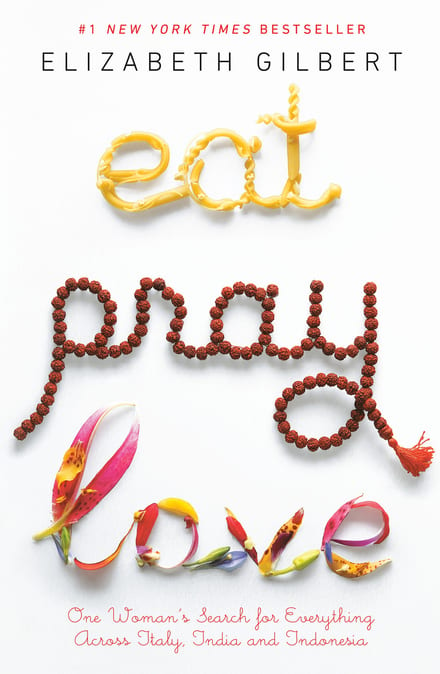
Eat, Pray, Love: One Woman's Search for Everything Across Italy, India and Indonesia
One Woman's Search for Everything Across Italy, India and Indonesia
The full book runs ~364 pages — roughly 7 hours of reading. You get the key ideas here in 5 minutes.
The key ideas
- First prayer, 3 a.m. bathroom floor: the answer was go back to bed.
- Four months in Rome, one museum visited, twenty-three pounds gained, no apology offered.
- At the ashram she jumped a balcony rather than skip the 182-verse chant.
- Richard from Texas: a soul mate is a mirror, not a perfect fit.
- Ketut's whole meditation: sit still and smile, even in your liver.
- An email raised $18,000 for Wayan's house; Wayan promptly angled for more.
The summary
Three in the morning, a cold November, the upstairs bathroom of a big house in the New York suburbs. Elizabeth Gilbert is thirty-one, six years married, and sobbing on the tiles for the forty-seventh night running, because one sentence keeps forcing itself up: I don’t want to be married anymore. She has never prayed before. She starts anyway — “Hello, God. How are you? I’m Liz. It’s nice to meet you” — and what comes back, in her own voice but calmer than she’s ever heard it, is: Go back to bed, Liz.
She left seven months later, and the aftermath was worse than the marriage: a divorce her husband fought for nearly two years, a rebound she describes not as falling in love but as diving “out of my marriage and into David’s arms,” thirty pounds lost, a night talking herself out of a kitchen knife, then a rotation of Xanax, Zoloft, Wellbutrin and Busperin. What follows is a year split four months apiece between Italy, India and Indonesia, in 108 chapters strung like a japa mala. Not self-improvement. Triage.
Pleasure had to be studied like grammar
Rome had one assignment: find out what she enjoys. In four months she visits exactly one museum — the National Museum of Pasta. Her Puritan reflex keeps sounding; she catches herself wondering whether she ought to research the history of pleasure and write it up, double-spaced. The relief comes when she sees the only question is “How do I define pleasure?” The Italians hand her the vocabulary: bel far niente, the beauty of doing nothing, and l’arte d’arrangiarsi, making something out of nothing — a feast from a few ingredients, a festival from a few friends.
Depression and Loneliness still find her, showing up in the Villa Borghese at dusk “like Pinkerton Detectives,” and she answers them in a private notebook, writing herself the reassurance nobody else is there to say. She leaves twenty-three pounds heavier: “I have put on weight. I exist more now than I did four months ago.”
Devotion is diligence without assurance
India was meant to be six weeks at her Guru’s ashram, then a grand tour of temples and mountains. She stayed nearly four months, barely leaving the compound. Days begin at 3 a.m. She scrubs temple floors. Asked to sit still, her mind spends the hour redesigning an imaginary island. Her worst hour is the Gurugita, a 182-verse Sanskrit hymn she dreads physically — until the morning a roommate accidentally padlocks her in and she goes over the second-storey railing, drops to the concrete, and chants it bleeding, dedicating every verse to her eight-year-old nephew, who has trouble sleeping.
Her real teacher is Richard from Texas, a reformed junkie who nicknames her Groceries for how much she eats. He says the thing about David that she can’t: a soul mate isn’t a perfect fit but “a mirror, the person who shows you everything that’s holding you back,” whose job is to crack you open and then leave.
The forgiveness she wants from her ex-husband never comes, so she manufactures it on a rooftop at sunset, holding a typed page headed INSTRUCTIONS FOR FREEDOM: she invites him up, watches the two souls settle it above her head, then does a handstand — because a body can do that and a disembodied soul can’t.
Balance is not the same as paradise
Bali is where the halves are meant to meet, and largely they do. Ketut Liyer, the ninth-generation medicine man who once drew her a headless, four-legged figure with a face over its heart — feet planted, world seen through the heart, not the head — teaches a meditation that is nothing but sitting still and smiling, “even in your liver.” He has been to heaven and to hell and reports they are the same place: “Same in end, so better to be happy on journey.”
Then Gilbert dismantles her own postcard. A few afternoons in the local library turn up a slave trade, centuries of internal war, and roughly 100,000 corpses in Bali’s rivers after the killings of 1965. She bribes an official to extend her visa. And she meets Wayan, a healer whose husband beat her with a motorcycle helmet until she miscarried, who sold her forks and shoes to pay the lawyer who won back her daughter, and who is weeks from eviction with three children. Instead of a thirty-fifth birthday party, she emails everyone she knows and raises nearly $18,000 in a week.
What makes it honest is what happens next. Wayan stalls for months — bad taksu, no auspicious dream, a corner lot only a fool would live on — then floats a story about a mystic, seven parcels of land and a future hotel. Felipe, the Brazilian who has become her lover, says plainly she is being worked, and not out of malice: “four months ago the poor woman didn’t have enough money to buy lunch for her child and now she wants a hotel?” Gilbert lies to her friend, threatens to claw the money back, and the deed is notarized within four hours.
The bottom line
“I was not rescued by a prince; I was the administrator of my own rescue” is the line the whole year is built to earn: contentment isn’t weather that arrives, it’s something you fight for and then maintain daily or it leaks away. The privilege objection is fair, and Gilbert raises it first: a book advance paid for the trip, and in Sicily she calls her troubles “of a personal and largely self-created nature, not epically oppressive,” worked out with resources “financial, artistic and emotional” that most people don’t have. Richard puts it flatter: “I got a pretty cushy incarnation in this lifetime, kiddo. So did you—never forget that.”
Read it if you’re in the wreckage of a marriage or a depression and want company rather than a method — there isn’t a method here, only one woman’s particular way out.
Frequently asked questions
What is Eat, Pray, Love about?
At thirty-one, Elizabeth Gilbert ended a marriage she couldn't explain wanting out of, fell into a wrecking rebound with a man called David, and came apart badly enough to end up on antidepressants. The book is the year she spent afterward putting herself back together: four months of pleasure in Rome, four months of devotion at an Indian ashram, and four months in Bali trying to hold both at once. It's a memoir of recovery, not a program.
What are the key takeaways from Eat, Pray, Love?
Pleasure is a skill you have to give yourself permission to practice — the Italians call it bel far niente, the beauty of doing nothing, and l'arte d'arrangiarsi, making something out of nothing. Devotion is "diligence without assurance": nobody promises the 3 a.m. chanting will work, and you do it anyway. Richard from Texas reframes heartbreak by defining a soul mate as a mirror rather than a perfect fit — someone who cracks you open and then leaves. And forgiveness you're waiting on from another person can be manufactured alone, through a ritual you invent yourself. Ketut Liyer's version of all of it is one instruction: sit still and smile, even in your liver.
Who should read Eat, Pray, Love?
Anyone in the middle of a divorce, a depression, or the collapse of a life they built on purpose and no longer want. It's for readers who want the company of someone who has been there rather than a set of steps to follow.
Is Eat, Pray, Love worth reading?
Yes, if you take it as one person's story rather than advice. Gilbert is funny and unusually honest about her own worst behaviour — the neediness, the control issues, the lie she tells a Balinese friend to force a house purchase through — and she names the privilege objection herself, noting that a book advance paid for the year and that her troubles were "personal and largely self-created, not epically oppressive." Skip it if you want a method, or if a long stretch of interior work in an ashram sounds like a slog.