Book summary
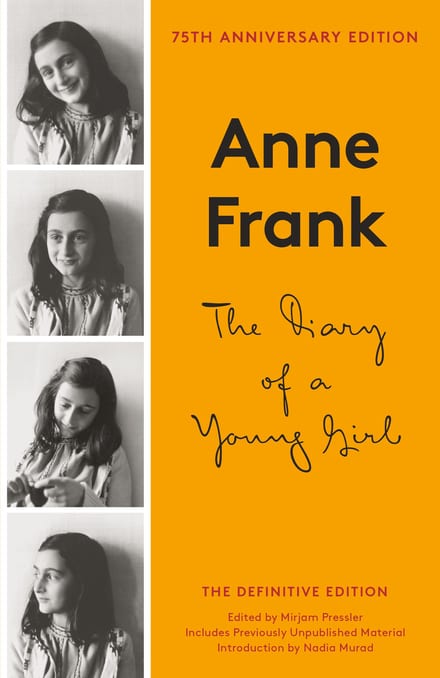
The Diary of a Young Girl
The full book runs ~320 pages — roughly 6 hours of reading. You get the key ideas here in 5 minutes.
The key ideas
- Eight people hid behind a bookcase at 263 Prinsengracht for two years and a month.
- Margot's SS call-up moved the plan up ten days; Anne packed the diary first.
- From 8:30 a.m., no running water, no flushing, no footsteps — the warehouse could hear.
- She waged a cold war on her mother, then reread her own pages and recanted.
- A London radio broadcast set her rewriting the diary as a book, The Secret Annex.
- The famous 'good at heart' line was written three weeks before the arrest.
The summary
The diary was a birthday present. Anne Frank turned thirteen on June 12, 1942, and the notebook was the first thing she saw that morning. Three weeks later it was the first thing she packed. On July 5 a call-up notice came from the SS — not for her father, as she and Margot first assumed, but for sixteen-year-old Margot. They left the next morning.
Eight people behind a bookcase
They walked to 263 Prinsengracht in the rain wearing every layer they owned; no Jew in Amsterdam could carry a suitcase down a street unstopped. Behind a plain gray door at the back of her father’s office building were the rooms Anne wouldn’t leave for two years and a month.
The van Daans came a week later; in November a dentist, Alfred Dussel, made eight and took half of Anne’s room. Mr. van Daan typed up a “Prospectus and Guide to the Secret Annex.” Price: Free. Diet: Low-fat. From half past eight each morning until the office staff left, nobody could run water, flush a toilet or cross a floor: the warehousemen downstairs knew nothing. Margot was forbidden to cough at night and dosed with codeine.
Everything came through Miep and Jan Gies, Victor Kugler, Johannes Kleiman and Bep Voskuijl: food, library books, black-market ration cards. Their heroism, Anne wrote, was proved daily “by their good spirits and affection.”
The war inside the house
Most of the diary is not about Germans. It’s about eight people who can’t get away from each other. Dussel demonstrates the correct way to hold a potato peeler, then reports Anne’s misbehaviour to her mother. Otto reads Dickens on a squeaky bed.
Anne wages a cold war on her mother. Margot is the clever one, the good one; Anne is “the clown and mischief maker” who pays for her sins twice. In November 1942 she writes that Edith is “not a mother to me — I have to mother myself.” Then, in January 1944, she rereads her own pages and is appalled by them: “Anne, is that really you talking about hate?” She works out that her mother was frightened and cornered too, and stops. She won’t fake the rest: “there’s one thing I can’t do, and that’s to love Mother with the devotion of a child.”
Peter, and what she actually wanted
She’s just as hard on herself about Peter van Daan. In January 1944 she admits she picked him on purpose — “my longing for someone to talk to has become so unbearable that I … took it into my head to select Peter for this role” — and invented reasons to sit in his room. They sat in the front attic looking out at the bare chestnut tree and the gulls. On April 15, 1944, he kissed her through her hair, half on the cheek and half on the ear, and she tore downstairs without looking back.
Three months later she takes it apart: “I know very well that he was my conquest, and not the other way around. I created an image of him in my mind… I soon realized he could never be a kindred spirit.” The wanting is real and so is the verdict on it.
She meant to be a writer
In 1944 the exiled Dutch minister Gerrit Bolkestein broadcast from London that after the war he hoped to collect ordinary diaries as evidence of the occupation. Anne heard it and started rewriting — cutting what bored her, adding scenes from memory. She had a title ready: The Secret Annex. “I don’t want to have lived in vain like most people,” she wrote on April 5, 1944. “I want to go on living even after my death!” She was fourteen. In the same entry: “it remains to be seen whether I really have talent.” Her father later cut the sex and the sharpest lines about his wife; this definitive text restores them.
What the famous line sits next to
Fear was never abstract. Burglars forced the warehouse door on Easter Sunday, 1944; police came, and eight people sat in the dark while someone rattled the bookcase twice and walked away. Somebody suggested burning the diary, and Anne thought: “if my diary goes, I go too.” In May the man who supplied their potatoes was arrested for hiding two Jews of his own, and the household cut back to cereal and fried potatoes. “We’re going to be hungry, but nothing’s worse than being caught.”
On June 6 the BBC said “This is D Day” and the Annex went up like a flare. In mid-July Anne wrote the sentence everyone quotes — “I still believe, in spite of everything, that people are truly good at heart” — and it’s worth seeing what stands beside it: “I see the world being slowly transformed into a wilderness, I hear the approaching thunder that, one day, will destroy us too.” That is not uplift. It’s someone holding on by her fingernails.
The last entry, August 1, 1944, is about being two people at once: the loud one everyone gets, and the “purer, deeper and finer” one who never gets to speak. Three days later an SS sergeant and three Dutch policemen came to the door; someone had informed. Miep Gies found the diaries on the floor and put them in a drawer. Of the eight, only Otto Frank came back. Anne and Margot died of typhus in Bergen-Belsen in early 1945, Margot first, Anne a few days later.
The bottom line
The diary gets quoted as consolation, and it isn’t one. It’s the record of a funny, vain, furious, self-auditing girl learning her craft in four rooms with seven other people, who knew what she was making and was still editing it when the door opened. Read it if you’ve only ever met Anne Frank in a quotation, or if you want the war at the scale a person actually lives it.
Frequently asked questions
What is The Diary of a Young Girl about?
It is the diary Anne Frank kept from her thirteenth birthday in June 1942 until August 1944, while she, her parents, her sister Margot, the van Daans and a dentist named Dussel hid in rooms behind a bookcase at 263 Prinsengracht in Amsterdam. She writes about the eight of them wearing on each other, her fights with her mother, her feelings for Peter van Daan, and the burglaries, hunger and police that came closer as the war went on. Three days after the last entry the hiding place was raided; only her father survived.
What are the key takeaways from The Diary of a Young Girl?
The book shows what hiding actually cost: no running water, no flushing, no footsteps from half past eight each morning, because the warehousemen downstairs knew nothing. It shows a teenager auditing herself in real time - she rereads her own furious pages about her mother and recants them, then admits that Peter "was my conquest, and not the other way around." And it shows a writer at work: after hearing a London broadcast asking Dutch people to save their diaries, Anne began rewriting hers as a book she planned to call The Secret Annex.
Who should read The Diary of a Young Girl?
Anyone who has only ever met Anne Frank as a quotation on a poster, and anyone who wants the occupation described at the scale one household actually lived it. It is also a rare, honest record of adolescence - useful to teenagers and to the adults trying to understand them.
Is The Diary of a Young Girl worth reading?
Yes, and it is better than its reputation as an inspirational text. The famous line about people being good at heart sits three weeks before the arrest, right beside "I hear the approaching thunder that, one day, will destroy us too" - the book is far more clear-eyed than the quote suggests. Readers who want a history of the Holocaust will need another book; this one is domestic, funny, petty and personal, which is exactly why it lands.