Book summary
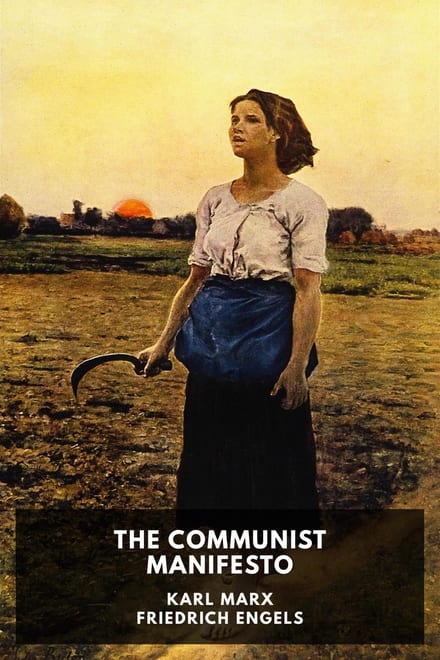
The Communist Manifesto
The key ideas
- Owning the means of production means controlling law, culture, and power
- Farming surplus birthed the first class systems and hierarchies
- Capitalism pays workers less than the value they create
- Division of labor reduces workers to interchangeable, replaceable cogs
- Abolish private ownership of production, not personal belongings
- Revolution, not reform, breaks the cycle of exploitation
The summary
“A spectre is haunting Europe — the spectre of communism.” Marx and Engels open with a provocation, but the argument underneath it is a theory of nearly everything: whoever controls how goods are produced also controls the politics, the laws, and the culture that follow. Read history that way and it becomes one long fight between those who own the means of production and those who have nothing to sell but their own labor.
That fight has a clear origin. Hunter-gatherers produced barely enough for their own group, so no lasting hierarchy could form. Farming changed that. Once you could grow more food than a family needed, someone could control the surplus and make others work for access to it — and economic power turned into political power. From then on, every society ran the same machinery under different names. Roman slaves were barred from owning property to keep them subjugated; feudal serfs were bound to land they could never own, indebted to the lords who effectively owned them. The engine of history, Marx and Engels argue, is this struggle between oppressor and oppressed.
Capitalism sharpens the divide
Feudalism cracked in the eighteenth century, when factory work offered an alternative to laboring on someone’s estate. But industrialization didn’t dissolve the hierarchy; it installed new owners at the top. The bourgeoisie — those who own the factories and machinery, the industrial means of production — took the place of the landed aristocracy.
The core mechanism is simple and, they argue, unavoidable. Workers sell their labor for wages worth less than the value they create. The difference doesn’t return to them; it accumulates as capital in the owners’ hands, deepening their power. The drive for more capital pushes exploitation harder at home and expansion outward across the globe, until capitalism becomes the world’s dominant system.
For the proletariat, the working class, this means laboring not for themselves but for owners who pay just enough to keep them alive and productive. Nearly all the reward flows upward. The worker becomes a commodity, valued only while useful and discarded once the labor stops feeding profit. And as the division of labor grinds finer, the work turns monotonous and interchangeable — you stop being a person with a craft and become a replaceable cog in the machine.
Why revolution, not reform
The same system, Marx and Engels insist, is breeding its own undoing. Workers are beginning to organize, to see their shared interests, and to press against the bourgeoisie directly; the exploitation that built bourgeois wealth is what will eventually bury it. The communist project is to unite workers across borders and overthrow that ownership class.
The keystone is abolishing private property — not your coat or your furniture, but private ownership of the means of production, the root of one class’s power over another. Capital and its profits are products of the whole society’s labor, so they should be shared, not hoarded at the top. To get there, the Manifesto lists concrete demands: a progressive income tax, the abolition of inheritance and child labor, free public education, nationalized credit, transport, and communication, the removal of regional borders, and public cultivation of unused land.
This is what separates communism from the other socialisms of the day. The reformists want to patch capitalism’s institutions and leave the structure standing. Marx and Engels reject that as futile — tinkering can’t fix a system whose ordinary workings reproduce exploitation. Only a revolution by the working class, replacing the whole arrangement, can end it.
The bottom line
All of recorded history, in this reading, is a series of class struggles, and capitalism has boiled that conflict down to a final showdown between owners and wage-earners — one that only a workers’ revolution abolishing private ownership can resolve. Read this short, incendiary pamphlet to understand the argument that has shaped, and unsettled, politics for nearly two centuries.
Frequently asked questions
What is The Communist Manifesto about?
Whoever controls how goods are produced also controls the politics, laws, and culture that follow — and read that way, all of history becomes one long fight between those who own the means of production and those who have only their labor to sell. The pamphlet argues that capitalism has boiled that struggle down to a final showdown between owners and wage-earners.
What are the key takeaways from The Communist Manifesto?
History runs on class struggle: farming created a surplus someone could control, turning economic power into political power, and every society since ran the same machinery under different names. Under capitalism the bourgeoisie own the factories while workers sell their labor for less than the value they create, with the difference accumulating as capital — turning the worker into a replaceable commodity. Marx and Engels argue reform can't fix a system whose ordinary workings reproduce exploitation, so only a workers' revolution can. The keystone is abolishing private ownership of the means of production, backed by concrete demands like a progressive income tax, free public education, and abolishing inheritance and child labor.
Who should read The Communist Manifesto?
Read this short, incendiary pamphlet to understand the argument that has shaped, and unsettled, politics for nearly two centuries. It suits anyone wanting the source of ideas about class, capital, and revolution firsthand.
Is The Communist Manifesto worth reading?
It's worth it because it's brief, forceful, and foundational — you get the core theory of class struggle and the case for revolution over reform straight from the source. It's a nineteenth-century polemic, so it reads as an argument to grapple with rather than a neutral analysis, and its concrete demands reflect its era. For understanding a worldview that still shapes politics, it's essential reading.