
Reading path
Why People Do Terrible Things
Six books on the question true crime usually skips — what actually produces a violent act, and how badly we judge the people who commit one.
True crime usually stops at what happened. This path is about the harder question underneath it — what produces a person who does something monstrous, and how much of our confidence about that is storytelling. It runs from the biology of a single decision, through two cases reported in extraordinary detail, to the courtrooms where the answer gets decided anyway.
Behave
Start with the biology, because it sets the terms. Sapolsky walks backwards from a single act — the second before it, then the hour, the childhood, the culture, the centuries — and by the end the question "why did he do that?" has stopped having one answer.
In Cold Blood: A True Account of a Multiple Murder and Its Consequences
Then one night examined closer than almost any crime in print. Capote spent six years on four murders in Kansas and produced both an explanation and a warning: a narrative that hides its author also hides where the reporting stopped and the shaping began.
If You Tell
Cruelty doesn't always look like a stranger. Olsen's account of three sisters raised by a mother who tortured them shows how long abuse can hide inside an ordinary house, and why the children themselves are the last to call it abuse.
The Devil in the White City: Murder, Magic, and Madness at the Fair That Changed America
The other failure mode: a man who used a city's optimism as cover. Larson runs H.H. Holmes alongside the architects of the 1893 Chicago fair, and the pairing is the point — the same boom that built the White City fed the hotel at the end of the street.
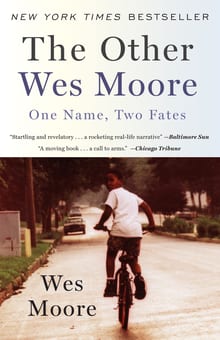
The Other Wes Moore: One Name, Two Fates
Then the sharpest version of the question. Two boys with the same name grew up miles apart in Baltimore; one won a Rhodes Scholarship, the other is serving life without parole for a robbery in which an off-duty police sergeant was shot dead. Moore's answer is expectations rather than choices — and the book is honest that he can't fully prove it.
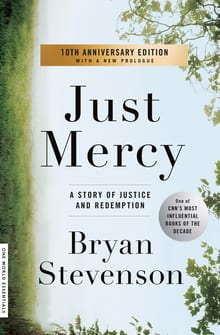
Just Mercy
Finish with what we do afterwards. Stevenson defends the condemned in Alabama, and the pattern in who ends up sentenced to die makes clear that the system judging these acts is no more rational than the acts themselves.