
Reading path
Understand Your Own Mind
Why you decide the way you do — the biases, shortcuts, and blind spots running quietly underneath.
You are far less rational than you feel, in ways that are predictable and well-mapped. Start with the foundation, then watch the patterns repeat.
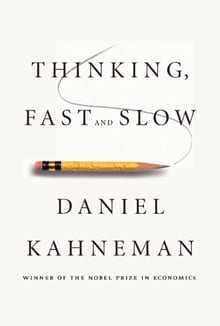
Thinking, Fast and Slow
The foundation. Kahneman's two systems — fast intuition, slow reasoning — explain most of the errors the other books catalogue.
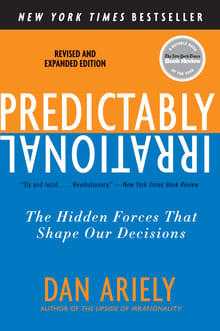
Predictably Irrational: The Hidden Forces That Shape Our Decisions
Ariely shows the irrationality isn't random; it's systematic and repeatable. Once you see the patterns you can't unsee them.
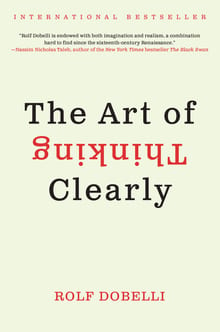
The Art of Thinking Clearly
The field guide. Ninety-nine errors, two pages each — Dobelli's point is that you get smarter by subtracting the predictable mistakes, not by adding tricks.
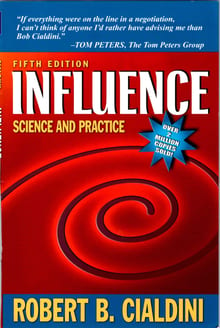
Influence: The Psychology of Persuasion
Cialdini's six levers of persuasion. Read it to understand how you're being moved — and to stop being moved without noticing.
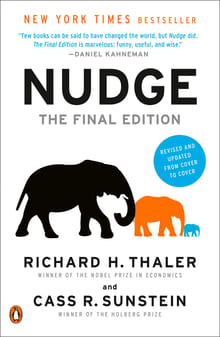
Nudge: Improving Decisions About Health, Wealth, and Happiness
Small changes to how a choice is presented change what people pick. The architecture of a decision matters as much as the decision.
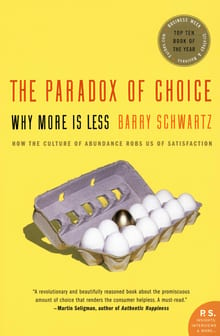
The Paradox of Choice: Why More Is Less
The other side of that architecture: what happens when there are too many options. Schwartz on why chasing the best leaves you worse off than settling for good enough.
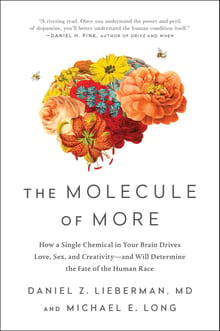
The Molecule of More: How a Single Chemical in Your Brain Drives Love, Sex, and Creativity—and Will Determine the Fate of the Human Race
Underneath all of it, the chemistry of wanting. Lieberman and Long on why the system that makes you pursue a thing is not the system that lets you enjoy having it.
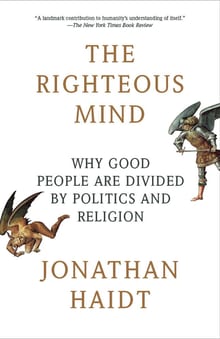
The Righteous Mind: Why Good People Are Divided by Politics and Religion
Why reasonable people disagree so bitterly. Haidt: moral intuitions come first, and reasons show up afterward to justify them.
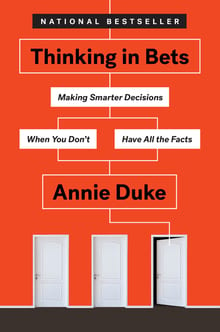
Thinking in Bets: Making Smarter Decisions When You Don't Have All the Facts
Finish with the fix. Duke, a former professional poker player, on separating the quality of a decision from the quality of its outcome — the habit every bias above makes hard.