
Reading path
Turn a Goal Into Done
Five books on the gap between deciding and finishing — picking the one goal, writing it so it can't be fudged, and building the machinery that carries it.
Deciding is the easy half. This path runs from choosing the one goal worth the quarter, through writing it so it can be judged, to the weekly and daily machinery that actually moves it — the part where most plans quietly stall.
The ONE Thing: The Surprisingly Simple Truth Behind Extraordinary Results
Start by cutting the list down. Keller's focusing question — what's the one thing you can do such that everything else gets easier or unnecessary — is a filter, not a motivational line, and most goals die because nobody ran it.
Measure What Matters: How Google, Bono, and the Gates Foundation Rock the World with OKRs
Then write the survivor down so it can't be fudged. Grove's OKRs, via Doerr: an objective you either hit or didn't, and key results specific enough that nobody can argue at the end of the quarter about whether they happened.
The 4 Disciplines of Execution: Achieving Your Wildly Important Goals
Now the part that fails in practice. McChesney's whirlwind — the day job, already full before the goal showed up — beats strategy every morning because it's urgent. His answer is a weekly cadence: lead measures you can move this week, a scoreboard readable in five seconds, twenty minutes of commitments made out loud.
Getting Things Done: The Art of Stress-Free Productivity
The personal system underneath all of it. Allen's insight is that your head is a terrible place to store commitments — capture everything somewhere you trust, decide the next physical action, and the anxiety of half-remembered obligations goes with it.
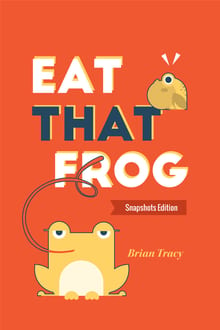
Eat That Frog!
Finish on the daily version, because none of the above survives a badly spent morning. Tracy's rule is unsubtle and works: the task you most want to avoid is usually the one that matters, so do it first, before the day fills up.