
Reading path
Testimony From Inside
Eight first-hand accounts of living inside history — and eight different answers to the question of how you tell it afterward.
Every book here is someone reporting from inside something the outside world would rather receive as a statistic. Read in this order, they move from an account written while it was still happening in private, to one filed anonymously to a broadcaster while the danger was live, to one written afterward by the person it happened to, to one extracted from a reluctant survivor by his son, to two that answer the problem by turning it into art, to one that stayed unsaid for a quarter of a century — and finally to one where the question stops being how to tell it and becomes whether we believe the telling.

The Diary of a Young Girl
Start with the one written during. Anne Frank at thirteen, eight people behind a bookcase — and, crucially, a writer at work, revising her own diary for publication while it was still happening.
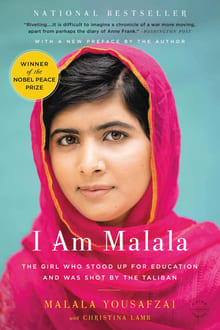
I Am Malala: The Girl Who Stood Up for Education and Was Shot by the Taliban
Then the one broadcast while it was still happening. At eleven Malala filed a diary from Swat for BBC Urdu under a pen name, because a girl who is named is a girl who can be found — and the memoir she wrote after the Taliban shot her is partly an argument about what that anonymity was protecting.

Night
Then the one written after, by the person it happened to. Wiesel at fifteen, from a Transylvanian village to Auschwitz, watching his faith and his father go. Pared down to almost nothing, and heavier for it.
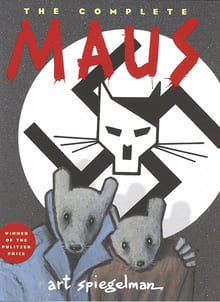
Maus: A Survivor's Tale
Now testimony pulled out of someone else. Spiegelman tapes his father Vladek in a Queens living room forty years late, leaves the digressions and the grievances in, and lets you watch what the asking costs them both.
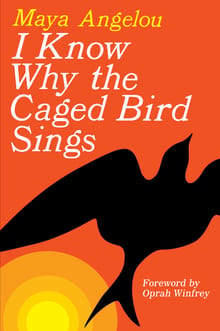
I Know Why the Caged Bird Sings
Testimony as literature. Angelou is three when she's sent to Stamps, Arkansas and eight when she stops speaking — a childhood where what a Black girl is worth gets settled before she has words to argue with it.
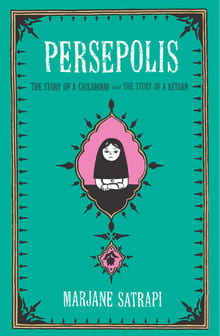
The Complete Persepolis
Finish with the one that's drawn. Satrapi puts the Iranian revolution, the war and the executions at a child's eye level — a girl arguing with God at ten, smuggling home an Iron Maiden poster — because a nation is easier to dismiss than a family.
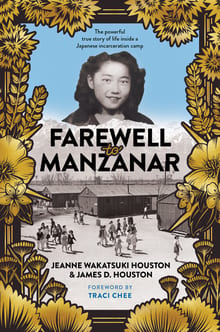
Farewell to Manzanar: A True Story of Japanese American Experience During and After the World War II Incarceration
Then the one that almost wasn't told. Houston was seven when Executive Order 9066 put her family behind wire in the Owens Valley, and she said nothing about it for close to twenty-five years — not to her husband, not to the women who'd been in there with her. It took a nephew's question and a tape recorder. The silence is the testimony here.
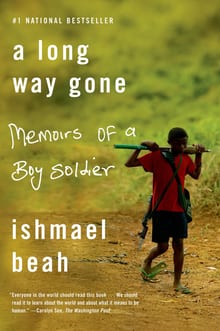
A Long Way Gone: Memoirs of a Boy Soldier
End with the one whose telling got fought over. Beah was twelve when the war took his family and thirteen when the army handed him a rifle — and in 2008 a newspaper spent months disputing his dates. Read it knowing that: the memory of a drugged child soldier is exactly the kind of witness this whole path is asking you to weigh.