
Reading path
Say It So It Lands
Seven books on being understood — the everyday conversations you avoid, the ones that turn into negotiations, and the moment you have to stand up and speak.
Being right is not the same as being heard. This path runs from the small courtesies that open a conversation, through the ones you dread, into negotiation — and ends on a stage, where you get one shot to make it land.
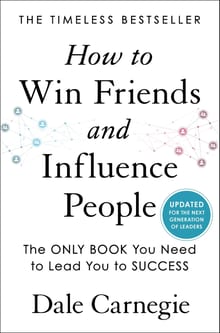
How to Win Friends and Influence People
Start with the basics nobody outgrows. Carnegie's rules are almost embarrassingly simple — use someone's name, ask about them, never say 'you're wrong' — and they still work because almost nobody does them.
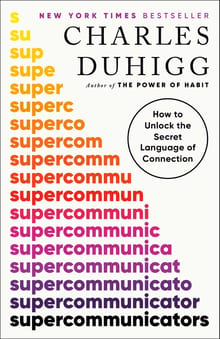
Supercommunicators: How to Unlock the Secret Language of Connection
Then the diagnosis for why so many conversations miss. Duhigg's matching principle: every exchange is practical, emotional or social, and you connect only when you're both in the same one.
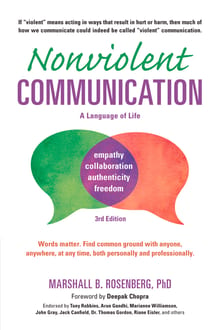
Nonviolent Communication: A Language of Life: Life-Changing Tools for Healthy Relationships
Then the hard part: saying what you need without an accusation attached. Rosenberg's four steps — observation, feeling, need, request — turn a fight into a request the other person can actually answer.
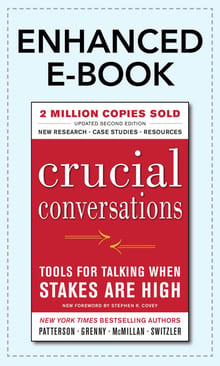
Crucial Conversations: Tools for Talking When Stakes are High
For the conversations you've been putting off. What to do when stakes are high and emotions are running: make it safe enough that the truth can be said out loud.
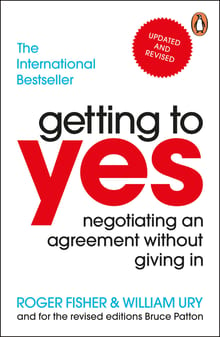
Getting to Yes: Negotiating Agreement Without Giving In
Where communication becomes negotiation. The Harvard method: dig past positions to the interests underneath, invent options before you decide, and settle it on standards neither side made up.
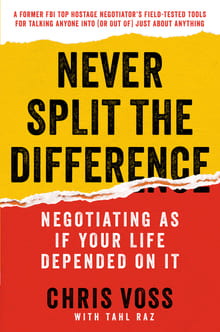
Never Split the Difference: Negotiating as if Your Life Depended on It
The counter-argument, from an FBI hostage negotiator. Voss thinks the Harvard school is too tidy for real people — label the emotion, mirror the last three words, and get to 'that's right'.
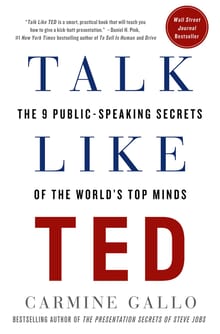
Talk Like TED: The 9 Public-Speaking Secrets of the World's Top Minds
Finish on your feet. Gallo took apart 500 TED talks and found the same nine habits: real passion, mostly story, one moment nobody sees coming, and 18 minutes to do it in.