
Reading path
Run the Company
Ten books from what strategy actually is, through the operating habits that turn it into work, to what keeps a company compounding for decades.
The companion to Start a Company: this is the reading for once the thing exists and has to be run. It moves from deciding what you’re doing, to making people do it, to the habits that hold up over decades.
Good Strategy Bad Strategy: The Difference and Why It Matters
First, what strategy even is. Rumelt's kernel — an honest diagnosis, a guiding policy, coherent action — and his catalogue of the fluff that usually passes for it.
Blue Ocean Strategy
Then where to compete. Kim and Mauborgne's case for building a market nobody is fighting over instead of taking share in one everybody is.
The Innovator's Dilemma: When New Technologies Cause Great Firms to Fail
And why winning the market you chose is not safety. Christensen on the cheap, worse product arriving underneath you, and why good management is exactly what makes you ignore it.
Measure What Matters: How Google, Bono, and the Gates Foundation Rock the World with OKRs
Turning it into what people actually do this quarter. Grove's OKRs, via Doerr — objectives you can't fudge and key results you can't argue with.
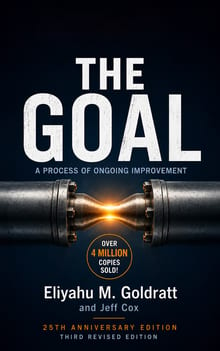
The Goal: A Process of Ongoing Improvement
Then find what's actually holding you back. Goldratt's novel about a failing plant teaches one rule: every system has a single constraint, and effort spent anywhere else is noise.
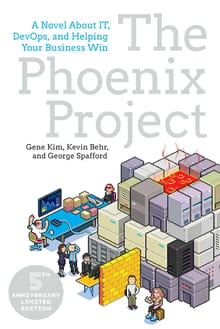
The Phoenix Project: A Novel About IT, DevOps, and Helping Your Business Win
The same trick, run again on technology. Kim, Behr and Spafford put Goldratt's plant argument inside an IT department — invisible work stacking up, one irreplaceable engineer as the bottleneck, ninety days before the whole function gets outsourced. The homage is explicit and the transfer works.
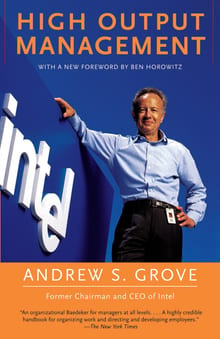
High Output Management
The operating discipline underneath. Grove himself on meetings, leverage and what a manager's output really is.
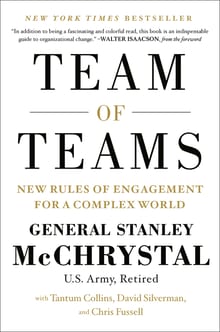
Team of Teams: New Rules of Engagement for a Complex World
Then the case for when that discipline stops working. McChrystal commanded a task force that won nearly every engagement and was losing the war anyway, and his diagnosis was architectural: a machine built for efficiency can't cope with a problem that won't hold still. Push the decision to whoever can see it, and make sure everyone knows everything.
Good to Great: Why Some Companies Make the Leap and Others Don't
What separates the companies that compound. Collins on Level 5 leaders, the hedgehog concept, and getting the right people on before the destination.
Built to Last: Successful Habits of Visionary Companies
And the ones that last a century. The same researcher, eighteen companies each paired against a rival — the winners built clocks instead of telling time.