
Reading path
How to See the Living World
Five books that change what you notice outdoors — reciprocity, fungal networks, a mind unlike ours, the book that started environmentalism, and the original retreat.
The gap between knowing a forest is there and actually seeing it is mostly a matter of what you’ve read. This path runs from a botanist’s case for reciprocity, through the organisms and minds that don’t fit our categories, to the book that made all of it a political question.
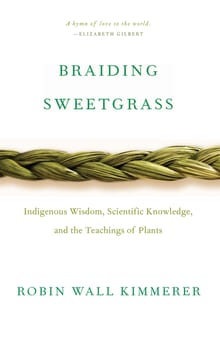
Braiding Sweetgrass: Indigenous Wisdom, Scientific Knowledge and the Teachings of Plants
Start with the frame, because it decides what the rest of these books are for. Kimmerer is a botanist and a citizen of the Potawatomi Nation, and her argument is that the same plant arrives differently depending on whether you meet it as a commodity or as a gift — one leaves you with a transaction, the other with an obligation.
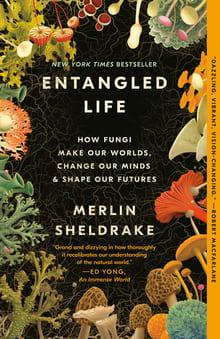
Entangled Life
Then the organism that breaks the categories. Sheldrake on fungi: neither plant nor animal, wired through the soil into networks that move nutrients and information between trees, and impossible to think about without loosening what you mean by an individual.
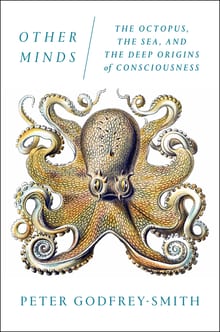
Other Minds
Now a mind that evolved separately from ours. Godfrey-Smith is a philosopher and a diver, and the octopus is his test case — most of its neurons are in its arms, which means consciousness took at least two runs at the problem on this planet.
Silent Spring
The book that turned all of this into politics. Carson's 1962 case against indiscriminate pesticide use is careful, heavily referenced, and was attacked ferociously — and it is the reason environmental regulation exists in the form it does.

Walden; or, Life in the Woods
Finish at the source of the impulse. Thoreau went to the woods on purpose, for two years, to find out how much of ordinary life was actually necessary — the argument every book above is a descendant of.