
Reading path
Get People to Want It
Nine books on demand — how to position the thing, pick who you sell to first, make it memorable, put it in front of strangers, sell it, and make them tell someone.
Having something good is not the same as having customers. This path runs from where a product sits in someone’s head, through choosing which customers to win first and the message that survives being repeated, to the unglamorous work of getting it in front of people who’ve never heard of you — and finally to the experience that makes them tell somebody about it.
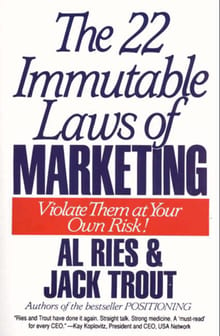
The 22 Immutable Laws of Marketing: Violate Them at Your Own Risk
Start with position, because everything downstream depends on it. Ries and Trout's argument is that marketing is a battle fought in the customer's head, not in the product — so be first into a category, and own one word in it.
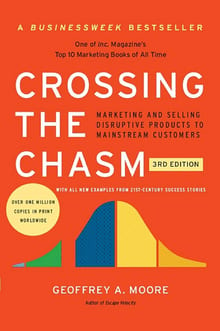
Crossing the Chasm: Marketing and Selling Disruptive Products to Mainstream Customers
Then decide who goes first. Moore's point is that the enthusiasts who love a new thing can't give you the references mainstream buyers want — so shrink the target to one segment you can own outright.
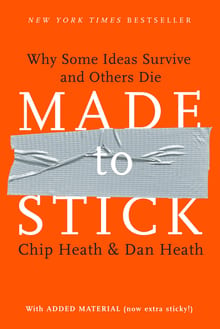
Made to Stick: Why Some Ideas Survive and Others Die
Now make the message survive a retelling. The Heaths' six traits — simple, unexpected, concrete, credible, emotional, story — plus the reason yours currently fails: once you know something, you can't imagine not knowing it.
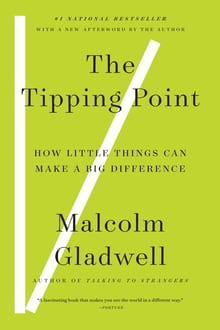
The Tipping Point: How Little Things Can Make a Big Difference
Then how ideas actually travel. Gladwell's three rules — a few unusually connected people, a message that sticks, and a context that's ready for it — explain why the same idea dies one year and spreads the next.
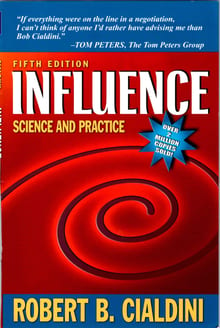
Influence: The Psychology of Persuasion
Underneath all of it, the machinery of yes. Cialdini's six shortcuts — reciprocity, commitment, social proof, liking, authority, scarcity — are how people decide when they're not really deciding.

$100M Offers: How to Make Offers So Good People Feel Stupid Saying No
Now package it. Hormozi's value equation, and his rule that an offer nobody can price-compare takes price out of the conversation entirely. Loud and self-promotional; the framework still works.
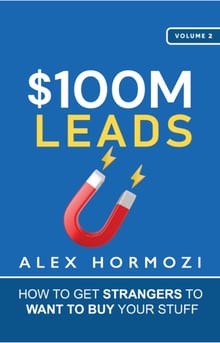
$100M Leads: How to Get Strangers to Want to Buy Your Stuff
Then distribution, the part most people skip. There are only four ways to tell anyone anything — warm outreach, content, cold outreach, paid ads — and the whole book is about doing one of them relentlessly instead of all four badly.
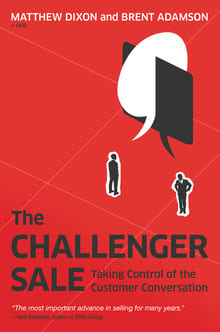
The Challenger Sale: Taking Control of the Customer Conversation
Then the conversation itself, which is where complex deals are actually won or lost. Dixon and Adamson's CEB research put Challengers — reps who teach the customer something about their own business and push back — at the top of the star performers, and the agreeable Relationship Builder at the bottom. Proprietary vendor research, so hold the numbers loosely.
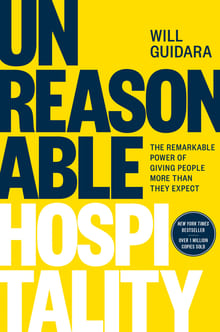
Unreasonable Hospitality: The Remarkable Power of Giving People More Than They Expect
Finish with the part no ad buys. Guidara treats how someone feels after dealing with you as a discipline with a budget line behind it — run the numbers tightly 95 percent of the time so the other 5 percent can pay for the gesture nobody expected, and let the guests do the marketing.