
Reading path
Decide Without Knowing
Seven books for choices you have to make on bad information — why forecasts fail, how to judge a decision apart from its outcome, and how to be wrong cheaply.
Most advice assumes you’ll know enough to choose well. You won’t. These seven start from the opposite premise — that the big things are unforecastable and you have to act anyway — and build from the diagnosis to a way of deciding that survives being wrong.
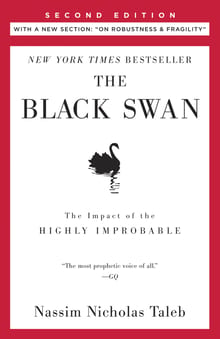
The Black Swan: The Impact of the Highly Improbable
Start with the shape of the problem. Taleb's case that the events deciding your life are the rare ones nobody forecast — and that the models calling them negligible are what make you the turkey.
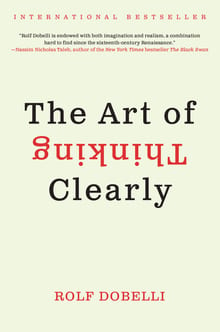
The Art of Thinking Clearly
Then why you feel certain anyway. Dobelli's ninety-nine errors, two pages each, are the machinery that turns a guess into a conviction you'd bet on.
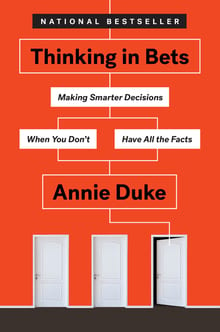
Thinking in Bets: Making Smarter Decisions When You Don't Have All the Facts
The reframe that fixes it. Duke, a former professional poker player, on separating the quality of a decision from the quality of its result — the only way to learn from a world this noisy.
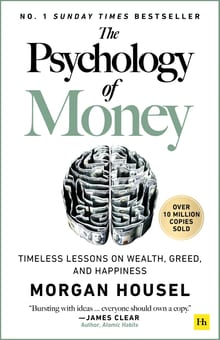
The Psychology of Money
Where it costs real money. Housel on luck, risk and leaving room for error, written for people who will never know which one they got.
Antifragile: Things That Gain from Disorder
Taleb's constructive answer. Stop forecasting the shock and change your exposure to it: clip the downside, keep the upside, and let disorder work for you.
Thinking in Systems: A Primer
The structural view. Meadows on why sensible people inside a badly wired system keep producing a result none of them wants — and why the intervention everyone is fighting over is usually the weak one.
Principles: Life and Work
Finish with a system. Dalio ran the world's largest hedge fund on written rules and believability-weighted disagreement — decision-making as something you build, not something you have.