Book summary
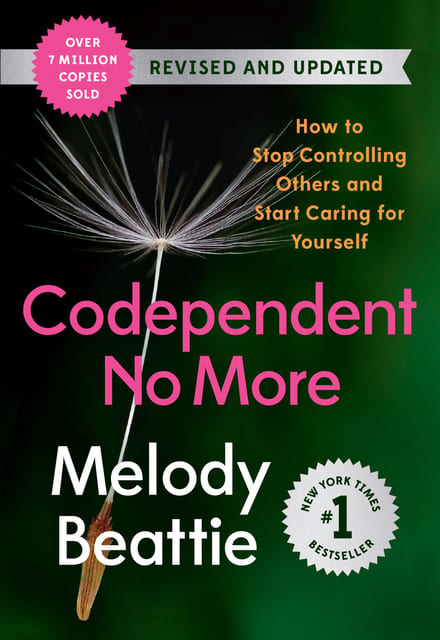
Codependent No More
How to Stop Controlling Others and Start Caring for Yourself
The full book runs ~245 pages — roughly 4 hours of reading. You get the key ideas here in 5 minutes.
The key ideas
- Rescuing others isn't love; it's compulsion that keeps everyone stuck
- Detach from their chaos without abandoning your care
- Build self-worth from within, not from others' approval
- Accept reality actively and let yourself grieve real losses
- Communicate directly by naming what you actually need
- Set your own goals instead of reacting to others
The summary
The urge to monitor someone else’s drinking, track their moods, and clean up their messes feels like devotion. Melody Beattie’s blunt correction is that it isn’t love at all. It’s a compulsion, usually learned young in a chaotic home, and it keeps you so busy managing another person’s life that you never have to face your own. That’s codependency: your whole self organized as a reaction to somebody else’s dysfunction. As Beattie writes, codependents “overreact… underreact. But rarely do they act.” Recovery doesn’t start with fixing them. It starts with taking your own life back.
Rescuing isn’t love — it’s a compulsion
Beattie first used the word for the people orbiting an addict — the spouse, child, or lover of someone chemically dependent, who developed their own unhealthy coping patterns in response. The definition widened from there. Codependency is being so affected by another person’s behavior that you become obsessed with controlling it. It shows up as caretaking, low self-worth, denial, weak boundaries, buried anger, and trouble trusting or being close to anyone. None of these are character defects. They’re survival skills picked up in a family where your job was to manage the unmanageable.
Many codependents were, at some point, genuine victims — of abuse, neglect, abandonment. The harm was real. The trap is that you keep replaying it, casting yourself as the rescuer, then quietly resenting the people you rescue. Consider Maria, whose husband’s drinking took over her life. She monitored him, cut herself off from friends, gave up her own chances. When none of it stopped his drinking, he persuaded her that if she took a job to ease his money worries, he’d finally quit. She did. He kept drinking. She quit the job to go back to full-time caretaking. That’s the loop: you shoulder other people’s responsibilities, then feel used and sorry for yourself while your own life quietly disappears.
Detachment is how you stop drowning with them
Codependents attach to other people’s problems the way an addict attaches to a drug. You worry, obsess, and try to steer outcomes that were never yours to steer, which drains you and — this is the cruel part — shields the other person from the consequences that might actually change them. Detachment is the way out. It doesn’t mean you stop caring. It means you stop letting their crisis run your every thought.
Beattie’s line lands hard: saying “If you loved me, you wouldn’t drink” to an alcoholic makes as much sense as telling someone with pneumonia, “If you loved me, you wouldn’t cough.” You’re taking personally a condition that isn’t about you. Real control is the narrow slice you actually own — your own responses, your own boundaries. Notice your triggers, calm yourself, look at the situation honestly, and choose a deliberate action instead of a reflex.
Your worth can’t come from managing others
Codependents treat themselves with a contempt they’d never aim at anyone else. The inner voice is savage: you’re stupid, ugly, incompetent, unlovable. You hold yourself to impossible standards and then punish yourself for missing them, all while being endlessly patient with everybody else. Beattie’s reframe is bracing — the people who strike you as confident and beautiful are working with the same raw material you are. The difference is what they tell themselves. They let themselves shine through; you don’t.
This starves in the same soil as another fear: being alone. Convinced you can’t function on your own, you keep chasing worth and validation from other people, which locks you into the very relationships that hurt you. Breaking free means naming the pattern, tending the childhood wounds beneath it, and learning that you can rely on yourself.
Feel your feelings and say what you actually need
Acceptance is where healing gets real, and it’s active, not passive resignation. Facing a loved one’s addiction usually means grieving shattered plans, and that grief moves through the familiar stages — denial, anger, bargaining, depression, and finally acceptance. Refusing to grieve just keeps you stuck. It also cuts you off from your own emotions, which codependents learn to suppress for protection. But “feelings are energy. Repressed feelings block energy,” and you can’t do your best while you’re blocked. Anger especially needs an honest home: own it by saying “I feel angry when you do this because…” rather than “You made me mad.”
Then there’s how you talk. Codependent communication is indirect and manipulative — hints, guilt trips, hidden agendas — not from malice but from a buried belief that your needs don’t count. The repair is plain speech. Learn the words: “This is what I need from you. This is what I want from you.” Set your own goals, too, broken into steps you can actually take, so your life has a direction of its own instead of forever bending around someone else’s.
The bottom line
Recovery from codependency isn’t about changing the person you’re worried about; it’s about detaching from their chaos, rebuilding your own worth, and speaking honestly about what you need. Read this if you’ve lost yourself inside someone else’s problems — a partner’s addiction, a parent’s dysfunction, or just a lifelong habit of feeling responsible for everyone but you.
Fact check
Popular books repeat findings that later research has complicated. Where Codependent No More makes a testable claim, here's what the evidence actually shows.
Grief over a loss moves through denial, anger, bargaining, depression and finally acceptance.
In the one study that tested the sequence directly, following 233 bereaved people from 1 to 24 months after a death, acceptance was the most frequently endorsed response from the first month onward rather than the destination, and yearning — not depression — was the dominant negative response throughout. The five indicators did reach their peaks in roughly the predicted order (disbelief at 1 month, yearning at 4, anger at 5, depression at 6), so the ordering is not baseless. But a prospective study that followed 205 people from before a spouse's death to 18 months after found resilience, meaning little sustained disruption, was the most common of five trajectories, and the textbook grief pattern was relatively infrequent. Beattie's underlying point that unfelt grief keeps you stuck does not depend on the staircase being real.
- Maciejewski PK, Zhang B, Block SD, Prigerson HG. An empirical examination of the stage theory of grief. JAMA. 2007;297(7):716-23. PubMed
- Bonanno GA, Wortman CB, Lehman DR, et al. Resilience to loss and chronic grief: a prospective study from preloss to 18-months postloss. J Pers Soc Psychol. 2002;83(5):1150-64. PubMed
Codependency is a definable condition with a consistent trait cluster — caretaking, low self-worth, denial, weak boundaries, buried anger.
The distress is real and measurable, but the construct has never settled. A 2026 systematic review of 30 studies published between 2013 and 2024 found six competing conceptual frames in use — sociocultural, relational, addiction-based, developmental, psychoanalytic and cognitive-personality — and described the term as conceptually fragmented, while consistently linking it to emotional distress, disrupted identity and impaired relational functioning. Reviews of the measurement literature have flagged the same problem since 2001: the definition widened from the wives of men with alcohol problems to almost any dysfunctional way of relating, which is what makes competing instruments hard to validate against each other. Codependency is a serviceable description of a pattern, not a diagnosis with agreed boundaries.
Detaching and letting the addicted person face their own consequences is what gives them a chance to change.
Detachment reliably helps the family member, which is the book's stated aim, but it is the weakest of the tested routes to getting the drinker into treatment. A randomized trial of 130 concerned relatives compared Al-Anon facilitation, which teaches detachment, against a Johnson Institute confrontation and against CRAFT, which coaches active behavioural skills to use at home: CRAFT engaged 64% of initially unmotivated problem drinkers in treatment, the confrontation 30%, and Al-Anon facilitation 13%. All three produced similar improvement in the relative's own functioning and relationship quality. So Beattie is right that stepping back restores your own life, and overstates the case if she implies stepping back is also what moves the other person.
- Miller WR, Meyers RJ, Tonigan JS. Engaging the unmotivated in treatment for alcohol problems: a comparison of three strategies for intervention through family members. J Consult Clin Psychol. 1999;67(5):688-97. PubMed
Frequently asked questions
What is Codependent No More about?
The urge to monitor someone else's drinking, track their moods, and clean up their messes feels like devotion, but the book's blunt correction is that it isn't love — it's a compulsion. Codependency is organizing your whole self around someone else's dysfunction, and recovery starts not with fixing them but with taking your own life back.
What are the key takeaways from Codependent No More?
Rescuing isn't love; it's a compulsion often learned in a chaotic home, showing up as caretaking, low self-worth, denial, and weak boundaries. Detachment is the way out — you stop letting someone's crisis run your every thought without stopping caring. Your worth can't come from managing others, so you name the pattern, tend the childhood wounds beneath it, and learn to rely on yourself. And you have to feel your feelings rather than repress them, then say plainly what you need: 'This is what I need from you,' instead of hints and guilt trips.
Who should read Codependent No More?
Read this if you've lost yourself inside someone else's problems — a partner's addiction, a parent's dysfunction, or just a lifelong habit of feeling responsible for everyone but you.
Is Codependent No More worth reading?
It's worth it for naming a pattern many people live inside without a word for it, and for the practical shift from controlling others to detaching and rebuilding your own worth. The examples, like Maria caught in the caretaking loop, make the trap recognizable. The framing leans on addiction-recovery language, so readers whose situation is milder may need to translate it, but the core tools apply broadly.