Book summary
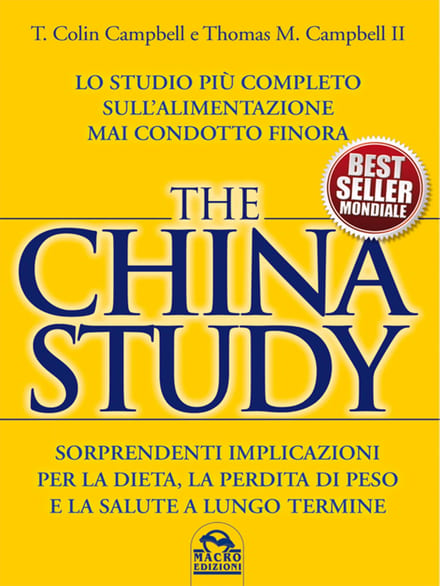
The China Study: The Most Comprehensive Study of Nutrition Ever Conducted
The China Study: The Most Comprehensive Study of Nutrition Ever Conducted and the Startling Implications for Diet, Weight Loss, and Long-term Health
The full book runs ~417 pages — roughly 8 hours of reading. You get the key ideas here in 4 minutes.
The key ideas
- Animal protein switches on cancer growth in lab and population studies
- China Study: 8,000 associations linking plant diets to health
- Whole plant foods prevent heart disease, diabetes, cancer, and more
- Even small amounts of animal protein show harmful effects
- Meat and dairy industries distort nutrition science and policy
- Medical system profits from drugs and surgery, not prevention
The summary
Across thousands of correlations gathered in rural China and decades of animal experiments, one pattern held up again and again: the more animal-based food people ate, the more chronic disease they got, and the more whole plant food they ate, the healthier they stayed. T. Colin Campbell’s conclusion is blunt. Even small amounts of animal protein showed harmful effects, and the finding was consistent whether he looked at controlled lab studies or a massive survey of real people. Yet medicine still reaches first for drugs and surgery.
The backdrop makes the stakes clear. The United States spends more on health care than any country on earth, and Americans keep getting sicker. Costs were projected to hit $16 trillion by 2030 — one out of every seven dollars the economy produces. Meanwhile physician error, medication error, and adverse reactions to drugs and surgery kill some 225,400 people a year, the third-leading cause of death behind cancer and heart disease. The system, Campbell argues, is built to profit from chemical and surgical intervention, so diet keeps riding in the back seat.
Animal protein switches disease on and off
The most striking evidence came from the lab. Rats exposed to aflatoxin, a toxic mold, developed liver cancer when fed a high-protein diet — but stayed healthy on a low-protein one, despite the same dose of poison. The same pattern appeared in the Philippines, where malnourished children exposed to aflatoxins were more likely to develop liver cancer if they ate a high-protein diet. The toxin lit the match, but the protein decided whether the fire spread.
From there a consistent rule emerged: nutrients from animal foods tended to promote tumor growth, while nutrients from plant foods tended to suppress it. Low-protein diets, around 5 percent of calories, quieted the enzyme activity that drives cancer forward. Dairy showed one of the most specific links of all, to prostate cancer. High animal protein and saturated fat raised breast cancer risk, and low-fiber diets tracked with more colon and rectal cancer.
What the China Study actually measured
In the early 1980s, Campbell and his colleagues launched one of the most comprehensive nutrition studies ever attempted. They chose rural China for three reasons: to examine diets far outside the Western pattern, to study a genetically similar population in the Han ethnic group, and to explain why disease rates varied so much from region to region despite that shared genetics. The design let them set genetics aside and put diet and lifestyle in the foreground.
Over 20 years, researchers collected data from 65 counties, 130 villages, and 6,500 adults and their families, ending with more than 8,000 statistically significant associations between diet and disease. Rural Chinese ate less fat, less animal protein, and more fiber than Americans. They took in more total calories yet weighed less and had far lower rates of chronic illness. Heart disease, diabetes, stroke, hypertension, arthritis, cataracts, Alzheimer’s, and multiple cancers all looked largely preventable through diet.
Why nutrition still confuses you
Campbell insists that a whole-food, plant-based diet does more for health than any drug or surgery in medical practice — capable of preventing and even reversing disease. So why the confusion? Part of it is how research gets done. Studies tend to isolate a single nutrient rather than study whole foods, which hides how plants actually work. Everything in food acts together to create health or disease, and, as Campbell writes, the more we think one chemical characterizes a whole food, the further we stray into idiocy.
The larger problem is money. The meat and dairy industries have shaped nutrition science and public health advice for decades, suppressing or spinning findings that threaten their products. Government policy and funding tend to line up with industry rather than public health. That’s a big reason official advice keeps shifting and your doctor reaches for a prescription pad instead of asking what’s on your plate.
The bottom line
The core finding never wavered: people who ate the most animal-based foods got the most chronic disease, while people who ate the most whole plant foods stayed the healthiest — a pattern that held across thousands of correlations and multiple kinds of study. Read this if you’re tired of getting sicker while spending more on care, and you’re willing to test a plant-based month on yourself to feel the difference.
Fact check
Popular books repeat findings that later research has complicated. Where The China Study makes a testable claim, here's what the evidence actually shows.
In rats dosed with aflatoxin, a high-casein diet switches liver cancer on and cutting protein to around 5 percent of calories switches it off.
This is the best-documented part of the book. Fischer 344 rats fed 20 percent casein after aflatoxin B1 dosing developed roughly six times as many preneoplastic liver foci as rats fed 5 percent casein, regardless of what they had eaten during dosing. A longer experiment fed 6, 14 or 22 percent casein and followed animals to 100 weeks: foci at 12 weeks and tumours at 40, 58 and 100 weeks rose dose-dependently with protein, with fewer, smaller and later tumours on the low-protein diet even though those animals ate more energy. The result is solid inside that model — one initiating toxin, one purified milk protein, and a low arm roughly a quarter of the standard laboratory diet.
- Appleton BS, Campbell TC. Effect of high and low dietary protein on the dosing and postdosing periods of aflatoxin B1-induced hepatic preneoplastic lesion development in the rat. Cancer Res. 1983;43(5):2150-2154. PubMed
- Youngman LD, Campbell TC. Inhibition of aflatoxin B1-induced gamma-glutamyltranspeptidase positive (GGT+) hepatic preneoplastic foci and tumors by low protein diets: evidence that altered GGT+ foci indicate neoplastic potential. Carcinogenesis. 1992;13(9):1607-1613. PubMed
The China Study's 8,000-plus statistically significant associations show that animal-based food causes chronic disease.
The China Project was an ecologic survey: it compared 65 rural counties on averaged diet, biomarker and mortality figures, not individuals tracked over time. Campbell's own write-up in the American Journal of Clinical Nutrition describes it that way, reporting mean animal protein intake about a tenth of the US level, total fat at 14.5 percent of energy and fibre at 33.3 g a day. Correlations between county averages cannot establish that a given person's diet caused their disease — epidemiologists list cross-level bias, weak confounder control, within-group misclassification and temporal ambiguity as limits specific to this design. The pattern is a serious hypothesis; a tally of significant correlations is not proof of cause.
Even small amounts of animal protein show harmful effects — there is no safe threshold.
In 131,342 US health professionals followed for up to three decades, animal protein intake was not associated with all-cause mortality at all (HR 1.02 per 10 percent of energy, 95% CI 0.98-1.05). It was associated with cardiovascular mortality (HR 1.08 per 10 percent of energy), but that association, and the mirror-image benefit of plant protein, appeared only among people carrying at least one of smoking, heavy drinking, obesity or inactivity — not among people with none of them. A meta-analysis of 55 cohorts covering more than 4 million participants judged the association between red or processed meat and mortality and cardiometabolic outcomes very small, on low-certainty evidence. Swapping plant protein for processed red meat does track with lower mortality; the no-threshold version of the claim runs ahead of the human data.
- Song M, Fung TT, Hu FB, Willett WC, Longo VD, Chan AT, Giovannucci EL. Association of animal and plant protein intake with all-cause and cause-specific mortality. JAMA Intern Med. 2016;176(10):1453-1463. PubMed
- Zeraatkar D, Han MA, Guyatt GH, et al. Red and processed meat consumption and risk for all-cause mortality and cardiometabolic outcomes: a systematic review and meta-analysis of cohort studies. Ann Intern Med. 2019;171(10):703-710. PubMed
Physician error, medication error and adverse reactions to drugs and surgery kill about 225,400 Americans a year, making medical care the third-leading cause of death.
The figure is real and traceable: it comes from a one-page 2000 JAMA commentary by Barbara Starfield, which totalled extrapolations from earlier hospital studies rather than counting deaths. The bundle it describes is much broader than error — the Institute of Medicine's landmark report the same year put deaths from medical errors in hospitals at up to 98,000 a year, under half the 225,400 total. The ranking is the shakier part, since it sets an extrapolated total against categories drawn from death certificates, which have no line for iatrogenic harm, and estimates of this kind remain openly contested in the patient-safety literature.
- Starfield B. Is US health really the best in the world? JAMA. 2000;284(4):483-485. PubMed
- Kohn LT, Corrigan JM, Donaldson MS, eds. To Err is Human: Building a Safer Health System. Washington, DC: National Academies Press; 2000. Source
- Shojania KG, Dixon-Woods M. Estimating deaths due to medical error: the ongoing controversy and why it matters. BMJ Qual Saf. 2017;26(5):423-428. PubMed
Frequently asked questions
What is The China Study about?
Across thousands of correlations from rural China and decades of animal experiments, one pattern held up: the more animal-based food people ate, the more chronic disease they got, and the more whole plant food they ate, the healthier they stayed. The book argues a whole-food, plant-based diet can prevent and even reverse disease, yet medicine still reaches first for drugs and surgery.
What are the key takeaways from The China Study?
Animal protein appeared to switch disease on and off: rats given a liver-cancer toxin stayed healthy on a low-protein diet but developed cancer on a high-protein one, with the same pattern in malnourished children. Nutrients from animal foods tended to promote tumor growth while plant nutrients suppressed it, and dairy showed a specific link to prostate cancer. The China Study itself gathered data from 65 counties and 6,500 adults, finding rural Chinese ate less fat and animal protein, more fiber, and had far lower rates of chronic illness. Confusion persists partly because studies isolate single nutrients instead of whole foods, and partly because meat and dairy industries have shaped the science.
Who should read The China Study?
Read this if you're tired of getting sicker while spending more on care, and you're willing to test a plant-based month on yourself to feel the difference. It suits anyone weighing diet against medication for long-term health.
Is The China Study worth reading?
It's worth it for the sheer scale of evidence it marshals — a massive population survey plus controlled lab work pointing the same direction — and for its clear-eyed take on why industry money muddies nutrition advice. The message is single-minded, so readers wanting a nuanced, every-food-in-moderation view may find it one-sided. If you're open to testing a plant-based approach, it makes a forceful case.