Book summary
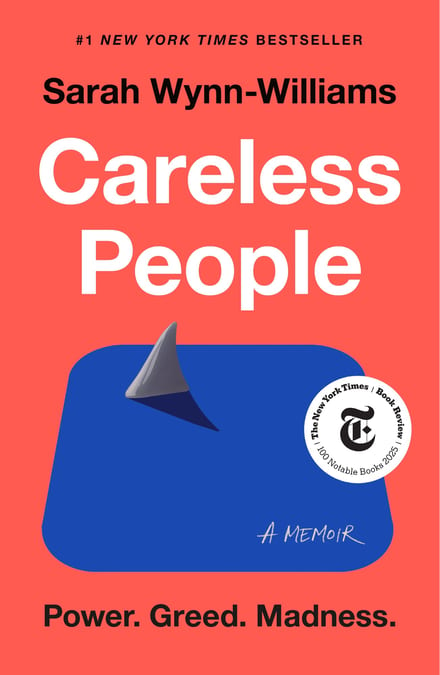
Careless People: A Cautionary Tale of Power, Greed, and Lost Idealism
The full book runs ~394 pages — roughly 7 hours of reading. You get the key ideas here in 9 minutes.
The key ideas
- Idealism curdled into disillusion inside Facebook's leadership culture.
- Wealth and scale severed executives from real-world consequences.
- Inaction in Myanmar let the platform fuel genocide.
- Secret China deal built censorship and surveillance tools, then lied.
- Profit from inflammatory political ads outweighed misinformation warnings.
- Reporting harassment triggered swift retaliation and fabricated firing.
The summary
Sarah Wynn-Williams talked her way into Facebook because she believed it could do what governments couldn’t. She’d watched the platform coordinate rescue and relief after the Christchurch earthquake when official channels failed, and after years as a UN diplomat frustrated by bureaucracy, she was convinced this was where one person could actually change things. She pitched the company on a global policy role and got it. What she found was the opposite of what she’d imagined: a leadership so cushioned by wealth and scale that its decisions had come unmoored from their consequences, inside a company that treated anyone who named the harm as the problem.
A culture insulated from consequence
The distance showed in small things and large. Colleagues called their six-figure salaries “meaningless” next to their stock options; assistants wore Louboutins to the office. Mark Zuckerberg, she writes, had no real theory of how Facebook should exist in the world beyond “sign up more users.” He told his team he might miss the birth of his first child if “something more important” came up. Employees let him win at Settlers of Catan. When tourists in Asia failed to recognize him, he was visibly wounded, then asked his staff to organize a rally or a riot of over a million people, apparently to test whether Facebook could move crowds offline.
Sheryl Sandberg embodied the gap between the message and the machine. Her Lean In tour made her a celebrity while junior women were pulled off their jobs to support it. She preached work-life balance and privately ran on fear, firing a makeup artist and reducing another to tears before a meeting with Japan’s Prime Minister. Motherhood was treated as a liability; when Wynn-Williams’s baby was audible on a call, Sandberg’s advice was to get a Filipina nanny.
Growth mattered more than people
When South Korean authorities issued arrest warrants over gaming rules, executives decided they needed “a body to arrest. To call their bluff. See how serious they are.” Wynn-Williams was the first choice; she agreed, then refused once she thought about her family. Someone else was sent.
The pattern turned lethal in Myanmar. Facebook had pushed to unblock the platform there, but never staffed the language support or moderation the country needed, and let hate speech and misinformation spread until the platform became an instrument of genocide against the Rohingya. Her verdict is blunt: it wasn’t malice or lack of money—“Joel, Elliot, Sheryl, and Mark didn’t give a fuck.” The same indifference shaped the ad business at home. She warned that leaders like Duterte were weaponizing the platform, and that Facebook charged less for the most inflammatory political ads and pushed them to more people. Leadership didn’t care; the money was too good and, Kaplan assured everyone, Clinton was going to win anyway. When a leaked document showed Facebook targeting emotionally vulnerable teenagers for advertisers, the company denied it publicly while knowing internally that the practice was routine.
The China deal, and the lie
The clearest proof of who these people were sat in documents about China. Under the codename “Aldrin,” Facebook partnered with the private equity firm Hony Capital (“Jupiter”) and agreed to store Chinese users’ data inside China, build censorship tools including facial recognition and emergency kill switches, and share technology with Chinese entities, all things it had refused other governments. The plan even budgeted for the fallout: evasive answers prepared for Congress, money set aside to neutralize critics like Human Rights Watch. Asked directly, Zuckerberg said no decisions had been made about any future service in China. It was a lie; the tools had already been built and tested with the Communist Party. Facebook went on to censor the dissident Guo Wengui and misrepresent why, and to launch apps in China through shell companies until a New York Times story exposed them.
Naming the harm got you punished
Wynn-Williams eventually found the Feminist Fight Club, a hidden group of nearly 200 female employees trading accounts of harassment. She reported Joel Kaplan’s behavior toward her: asking where she was bleeding from after her near-fatal childbirth, demanding she explain breastfeeding. He retaliated by stripping her responsibilities and forcing her onto the China team. After he called her “sultry” and ground against her at a company event, she reported it again, and the company manufactured performance problems and fired her. She was seventeen days short of a residency requirement for citizenship, which had left her dependent on Facebook’s own lawyers. Male colleagues who’d had affairs with subordinates kept their jobs.
The bottom line
Facebook’s worst outcomes—genocide in Myanmar, a secret surveillance pact with Beijing, a business that profits from the ugliest politics—weren’t accidents. They followed directly from executives whose wealth and power had severed them from consequence, inside a culture that punished the people willing to say so. Read it if you want an insider’s view of how good intentions rot at the top of a company too big to feel what it does, and why that should worry you more as AI scales up.
Fact check
Popular books repeat findings that later research has complicated. Where Careless People makes a testable claim, here's what the evidence actually shows.
Facebook's failure to moderate Burmese-language hate speech let the platform become an instrument of the violence against the Rohingya.
Meta's own commissioned human rights assessment, published November 2018, concluded the company "wasn't doing enough to help prevent our platform from being used to foment division and incite offline violence" in Myanmar. Amnesty International's 2022 investigation went further, finding that engagement-optimizing recommendation systems amplified anti-Rohingya content and that Meta had been warned by local activists repeatedly between 2012 and 2017; an internal 2016 Meta report had already conceded that "our recommendation systems grow the problem" of extremism. The account of unstaffed language moderation and ignored warnings matches what both documents describe.
Facebook charged less for the most inflammatory political ads and delivered them to more people.
An independent audit of Facebook's ad system found the mechanism, though not in exactly this form: the delivery algorithm "effectively differentiate[s] the price of reaching a user based on their inferred political alignment with the advertised content," so an ad lands more cheaply on audiences already sympathetic to it, and the skew is strongest at small budgets. What makes content sympathetic is well measured too — a 2021 study of Facebook and Twitter posts found each word referring to a political out-group raised the odds of a share by 67%, making out-group hostility the strongest single predictor of engagement, ahead of negative emotion by a factor of about 4.8. Neither study tests whether inflammatory ads specifically get a discount, so the auction dynamic is documented while that precise framing is not.
- Ali M, Sapiezynski P, Korolova A, Mislove A, Rieke A. Ad Delivery Algorithms: The Hidden Arbiters of Political Messaging. arXiv:1912.04255 [cs.CY]. 2019. Source
- Rathje S, Van Bavel JJ, van der Linden S. Out-group animosity drives engagement on social media. Proc Natl Acad Sci U S A. 2021;118(26):e2024292118. PubMed
Frequently asked questions
What is Careless People about?
Careless People is an insider account of Facebook by Sarah Wynn-Williams, a former UN diplomat who joined believing the platform could do good governments couldn't. What she found instead was a leadership so cushioned by wealth and scale that its decisions had come unmoored from their consequences, inside a company that treated anyone who named the harm as the problem.
What are the key takeaways from Careless People?
The book's picture is of a culture insulated from consequence, where growth mattered more than people. It recounts Facebook failing to staff moderation in Myanmar as the platform fueled genocide against the Rohingya; a secret China plan codenamed 'Aldrin' to build censorship and surveillance tools, which Zuckerberg denied existed; ad practices that charged less for inflammatory political ads and targeted emotionally vulnerable teenagers; and the retaliation and firing Wynn-Williams faced after reporting harassment. The lesson is that these outcomes followed directly from executives severed from consequence, not from accident or lack of money.
Who should read Careless People?
Read it if you want an insider's view of how good intentions rot at the top of a company too big to feel what it does. It's for readers interested in tech accountability, corporate culture, and why that dynamic should worry us more as AI scales up.
Is Careless People worth reading?
It's worth it as a first-hand, specific account — named executives, documented deals, concrete episodes — that goes beyond abstract critiques of Big Tech. Its perspective is that of one insider who was ultimately pushed out, so it reads as pointed rather than neutral, and readers wanting a balanced corporate history should keep that framing in mind. As a cautionary tale about power divorced from consequence, it lands hard.