Book summary
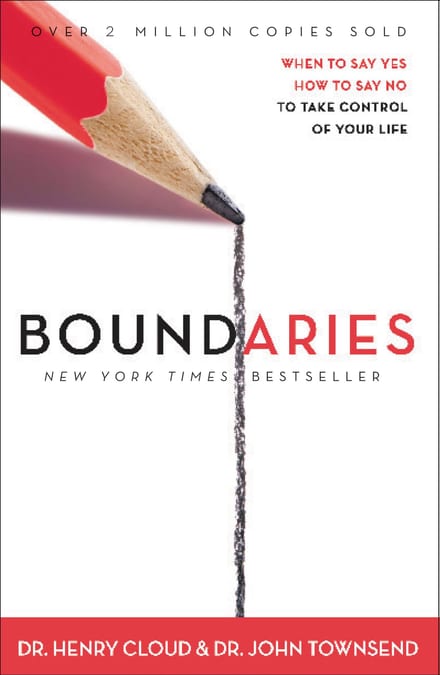
Boundaries
When to Say Yes, How to Say No to Take Control of Your Life
The full book runs ~224 pages — roughly 4 hours of reading. You get the key ideas here in 4 minutes.
The key ideas
- Own your life: you're responsible for yourself, to others.
- Rescuing people from consequences makes them weaker, not stronger.
- Recognize your pattern: compliant, avoidant, controller, or nonresponsive.
- Change yourself, not others—you can't control other people.
- Expect anger and guilt-trips; stay firm anyway.
- Boundaries aren't walls or selfishness—they make real love possible.
The summary
You cannot truly love someone you’re unable to say no to. When you say yes out of fear — fear of anger, of abandonment, of looking selfish — you aren’t being generous, you’re being dishonest, and you’re quietly teaching people that your limits don’t count. This is the paradox Henry Cloud and John Townsend build their book around: a no you actually mean is the only thing that gives your yes any weight. A boundary is simply the line where you end and someone else begins, and it isn’t a wall. It’s a fence with a gate, so you can let in the good things like love and nurture and keep out the harmful ones. The crucial distinction is that you are responsible to others — to love and serve them — but responsible for yourself: your own feelings, attitudes, choices, and daily load. When you carry what’s theirs to carry, you don’t help them; you make them weaker, because rescuing someone from the natural consequences of their behavior renders them powerless.
Take Sherrie, who spends her whole lunch break absorbing a friend’s complaints and never gets to eat. She can’t say no to her mother, husband, boss, or kids, so she feels responsible for everyone’s problems while her own life quietly collapses. Her issue isn’t that she cares too much. It’s that she has never taken ownership of her life.
Four ways people lose the line
Boundary trouble tends to run in four patterns. The Compliant say yes to the bad because they’re afraid of hurting anyone. The Avoidant say no to the good — they pull away when they need help and won’t let anyone in. The Controller ignores other people’s limits entirely, whether as an aggressive bully or a manipulative guilt-tripper who won’t take responsibility for their own life. And the Nonresponsive simply fail to hear what others need.
Most of us aren’t one pure type, but we lean, and the lean usually started in childhood. Healthy boundaries grow out of early safety and attachment, followed by a slow process of separation in which a child learns to tell “me” from “not-me” using tools like anger, ownership, and the word “no.” When a parent withdraws love the moment the child asserts themselves, the lesson lands hard: you’re lovable when you behave, and unlovable when you don’t. That message can become a life sentence.
The laws that make boundaries work
Cloud and Townsend lay out ten laws, but a few carry most of the weight. The Law of Sowing and Reaping says actions have consequences, and boundaries make sure the person doing the sowing is the one who does the reaping — keep bailing someone out and you’ve simply become their enabler. The Law of Responsibility holds that you can love others but cannot grow for them. The Law of Power is the pivot: you can change yourself but not anyone else, so the move is to change yourself until their destructive patterns no longer work on you.
The subtlest is the Law of Evaluation, which turns on the gap between hurting and harming. A dentist hurts you when he drills out a cavity, but he doesn’t harm you — he makes you better. Sugar tastes good and quietly harms you. Things that hurt can be good for you, and things that feel good can destroy you, so a boundary that causes short-term pain isn’t automatically cruel. Rounding out the set: give from love rather than guilt or fear, respect others’ limits if you want yours respected, act on your values instead of just reacting, and state your boundaries out loud, because no one can honor a line they can’t see.
Not selfish, and not a wall
Setting boundaries is not selfish; it’s stewardship of the one life you’re responsible for, and you can’t pour from an empty tank. Boundaries are defensive, not offensive — they don’t attack anyone, they protect you — and firmer boundaries actually lower your anger over time, because you stop marinating in resentment at people walking over you. One reliable warning sign is when a single relationship has the power to poison all your others.
The principles play out everywhere. In marriage, two people become one but must keep distinct identities; the trouble starts when one tries to control the other’s feelings, choices, or thoughts, and the cure is letting consequences land and changing yourself rather than your partner. With difficult coworkers, keep emotional distance and refuse to internalize their attitudes. With technology, which has erased the natural limits of time and space, the rule is blunt: “find the misery and make a rule,” and choose the people physically in front of you over the fear of missing out. Hardest of all are the limits you set on yourself — around food, money, time, work, and more. Willpower alone tends to fail because it relies on isolation; real self-control comes from naming the root need, welcoming consequences, and surrounding yourself with support.
Expect resistance when you begin. People may answer your boundaries with anger, guilt trips, or pushback, and you’ll need to hold firm — someone who rages at your limits usually has a character problem, seeing you as an extension of themselves. We resist our own boundaries too, out of unmet needs, old grief, fear of the unknown, and unforgiveness. Maturity shows up when your no becomes as free as your yes. Sherrie reaches it: she manages her time, lets her children face consequences, finally confronts her friend and husband, and cares for herself without guilt, her days marked by freedom, self-control, and intimacy.
The bottom line
Owning your own feelings and choices — and letting other people carry the weight of theirs — is what makes genuine care possible; boundaries don’t shrink love, they’re what love needs to exist. Read this if you’re worn out from hauling everyone else’s problems, or you can’t work out why your relationships feel like obligations instead of choices.
Frequently asked questions
What is Boundaries about?
Henry Cloud and John Townsend build the book on a paradox: you can't truly love someone you're unable to say no to, because a yes you give out of fear is really dishonesty that teaches people your limits don't count. A boundary is simply the line where you end and someone else begins, and it isn't a wall but a fence with a gate that lets good things in and keeps harmful ones out. The crucial distinction is that you're responsible to others but responsible for yourself.
What are the key takeaways from Boundaries?
Boundary trouble runs in four patterns: the Compliant say yes to the bad, the Avoidant say no to the good, the Controller ignores others' limits, and the Nonresponsive don't hear what others need. Several laws do the heavy lifting: Sowing and Reaping means the person who acts should face the consequences instead of being bailed out, Responsibility means you can love others but not grow for them, Power means you change yourself rather than them, and Evaluation distinguishes hurting someone from harming them. Setting limits is stewardship, not selfishness, and you should expect pushback.
Who should read Boundaries?
Read it if you're worn out from hauling everyone else's problems, or you can't work out why your relationships feel like obligations instead of choices. It helps chronic people-pleasers and anyone whose caring has curdled into resentment.
Is Boundaries worth reading?
Yes, for a clear, practical framework, the four patterns and the laws, that reframes saying no as what love actually needs to exist. The book leans on Christian language and scripture throughout, which grounds it for some readers and may put off others, but the underlying principles about ownership and consequences work regardless of faith.