Book summary
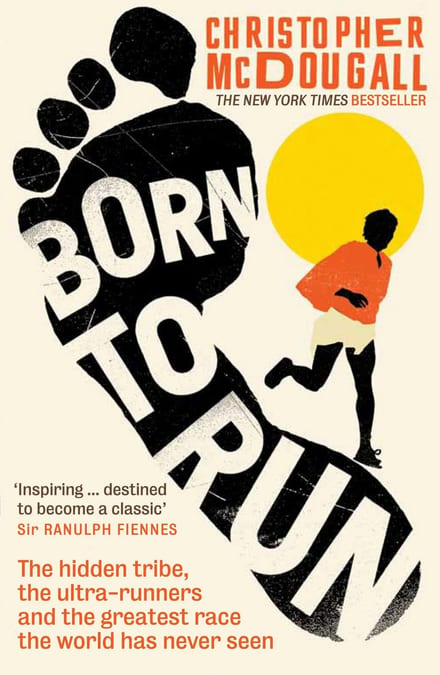
Born to Run: A Hidden Tribe, Superathletes, and the Greatest Race the World Has Never Seen
The full book runs ~287 pages — roughly 5 hours of reading. You get the key ideas here in 3 minutes.
The key ideas
- Evolution built human bodies for long-distance endurance running.
- Tarahumara run hundreds of miles injury-free in thin sandals.
- Cushioned shoes mute feedback and teach flawed, injury-prone form.
- Run barefoot or flat-soled to rebuild natural foot strength.
- Approach running as play, not punishment or obligation.
- Master easy, light, smooth form and speed follows.
The summary
Distance running should not wreck your body. For most of human history it didn’t. Your anatomy was shaped by persistence hunting—chasing animals across open ground until they dropped from heat exhaustion—which means the body is engineered to cover long distances. So why do 65 to 80 percent of modern runners get hurt every year, with doctors telling the injured to simply stop? Christopher McDougall’s answer is that the fault isn’t in running. It’s in the cushioned shoes that numb the feedback your feet need, and in treating running as a chore instead of the pleasure it was born to be.
The tribe that runs hundreds of miles
The clue is a group of people who don’t get injured. Deep in Mexico’s Copper Canyons live the Tarahumara, who run staggering distances over jagged terrain in nothing but thin sandals—one runner reportedly covered 435 miles without stopping. They don’t train. Running is simply part of who they are, celebrated in rarájipari, a traditional game where players kick wooden balls ahead of them across 50 or 60 miles, sometimes all night. A 1971 study called them the fittest people since the ancient Spartans. They live long, egalitarian lives largely free of heart disease and depression. What they never lost is the childhood sense that running is a joy.
Your body is a persistence hunter
We evolved to do this. Standing upright expanded our lung capacity for endurance; the Achilles tendon, arched feet, and powerful glutes act like springs that fling us forward efficiently. Four-legged animals can sprint, but galloping restricts their breathing and they can’t sweat to cool off, so over long distances a patient human wins. That heritage runs deep: a 64-year-old can outpace a 19-year-old, and in ultramarathons women often beat men, with the gap shrinking as the distance grows. As McDougall puts it, you don’t stop running because you get old—you get old because you stop running.
The shoes are the problem
If we’re built for it, why the injuries? The footwear. Studies link expensive running shoes to a 123 percent higher injury rate than cheap, flat-soled ones. Cushioning is the culprit: it hides the painful impact that would otherwise tell you your form is wrong, so you keep landing badly. Run barefoot and every step gives instant feedback—land poorly and it hurts, so you adjust and find a safe gait on your own. The natural inward roll of the foot, pronation, is real shock absorption, but shoe companies sold it as a defect to move “corrective” models. Thick soles also cage the foot, weakening the muscles and tendons meant to do the work. Barefoot Ted, a serious ultrarunner, cured chronic back pain simply by ditching his shoes. The Tarahumara, in sandals or nothing, stay whole.
Run for joy, then train like the Tarahumara
The other half is why you run. Treat it as a means to an end—punishment for eating, a box to tick—and you’ll learn to hate it. Ultrarunners keep going for love of the act; there’s little fame or money in it. Micah True, a former California boxer who became Caballo Blanco, the White Horse, walked away from modern life to live among the Tarahumara, adopting their sandals, their pinole-corn diet, and their brutal trails, and grew healthier and happier for it. He organized a 50-mile race in the canyons pitting Tarahumara runners against American stars, including elite ultrarunner Scott Jurek.
To prepare, McDougall trained under coach Eric Orton with a back-to-basics plan: form, strength, pace, and diet. He used a metronome to learn the Tarahumara’s quick, light foot turnover, ran in flat-soled shoes, and shifted to a mostly vegetarian diet of pinole and chia—maximum nutrition from the fewest calories, with carbs that digest fast and leave no bulk to haul. Jurek and many top ultrarunners eat the same way. The guiding mantra was simple: easy, light, smooth, and fast—get the first three and speed takes care of itself. McDougall shed 25 pounds, felt better, ran faster, and stopped getting hurt. He finished the grueling Copper Canyon race; the Tarahumara’s Arnulfo Quimare won it, beating Jurek.
The bottom line
If running hurts you, the problem is almost never running itself—it’s cushioned shoes that mute the signals your feet use to protect you, and a mindset that turns movement into a chore. Strip both away and the body remembers what it was made for. Read this if a doctor has told you to quit, or if you want to feel again what it was like to run as a kid, for no reason but the running.
Fact check
Popular books repeat findings that later research has complicated. Where Born to Run makes a testable claim, here's what the evidence actually shows.
Between 65 and 80 percent of modern runners are injured every year.
A systematic review of long-distance runners found annual lower-extremity injury incidence anywhere from 19.4% to 79.3%, so 65-80% sits at the very top of a range that swings by a factor of four depending on how loosely a study defines 'injury'. The largest single cohort in that literature, a survey of 4,358 male joggers after a 16 km race, put the one-year rate at 45.8%, with 14.2% needing medical care and 2.3% missing work. Measured per hour of running rather than per runner-year, a meta-analysis found 17.8 injuries per 1,000 hours in novice runners and 7.7 in recreational runners.
- van Gent RN, Siem D, van Middelkoop M, van Os AG, Bierma-Zeinstra SM, Koes BW. Incidence and determinants of lower extremity running injuries in long distance runners: a systematic review. Br J Sports Med. 2007;41(8):469-80. PubMed
- Marti B, Vader JP, Minder CE, Abelin T. On the epidemiology of running injuries. The 1984 Bern Grand-Prix study. Am J Sports Med. 1988;16(3):285-94. PubMed
- Videbæk S, Bueno AM, Nielsen RO, Rasmussen S. Incidence of running-related injuries per 1000 h of running in different types of runners: a systematic review and meta-analysis. Sports Med. 2015;45(7):1017-26. PubMed
Expensive cushioned running shoes carry a 123 percent higher injury rate than cheap flat-soled ones.
The controlled evidence finds no injury difference between shoe types at all, in either direction. A 2022 Cochrane review pooling 12 trials and 11,240 runners reported no reduction in lower-limb injuries from cushioned, minimalist, soft- versus hard-midsole, or foot-posture-prescribed shoes, and concluded there is no evidence that prescribing footwear by foot type prevents injury. The 4,358-runner Bern survey that popular accounts lean on for a price effect states in its own results that injuries were 'not significantly related to race running speed, training surface, characteristics of running shoes, or relative weight'.
- Relph N, Greaves H, Armstrong R, Prior TD, Spencer S, Griffiths IB, Dey P, Langley B. Running shoes for preventing lower limb running injuries in adults. Cochrane Database Syst Rev. 2022;8(8):CD013368. PubMed
- Marti B, Vader JP, Minder CE, Abelin T. On the epidemiology of running injuries. The 1984 Bern Grand-Prix study. Am J Sports Med. 1988;16(3):285-94. PubMed
Running barefoot or in flat-soled shoes restores natural form and stops the injuries that cushioned shoes cause.
The mechanical half is real: habitually barefoot runners land on the forefoot or midfoot rather than the heel, and those landings generate smaller collision forces than shod rear-foot strikes. The injury half does not follow. In a 12-week comparison of 99 runners, the conventional neutral shoe produced 4 injuries against 12 in the partial-minimalist shoe, and full-minimalist runners reported more shin and calf pain. A randomised trial of 140 rearfoot runners assigned to minimalist footwear, gait retraining or control found no difference in injury incidence between groups — only a shift in where the injuries occurred.
- Lieberman DE, Venkadesan M, Werbel WA, Daoud AI, D'Andrea S, Davis IS, Mang'eni RO, Pitsiladis Y. Foot strike patterns and collision forces in habitually barefoot versus shod runners. Nature. 2010;463(7280):531-5. PubMed
- Ryan M, Elashi M, Newsham-West R, Taunton J. Examining injury risk and pain perception in runners using minimalist footwear. Br J Sports Med. 2014;48(16):1257-62. PubMed
- Abran G, Schwartz C, Dardenne N, Delvaux F, Croisier JL. Minimalist footwear and softer running technique alter injury location but not incidence in recreational endurance runners. Am J Sports Med. 2026;54(1):109-117. PubMed
Human anatomy was shaped by long-distance running, right down to the Achilles tendon, arched feet and sweat cooling.
This is the mainstream reading of the fossil and comparative evidence. Bramble and Lieberman's Nature paper argues endurance running is a derived capability of the genus Homo appearing roughly 2 million years ago, and catalogues the skeletal and physiological features that support it — spring-like tendons, a stabilised head and trunk, and heat-dissipation traits absent in other primates, which are poor sprinters over distance. What remains debated is how much of that anatomy was driven by persistence hunting specifically rather than by scavenging or general foraging, not whether the running adaptations are there.
- Bramble DM, Lieberman DE. Endurance running and the evolution of Homo. Nature. 2004;432(7015):345-52. PubMed
Frequently asked questions
What is Born to Run about?
Christopher McDougall sets out to answer why 65 to 80 percent of modern runners get hurt every year when the human body was shaped by persistence hunting to cover long distances comfortably. His answer is that the fault isn't in running but in cushioned shoes that numb the feedback your feet need, and in treating running as a chore instead of the joy it was born to be. The search leads him to Mexico's Copper Canyons and the Tarahumara, who run enormous distances in thin sandals without getting injured.
What are the key takeaways from Born to Run?
The Tarahumara run hundreds of miles injury-free because they never lost the childhood sense that running is a joy, and never wore modern shoes. Your body is a persistence hunter, built with spring-like tendons and the ability to sweat, so patient humans can outlast faster animals. Expensive cushioned shoes are linked to a 123 percent higher injury rate because they hide the impact that would correct your form. The fix is to run for love, then train like the Tarahumara, with a quick light stride, a pinole-and-chia diet, and the mantra 'easy, light, smooth, and fast.'
Who should read Born to Run?
Read it if a doctor has told you to quit running, or if you want to feel again what it was like to run as a kid, for no reason but the running. It speaks to injured runners and anyone curious about how we're built to move.
Is Born to Run worth reading?
Yes, for a genuinely thrilling narrative that builds toward a 50-mile race in the canyons while making its case about form, footwear, and joy. Keep in mind the barefoot and cushioning arguments are presented one-sidedly and remain debated, so treat the shoe claims as a provocative starting point rather than settled science.