Book summary
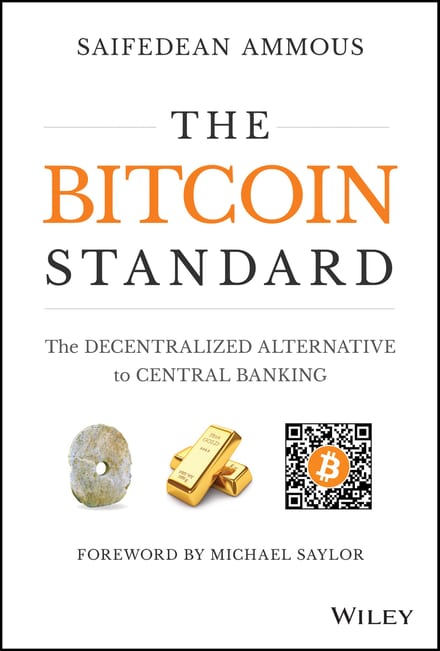
The Bitcoin Standard: The Decentralized Alternative to Central Banking
The full book runs ~304 pages — roughly 6 hours of reading. You get the key ideas here in 3 minutes.
The key ideas
- Scarcity makes money work; easy production destroys it every time
- Gold standards delivered stable prices and strong savings for generations
- Fiat money punishes savers, funds endless wars, distorts price signals
- Bitcoin caps supply at 21 million, creating unforgeable digital scarcity
- Decentralized blockchain secures transactions; a 51% attack is economically irrational
- Bitcoin excels as a store of value and neutral settlement layer
The summary
Money only works when nobody can make more of it easily. That single idea runs through Saifedean Ammous’s history of currency, and it’s the lens he uses to judge everything from Rai stones to the dollar. When money is hard to produce, it holds its value, people save, and prices tell the truth. When a government can print it at will, whole societies drift toward debt, short horizons, and broken price signals. Bitcoin matters, he argues, because it rebuilds the one property that made gold work — scarcity — in a form no state can dilute.
Hard-to-make money is the only kind that lasts
Money emerged to fix the clumsiness of barter, where a trade only happened if two people each wanted what the other was holding. The forms that survived shared a trait: they were costly to produce. The islanders of Yap used giant Rai stones as money until better tools made the stones easy to quarry, and the currency collapsed almost overnight. Gold won out across the world for the opposite reason — durable, divisible, and painfully hard to dig out of the ground. Ammous reads the same pattern into the collapse of empires: “As with Rome, the fall of Constantinople happened only after its rulers had started devaluing the currency.”
From the gold standard to a world of fiat
By the eighteenth century most major economies backed their paper notes with real metal. Britain adopted the gold standard in 1717, and about fifty countries had followed by 1900. It worked because a government couldn’t print past its reserves, so prices stayed stable and savings held their value. World War I broke the discipline: European states abandoned gold to fund the fighting, printed freely, and watched their currencies sink — while the still-backed Swiss franc held. Returning to the old parity afterward proved impossible, so governments settled for fiat money backed by nothing but trust. Bretton Woods tried to restore order in 1944 by pinning currencies to the dollar and the dollar to gold, but inflation wore it down, and in 1971 Nixon cut the last link. We’ve lived in a purely fiat world since.
Easy money warps the whole economy
Sound money rewards patience. When your savings will still be worth something in twenty years, you invest for the long run. Easy money flips the incentive: it punishes savers and rewards borrowers, and the numbers show it. The average savings rate across the seven largest advanced economies was 12.66% in 1970; by 2015 it had fallen to 3.39%, a drop of nearly three-quarters. The Keynesian habit of expanding the money supply during recessions pours cheap credit into the system, inflates bubbles, and scrambles the price signals investors depend on, so capital flows to the wrong places and boom follows bust follows boom. Printing also removes the natural brake on state power — a government that can conjure money doesn’t need to tax or borrow at honest rates to fund a war. Ammous’s charge is that the orthodoxy defending central management of the money supply has the historical record backwards: gold delivered stable prices for generations, and fiat has delivered inflation and crises.
Bitcoin rebuilds scarcity in code
This is where bitcoin enters as a technological answer. Its supply is capped at 21 million coins, released on a predictable, slowing schedule that ends around 2140, and no government or coalition can rewrite that limit. Unlike ordinary commodities, where a higher price pulls more supply out of the ground, bitcoin’s supply doesn’t respond to demand at all. That makes it immune to devaluation and puts it in gold’s category as a store of value. Security comes from a decentralized public blockchain: every transaction needs majority approval from the network and lands in a transparent ledger anyone can check, with no central authority in the middle. The real weakness today is volatility — with a supply that ignores demand and no central bank to smooth the swings, early prices lurch around. Ammous expects that to settle as the market deepens and the institutions around bitcoin mature, echoing gold’s own path to becoming money.
What it’s actually good for
Bitcoin’s strongest use is as a store of value; its guaranteed scarcity arguably makes it the best savings technology ever built. It restores individual sovereignty by letting you move value across the world without anyone’s permission, and it works as a fast, transparent, borderless settlement layer that could act as a neutral reserve currency tied to no nation’s fortunes. Ammous also swats down the usual objections. Mining isn’t waste; it’s how electricity gets converted into unforgeable records that secure the network. Bitcoin is poorly suited to serious crime, since the pseudonymous ledger is permanently traceable and raises the odds of getting caught. A 51% attack is technically possible but self-defeating, because pulling it off would destroy the value of the very asset being stolen. And of the more than 732 altcoins that existed by 2017, none matched bitcoin’s decentralization or demand.
The bottom line
Currency a government can print erodes savings and distorts every economic decision; bitcoin’s fixed ceiling of 21 million coins recreates the scarcity that made gold work, only in digital form. If you’ve ever wondered what your savings will really be worth in a few decades, this is the book that lays out the case.
Fact check
Popular books repeat findings that later research has complicated. Where The Bitcoin Standard makes a testable claim, here's what the evidence actually shows.
The classical gold standard delivered stable prices for generations, while the fiat era has delivered inflation and crises.
On long-run prices the book is right: US inflation averaged 0.1% a year under the classical gold standard of 1880-1914, against 4.1% a year from 1946 to 2003. Year to year, the gold era was the less stable of the two. Michael Bordo's figures put the coefficient of variation of US prices at 17.0 for 1879-1913 versus 0.88 for 1946-1990, real output variability at 3.5 versus 0.4, and unemployment averaging 6.8% versus 5.9%. Stable across decades, turbulent across quarters, is the fairer summary.
- Bordo MD. Gold standard. In: The Concise Encyclopedia of Economics. Library of Economics and Liberty. Accessed July 30, 2026. Source
Fiat money has gutted saving: the average savings rate across the seven largest advanced economies fell from 12.66% in 1970 to 3.39% in 2015.
Household saving out of disposable income is genuinely low — the US personal saving rate stood at 3.0% in May 2026 — but that narrow measure carries the whole argument. Gross national saving, which counts what firms and governments set aside alongside households, barely moved across the same economies: on World Bank data the six G7 countries with 1975 figures averaged 22.2% of GDP then and 20.1% in 2015, with 1990 sitting in between. A shift in who does the saving is not the same as a three-quarters collapse in how much gets saved.
Britain adopted the gold standard in 1717, and about fifty countries had followed by 1900.
1717 is a fair marker for Britain — Newton, as Master of the Mint, set a ratio that overvalued gold and put the country on an effective gold standard — though silver's legal-tender status was not restricted until 1774, and gold was formally adopted in 1816 and resumed in 1821. The country count runs well ahead of the record. Lawrence Officer's catalogue of the classical gold standard shows about thirty countries on gold in 1900 and just under forty by 1913; the tally approaches fifty only on the eve of the First World War.
- Officer LH. Gold standard. EH.Net Encyclopedia. Economic History Association. Accessed July 30, 2026. Source
Frequently asked questions
What is The Bitcoin Standard about?
Saifedean Ammous argues that money only works when nobody can make more of it easily, and uses that single idea to trace the history of currency from Rai stones to the dollar. When money is hard to produce it holds value, people save, and prices tell the truth; when governments can print at will, societies drift toward debt and broken price signals. Bitcoin matters, he says, because it rebuilds the scarcity that made gold work, in a form no state can dilute.
What are the key takeaways from The Bitcoin Standard?
Hard-to-make money is the only kind that lasts, which is why gold won out and why easy money is corrosive: across the seven largest advanced economies the savings rate fell from 12.66% in 1970 to 3.39% by 2015. The book walks from the gold standard through World War I, Bretton Woods, and Nixon severing the last link in 1971 into today's purely fiat world. Bitcoin's supply is capped at 21 million coins on a fixed schedule, making it immune to devaluation, with volatility its main current weakness.
Who should read The Bitcoin Standard?
If you've ever wondered what your savings will really be worth in a few decades, this is the book that lays out the case. It's for readers curious about sound money, monetary history, and why bitcoin's scarcity is treated as its core feature.
Is The Bitcoin Standard worth reading?
It's worth reading for a clear, forceful history of why scarce money holds value and how fiat erodes it. Just know it's strongly one-sided: Ammous swats down objections to bitcoin more than he tests them, so if you want a balanced weighing of the risks you'll need to read it alongside a skeptic.