Book summary
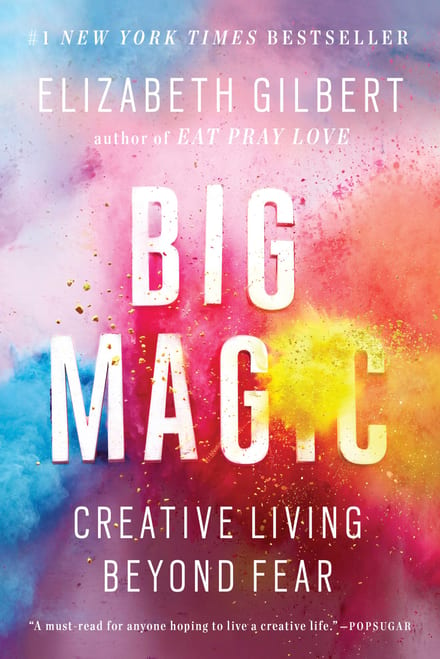
Big Magic: Creative Living Beyond Fear
The full book runs ~312 pages — roughly 6 hours of reading. You get the key ideas here in 2 minutes.
The key ideas
- Chase ideas fast—inspiration has a shelf life and moves on.
- Let fear ride along instead of fighting to conquer it.
- Keep your day job so art never pays the rent.
- Ditch perfectionism—done beats good, imperfect beats paralyzed.
- Create for yourself first, driven by relentless curiosity.
- Treat rejection as impersonal; context shifts, the work stays.
The summary
Gilbert treats ideas as living things. They exist independently of us, she says—drifting through the world like animals and plants, looking for a person ready to bring them to life. When a thought keeps grabbing hold of you, that isn’t random. An idea has picked you, and it won’t wait forever. Ignore it, get distracted, let fear talk you out of it, and it moves on to someone more receptive. She learned this the hard way after abandoning a novel set in the Amazon jungle. Soon another writer began a novel with an almost identical concept, and to Gilbert the meaning was obvious: the idea she’d neglected had simply found a new taker. You don’t have to believe the metaphysics to get the practical point. Inspiration has a shelf life. Answer it promptly, before it leaves.
Underneath all of this is a gentle premise: “The universe buries strange jewels deep within us all, and then stands back to see if we can find them.” Creative living means going digging. Your particular jewel might be painting or writing, but it might just as easily be karate or gardening, and none of it requires an academic credential or anyone’s permission. Creativity comes from real-world living and an open mind, not from a degree that legitimizes your passion.
Fear gets a seat, not the wheel
Every time you reach for something creative, fear turns up, and Gilbert’s advice is not to defeat it—you can’t—but to let it ride along. Fear is natural; it’s a signal that something matters to you. The trick is to stop wrestling it. “The less I fight my fear, the less it fights back,” she writes. “If I can relax, fear relaxes, too.” Your inner critic works the same territory, insisting you’re bound to fail. Answer it by claiming your identity out loud and on purpose: I’m a writer, I’m a painter, I’m a runner. Say it before you feel you’ve earned it, because you measure your worth by your dedication to the path, not by your wins and losses.
That reframe matters most when the rejection lands, and it will—everyone meets it before any success. Rejection is impersonal. Gilbert once had a story dismissed by an editor; years later, after she’d become famous, she sent that same story to the same editor, who now found it amazing and special. The words on the page hadn’t changed at all. Only the context around them had.
Keep the day job, treat art like an affair
One of Gilbert’s most freeing arguments is that you should not make your art pay your rent. When creative work has to earn a living, the pressure warps it—both the quality and your pleasure in doing it suffer. So keep the day job and approach your creative work like a secret affair, something you steal time for and return to as a beloved ritual in the middle of ordinary life. Before they were famous, Toni Morrison and J.K. Rowling did exactly that, carving writing out of routine days. Hunt for those “between” moments: the minutes before bed, the commute, the quiet before anyone else is awake. They add up, and they come without the crushing demand that this has to work.
When an idea does arrive, treat it as a partner that deserves dignity, not something to fret over, fight, or put off. Give it real attention—more rest so you’re alert, protected blocks of uninterrupted time—and let yourself feel satisfied with genuine progress instead of holding out for a finish line.
Perfectionism is fear in disguise
Perfectionism looks like high standards, but Gilbert reads it as insecurity and fear of unworthiness dressed up as rigor. Perfection is impossible anyway; there will always be a flaw you or someone else can find, so chasing it is a waste. Create imperfectly. Done is better than good. And expect obstacles as a permanent part of the work rather than a sign you’ve taken a wrong turn—learning to cope with frustration and self-doubt is as much a part of creating as the making itself. “Whatever you practice, you will improve at,” she reminds you, and that includes the practice of showing up when it’s uncomfortable.
To keep going for the long haul, stop treating any single piece as sacred or as your crowning achievement. You can always make something better later, or worse, and it doesn’t much matter as long as you still enjoy the process. Reframe every result, especially the failures, as simply “interesting”—an attitude that pushes you toward growth instead of surrender.
Make it for you first
Your art is for you, not an audience. Get passionate about sharing what you actually want to share, and don’t get paralyzed by originality, because nothing is wholly original; authenticity is the only bar that counts. Stay curious about everything, and watch for the clues that point to your next idea in conversations, objects, stray thoughts. Living creatively, in the end, just means living curiously and staying in cooperative conversation with the ideas that come knocking.
The bottom line
Ideas are living things that leave if you don’t act on them, and your creativity stays healthy precisely because you never force it to pay the bills. Fear and imperfection aren’t obstacles to clear before you begin—they’re the permanent traveling companions of anyone who makes things. Read this if you want to create but feel stuck behind fear, perfectionism, or the belief that art has to suffer or come with credentials to count.
Frequently asked questions
What is Big Magic about?
Elizabeth Gilbert makes the case for creative living beyond fear, treating ideas as living things that drift through the world looking for someone ready to bring them to life. When a thought keeps grabbing you, an idea has picked you, and it won't wait forever. You don't have to buy the metaphysics to get the practical point: inspiration has a shelf life, and creativity is a way of living curiously, not a credential you earn.
What are the key takeaways from Big Magic?
Answer inspiration promptly, because ideas move on if you stall. Let fear come along for the ride but never hand it the wheel, and claim your creative identity out loud before you feel you've earned it. Keep your day job so your art never has to pay the rent, and treat creative work like a secret affair squeezed into 'between' moments. Perfectionism is just fear in disguise, so create imperfectly, treat failure as merely 'interesting,' and make the work for yourself first.
Who should read Big Magic?
Read it if you want to create but feel stuck behind fear, perfectionism, or the belief that art has to suffer or come with credentials to count. It's a warm push for anyone who keeps talking themselves out of making things.
Is Big Magic worth reading?
Yes, if you need encouragement more than technique. Its freeing arguments, especially not forcing your art to pay the bills and treating rejection as impersonal, are genuinely useful. The mystical framing of ideas as sentient beings won't land for everyone, but the practical advice underneath survives even if you set the magic aside.