Book summary
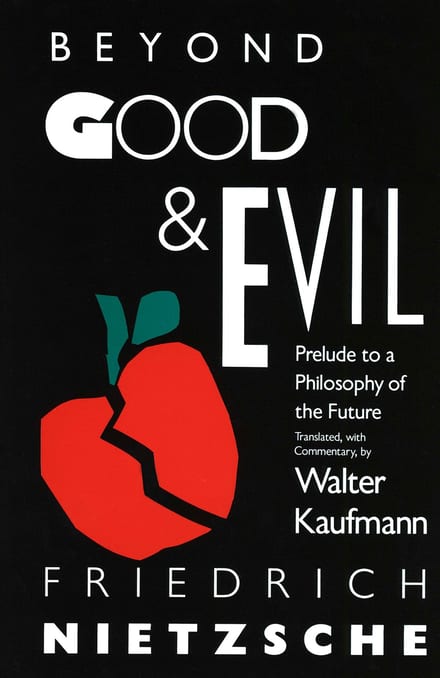
Beyond Good and Evil
The full book runs ~174 pages — roughly 3 hours of reading. You get the key ideas here in 3 minutes.
The key ideas
- Reject inherited binaries of good, evil, truth, and falsehood
- Recognize the will to power beneath all thinking
- Trace Christian morality to the resentment of the weak
- Doubt the unified 'I' as theological fiction
- Embrace suffering as the crucible of excellence
- Become a free spirit who creates his own values
The summary
Start with the question no one asks: why do we assume truth is worth more than illusion? Nietzsche opens by refusing the comfortable binaries—true versus false, good versus evil—that hold up nearly every philosophy ever written. Those oppositions aren’t discoveries about the world. They’re the philosopher’s own prejudices, promoted to the rank of universal law. In fact, he argues, every philosophy is “a kind of involuntary and unconscious memoir,” a confession of the temperament that produced it. Before you can think honestly, you have to be willing to crush your own moral prejudices and descend somewhere less flattering.
No one is thinking neutrally
We flatter ourselves that reason drives us. Nietzsche says it doesn’t. Under conscious thought runs a churn of physiological drives, and the strongest is the will to power—not mere survival but the urge to expand, discharge strength, impose yourself on the world. “A living thing seeks above all to discharge its strength—life itself is will to power; self-preservation is only one of the indirect and most frequent results.” Even the phrase “I think” smuggles in claims it can’t justify: that there’s a stable “I,” that thinking is a single clear act. The unified soul or self is a fiction inherited from Christian theology. You’re not one thing but a crowd of competing drives, held together only by that underlying will, and the noble motives you give yourself are usually darker ones you’ve rationalized after the fact.
Morality is the weak taking revenge
Nietzsche’s hardest blow lands on Christian morality, which he traces to what he calls slave morality. It arose among the oppressed, out of resentment toward those who ruled them. Unable to overpower their masters, the weak rewrote the scoreboard: they turned their own limitations—meekness, pity, selflessness—into “virtues,” and branded the masters’ freedom, strength, and sensuality as “evil.” Over centuries this inversion won. The life-affirming master moralities of earlier societies were overtaken by a life-denying herd morality that asks you to suppress your desires for the sake of the group. Morality tamed our outward aggression, but it turned that energy inward, breeding guilt and self-denial. Christianity also spread the idea that all people are equal, which Nietzsche flatly rejects. People differ enormously in strength, intelligence, and ability, and enforcing sameness only holds back the rare individuals who move a culture forward.
Suffering is the price of anything worth becoming
Because of this, Nietzsche has no patience for philosophies that measure life by pleasure and pain and dream of abolishing suffering. Suffering, to him, is the crucible. It strengthens the soul, sharpens virtue, and forces a person to make and remake himself. A life engineered for comfort produces nothing. “The strength of a person’s spirit would then be measured by how much ’truth’ he could tolerate”—how much reality he can face without needing it sweetened, disguised, or falsified.
The free spirit creates its own values
Against the conformity of scholars who merely repeat their predecessors, Nietzsche calls for the “free spirit”: the independent thinker who rejects inherited dogma and experiments his way toward new values. He also throws out Plato’s dream of an eternal, unchanging Truth existing beyond human beings. There are no such transcendent truths, only perspectives, only the languages and viewpoints through which we make sense of experience. That’s why every philosophy is bound to its author, and why honesty means owning where you stand rather than pretending to a view from nowhere. The work is dangerous: “He who fights with monsters might take care lest he thereby become a monster. And if you gaze for long into an abyss, the abyss gazes also into you.” The free spirit risks isolation and ruin, but for Nietzsche a decadent European culture can only be renewed by minds willing to live without the old comforts.
The bottom line
Nietzsche’s claim is that our inherited morality is not the voice of reason or God but the resentment of the weak made to sound like universal law, and that real thinkers must have the strength to create values of their own, suffering and all. Read this if you’re prepared to have your assumptions about good, truth, and selfhood taken apart, and you’d rather be unsettled than comforted.
Frequently asked questions
What is Beyond Good and Evil about?
Nietzsche refuses the comfortable oppositions, true versus false and good versus evil, that prop up nearly every philosophy, calling them the philosopher's own prejudices dressed up as universal law. Every philosophy, he says, is an involuntary memoir of the temperament that produced it. The book is an invitation to think without those inherited crutches, even when doing so leads somewhere far less flattering than we'd like.
What are the key takeaways from Beyond Good and Evil?
No one thinks neutrally: beneath conscious reason runs the will to power, the urge to expand and impose yourself, and the unified 'self' is a fiction, really a crowd of competing drives. Christian morality is traced to 'slave morality,' the resentment of the weak who rebranded meekness as virtue and strength as evil. Suffering is the crucible that forges anything worth becoming, there are no transcendent truths, only perspectives, and the 'free spirit' has to create its own values rather than repeat inherited dogma.
Who should read Beyond Good and Evil?
Read it if you're prepared to have your assumptions about good, truth, and selfhood taken apart, and you'd rather be unsettled than comforted. It suits readers who want to be provoked into thinking, not reassured.
Is Beyond Good and Evil worth reading?
It's worth it if you want a genuine challenge to how you think about morality and the self, delivered in aphorisms that reward slow reading. Be warned that it's deliberately unsettling and offers no comforting system to land on, so anyone looking for tidy conclusions or reassurance should probably skip it.