Book summary
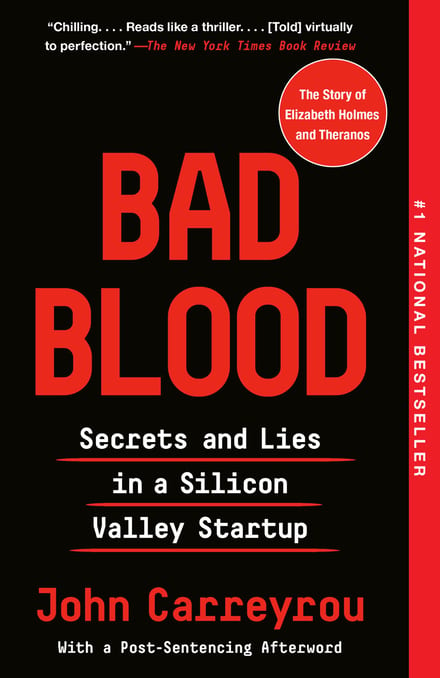
Bad Blood: Secrets and Lies in a Silicon Valley Startup
The full book runs ~352 pages — roughly 6 hours of reading. You get the key ideas here in 2 minutes.
The key ideas
- Promised revolutionary blood test that never actually worked
- Faked demos on commercial machines, hid a 65% failure rate
- Sold vision through Jobs-style charisma and investor FOMO
- Silenced dissent with NDAs, threats, and private investigators
- Endangered real patients with unreliable diagnostic results
- Collapsed in 2018; founders convicted and imprisoned for fraud
The summary
Silicon Valley loves a founder who fakes it until they make it, and that tolerance is mostly harmless — right up until the product is a medical diagnosis. Theranos is the story of what happens when it isn’t. Elizabeth Holmes, who feared needles and had wanted to be a billionaire since she was ten, sold an irresistible pitch: a credit card–sized device that would draw blood from a single pinprick, feed it to a toaster-sized machine called Edison, and test for over 200 diseases cheaply, in every home. By 2014 the company had reached a $9 billion valuation and signed deals with Walgreens and Safeway. The device never worked.
The technology never cleared its hurdles
The original idea was a wearable microneedle patch, abandoned once it turned out microneedles couldn’t draw enough blood. Edison was the pivot, and its problems were never solved. You can’t test for more than about 80 diseases from so small a sample, yet Theranos promised more than 200. The blood grew increasingly diluted during processing, which made results inaccurate. Edison was temperature-sensitive and unreliable in different climates. The pipettes clogged constantly and needed specialists to fix. These weren’t teething pains; they were fundamental flaws that made the machine unfit for medicine.
So Theranos hid them. It boasted higher accuracy than competitors while running a 65% failure rate overall, with some key tests, like testosterone, failing 87% of the time. During demonstrations, staff secretly ran the samples on standard commercial machines and passed the numbers off as Edison’s. When Edison was flatly nonfunctional, they displayed made-up results. They excluded inconvenient outliers to make the data fit. And they handed this unreliable data to real patients making real medical decisions.
The reality distortion field
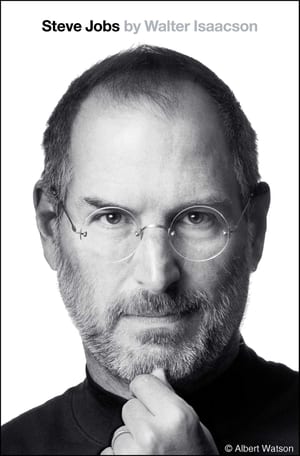
Holmes was extraordinary at selling the story. She modeled herself on Steve Jobs — black turtlenecks, a deliberately deepened voice, even Apple’s ad agency. One observer noted that “like her idol Steve Jobs, she emitted a reality distortion field that forced people to momentarily suspend disbelief.” Another said, “Elizabeth was so persuasive. She had this intense way of looking at you while she spoke that made you believe in her and want to follow her.” The technology looked disruptive, investors were terrified of missing out, and by planting Theranos in the heart of the Valley, Holmes channeled its fake-it culture and went to extreme lengths to hide the fakery.
That included the regulators. Theranos lied continuously to investors and government agencies. It claimed Edison was merely an “informational tool” rather than a medical device to dodge FDA scrutiny, then cherry-picked the handful of tests that could pass approval and publicly posed as an advocate for tougher FDA rules — generating flattering press while concealing how little had actually been approved. It also funded astroturf advocacy groups to push for looser standards.
The human cost of deception
Inside the company, the toll was severe. Employees resigned over the dishonesty, and many were replaced by workers dependent on Theranos for their visas. Everyone signed NDAs; some were threatened and tailed by private investigators. Ian Gibbons, the chief scientist who had worked there for a decade, was demoted for questioning the company’s practices. Two months later, the night before he was scheduled to be deposed in a lawsuit, he took his own life.
When Wall Street Journal reporter John Carreyrou and his sources began digging, they faced threats and harassment. They published anyway. As the evidence surfaced, partnerships collapsed and litigation piled up. Theranos dissolved on September 4, 2018. Holmes and former company president Sunny Balwani were convicted of fraud; Holmes was sentenced to 11 years and 3 months, Balwani to 12 years and 11 months plus three years of probation, and the two were ordered to jointly pay $452 million to victims.
The bottom line
Silicon Valley’s shrug at exaggeration stops being harmless the instant the product is someone’s health, and Theranos shows how founder charisma, investor fear of missing out, and a permissive culture around the truth can keep billions flowing into a machine that doesn’t work. Read this if you want to understand how fraud scales inside an ecosystem built on hype.
Frequently asked questions
What is Bad Blood about?
It tells the true story of Theranos, the Silicon Valley startup that promised a credit-card-sized device and a machine called Edison could run over 200 tests from a single pinprick of blood. Elizabeth Holmes rode that pitch to a $9 billion valuation and deals with Walgreens and Safeway, but the technology never actually worked. The book traces how founder charisma, investor fear of missing out, and a culture that shrugs at exaggeration kept billions flowing into a machine that handed unreliable results to real patients.
What are the key takeaways from Bad Blood?
Faking it stops being harmless the moment the product is someone's health. Edison's flaws were never fixable: you can't test 200 diseases from so small a sample, the blood grew diluted, the machine was temperature-sensitive, and it ran a 65% failure rate. Theranos hid all of it by secretly running samples on commercial machines, displaying made-up numbers, and excluding inconvenient data, then dodged the FDA by calling Edison an 'informational tool.' Dissent was crushed with NDAs, threats, and private investigators.
Who should read Bad Blood?
Anyone who wants to understand how fraud scales inside an ecosystem built on hype, and how founder charisma and investor FOMO can override common sense. It's especially sharp for founders, investors, and anyone drawn to the 'fake it till you make it' myth of the Valley.
Is Bad Blood worth reading?
Yes. It's a gripping account written by John Carreyrou, the journalist who broke the story, and it doesn't flinch from the human cost, from employees threatened and tailed to chief scientist Ian Gibbons taking his own life. If you're after a business how-to rather than a cautionary tale, it isn't that, but as an anatomy of deception it's hard to beat.