Book summary
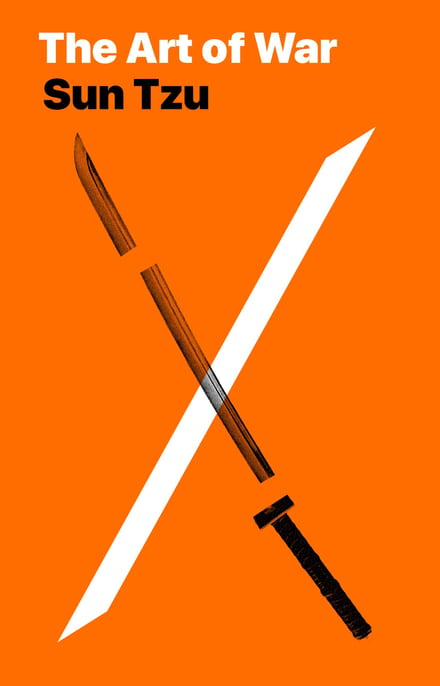
The Art of War
The full book runs ~90 pages — roughly 2 hours of reading. You get the key ideas here in 3 minutes.
The key ideas
- Win before fighting by reading terrain, timing, and morale
- Deceive constantly—appear weak when strong, absent when near
- Fight only when victory is all but assured
- Know yourself and your enemy to survive a hundred battles
- Move fast and preserve value; never prolong war
- Lead soldiers with humanity first, discipline second
The summary
The best general wins before the first blow lands. Writing more than 2,500 years ago during China’s era of warring states, Sun Tzu argued that battles are largely decided in advance — by the commander who reads terrain, morale, timing, and the opponent so accurately that a rival can be maneuvered into yielding. Actual fighting is the expensive last resort. “The best thing of all is to take the enemy’s country whole and intact; to shatter and destroy it is not so good.” The highest skill is to win without fighting at all.
Weigh the odds before you commit
Sun Tzu is relentless about assessment. Before engaging, weigh five factors: morale, the unity of your people and troops; weather, adapting to seasons and conditions; terrain, turning geography and position to your advantage; leadership, the wisdom and sincerity that builds confidence; and doctrine, a constant set of principles everyone follows. Only when the tally points to victory do you move. “If fighting is sure to result in victory, then you must fight, even though the ruler forbid it; if fighting will not result in victory, then you must not fight even at the ruler’s bidding.” Judgment on the ground outranks orders from the throne — and no ruler should send troops into the field merely to gratify his own spleen.
All warfare is based on deception
War is a contest of perception. “When able to attack, we must seem unable; when using our forces, we must seem inactive; when we are near, we must make the enemy believe we are far away; when far away, we must make him believe we are near.” Appear where you are not expected, strike where the enemy is weak, and keep your own weaknesses hidden. The clever commander imposes his will on the enemy without letting the enemy impose in return — dangling an advantage to draw a rival forward, or inflicting damage to keep him at bay. Rather than beating opponents at their own game, find the frontier they have overlooked and change the game entirely.
Know yourself, know the enemy
The book’s most quoted line is also its strategic core: “If you know the enemy and know yourself, you need not fear the result of a hundred battles. If you know yourself but not the enemy, for every victory gained you will also suffer a defeat. If you know neither the enemy nor yourself, you will succumb in every battle.” Self-knowledge without intelligence about the opponent is only half an advantage. That is why Sun Tzu prizes foreknowledge above almost everything, and why he treats spies as indispensable — “on them depends an army’s ability to move.” Information moves armies; without it, even a strong force gropes in the dark.
Win fast, and leave value intact
Prolonged war is a trap. It drains the treasury and exhausts the troops, so speed becomes a weapon in its own right. “Rapidity is the essence of war: take advantage of the enemy’s unreadiness, make your way by unexpected routes, and attack unguarded spots.” But speed is not savagery. The point is to preserve what you take, not burn it down, and to win through strategy and maneuver wherever you can. There is even calculation in mercy: “When you surround an army, leave an outlet free.” A cornered enemy with nothing to lose fights with desperate ferocity, so give him a way out rather than a reason to become deadly. Yet place your own force in real peril and it will fight hardest of all — “it is precisely when a force has fallen into harm’s way that it is capable of striking a blow for victory.”
Lead with humanity, then discipline
For all its cold arithmetic, the book insists that leadership is human before it is technical. Treat soldiers with care first: “Regard your soldiers as your children, and they will follow you into the deepest valleys… they will stand by you even unto death.” Study their well-being and do not overtax them, because tenacity, unity of purpose, and a spirit of sympathetic cooperation are what actually win battles. Lead by example, not by force. And guard against five faults that ruin commanders: recklessness, which leads to destruction; cowardice, which leads to capture; a hasty temper, which insults can provoke; a delicacy of honor too sensitive to shame; and over-solicitude for one’s men, which invites worry and paralysis. The great general pairs warmth with the nerve to estimate distances, dangers, and difficulties without flinching.
The bottom line
Sun Tzu’s enduring claim is that the highest victory is won without fighting — by knowing yourself and your rival so well, and maneuvering so skillfully, that the outcome is settled before any clash. Read this if you lead in any competitive arena where information, timing, and morale decide more than raw force ever could.
Frequently asked questions
What is The Art of War about?
Written more than 2,500 years ago, it argues that the best general wins before the first blow lands, by reading terrain, morale, timing, and the opponent so accurately that a rival can be maneuvered into yielding. Actual fighting is the expensive last resort, and winning without fighting at all is the highest skill.
What are the key takeaways from The Art of War?
Weigh five factors before committing, morale, weather, terrain, leadership, and doctrine, and only move when the tally points to victory. All warfare is based on deception, so appear where you're not expected and strike where the enemy is weak. Know the enemy and know yourself and you need not fear a hundred battles. Win fast to avoid draining the treasury, leave a cornered enemy an outlet, and lead with humanity first, treating soldiers like your own children while guarding against the five faults that ruin commanders.
Who should read The Art of War?
Anyone who leads in a competitive arena where information, timing, and morale decide more than raw force ever could.
Is The Art of War worth reading?
Yes, its core ideas about preparation, deception, and self-knowledge translate far beyond the battlefield into business and negotiation. It's ancient and aphoristic, so readers wanting modern examples or step-by-step tactics will have to do the interpreting themselves, but that compression is part of its staying power.