Book summary
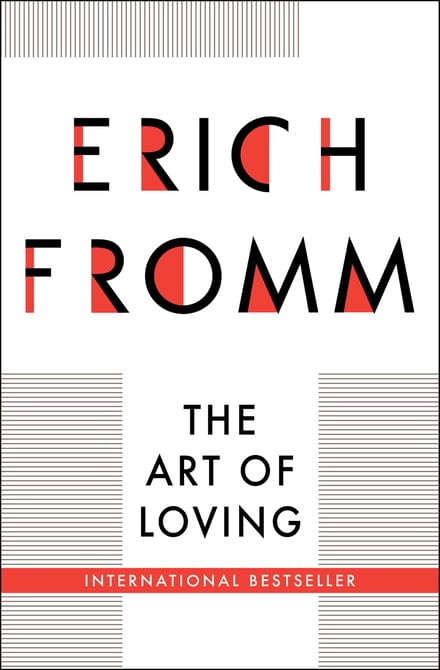
The Art of Loving
The full book runs ~138 pages — roughly 3 hours of reading. You get the key ideas here in 3 minutes.
The key ideas
- Master love as an art requiring discipline, knowledge, and effort
- Reject the market view of love as exchange value
- Build love on care, responsibility, respect, and knowledge
- Give from your inner aliveness, not from sacrifice
- Extend love outward as an orientation toward all people
- Love yourself first; selfishness signals a lack of self-love
The summary
Most people treat love as a problem of being loved, not of loving. You assume that if you can make yourself attractive, successful, or interesting enough, the right person will appear and love will simply happen to you. Erich Fromm says this has it exactly backward. Love is an art, a discipline you develop the way you’d develop any real skill, and almost no one bothers to learn it because we’re all too busy trying to be lovable.
The mistake goes deeper than laziness. We’ve absorbed a market mindset about the whole thing. “When two people fall in love,” Fromm writes, “they feel that they’ve found the best object available on the market in light of their own exchange value.” You weigh a partner’s looks, status, and charm against your own and strike a deal when the terms feel fair. The intoxication we call “falling in love” — sudden, overwhelming, mostly sexual — gets mistaken for the real thing, and when it fades, as it always does, the relationship has nothing underneath it. Genuine love isn’t a feeling that seizes you. It’s built from care, responsibility, respect, and knowledge, and those are practices, not moods.
We are all trying to escape our separateness
Fromm starts with the human condition. We’ve stepped out of nature and become aware of ourselves, and that awareness carries a price: we know we are separate, alone, and mortal. The anxiety that follows is the engine behind most of what people do. Some reach for orgiastic states — drugs, sex, ritual — that dissolve the self for a while but leave guilt and deeper isolation behind. Most people in modern society choose conformity instead, blending into the group until their individuality disappears. It’s a poor cure. It flattens genuine experience and never touches the loneliness underneath, which is why a culture of near-perfect conformists still produces so much addiction and despair. Even work, which can unite us with the world, mostly turns us into interchangeable cogs.
Love is the only union that solves the problem without erasing you. It lets you fuse with another person while keeping your own integrity intact. That’s what makes it so valuable, and so demanding.
Love is something you do
Real love is active. It’s a form of giving — but not the martyr’s kind, where you sacrifice yourself or hand over things out of duty. What you give is your own aliveness: your interest, your joy, your attention. Give that way and you don’t drain yourself; you set off a cycle that enriches both people.
Fromm breaks the practice into four elements. Care is active concern for another person’s life and growth. Responsibility means answering their needs, emotional as much as physical. Respect means seeing them as they are and letting them be that, rather than reshaping them into what you’d prefer. Knowledge means understanding their inner world — the fears and hopes and small signals most people miss. You cannot love someone you refuse to actually know.
Love is an orientation, not a single target
If you love one person and stay cold to everyone else, that isn’t love; it’s an attachment that serves you. True love is an attitude that shapes how you meet the whole world, though it takes different forms depending on its object. Brotherly love is the foundation — care and respect for every human being, expressed most purely toward the ones who can do nothing for you, the stranger and the helpless. Motherly love is the unconditional affirmation of a child’s life, both the “milk” of care and the “honey” of teaching them that being alive is good; its real test comes when a mother must support her child’s independence and let go. Erotic love is the exclusive craving for union with one specific person, and it’s real only when the desire rests on a decision to know and respect that one human being fully, not on the thrill alone.
Then there’s self-love, which most people confuse with selfishness. Fromm insists it’s the opposite. You cannot give others care, respect, and knowledge you’ve never extended to yourself. The selfish person isn’t loving himself too much; he’s incapable of love entirely, and his grasping is the symptom.
We’ve traded love for substitutes
Fromm argues that love has largely rotted into pseudo-love. Marriages run like business partnerships. Theories reduce love to sublimated sex. Even God gets repackaged as a tool for personal success. It all mirrors a society that prizes marketability over connection. To practice love against that current takes discipline, concentration, and patience, plus the harder work of overcoming your own narcissism so you can see people as they truly are. Fromm is honest that this is difficult in a culture built on competition, and that love won’t become common until the society around it changes.
The bottom line
Love is a skill you build through care, responsibility, respect, and knowledge — of others and, first, of yourself — not a prize handed to the sufficiently desirable. Read this if you sense that everything you’ve been told about love has quietly missed the point.
Frequently asked questions
What is The Art of Loving about?
It argues that most people treat love as a problem of being loved rather than of loving, when love is actually an art, a discipline you develop like any real skill. We mistake the intoxication of "falling in love" for the real thing, which is built from care, responsibility, respect, and knowledge.
What are the key takeaways from The Art of Loving?
All human striving comes from trying to escape our separateness, and love is the only union that solves it without erasing you. Love is active giving of your own aliveness, not martyrdom, and rests on four elements: care, responsibility, respect, and knowledge. It's an orientation toward the whole world rather than a single target, taking forms like brotherly, motherly, erotic, and self-love, which is the opposite of selfishness. In a market-minded culture love has rotted into pseudo-love, and practicing it takes discipline, concentration, and patience.
Who should read The Art of Loving?
Anyone who senses that everything they've been told about love has quietly missed the point.
Is The Art of Loving worth reading?
Yes, it's a short, penetrating reframing of love as a learnable practice rather than a stroke of luck, and its four elements give you something concrete to work on. Its mid-century framing and philosophical density can feel demanding, and readers wanting step-by-step relationship advice may need to translate the ideas themselves.