Book summary
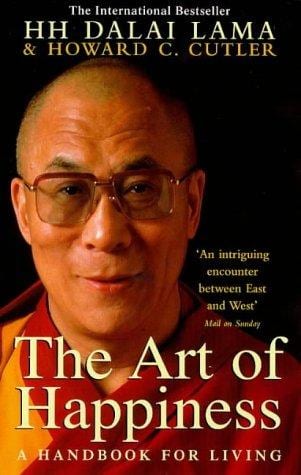
The Art of Happiness
The full book runs ~314 pages — roughly 6 hours of reading. You get the key ideas here in 3 minutes.
The key ideas
- Train contentment deliberately; mood snaps back after big life events
- Practice compassion as a discipline, extending it beyond your inner circle
- Accept suffering as ordinary; rejecting the victim mentality reduces pain
- Treat anger and anxiety as poisons; patience is the antidote
- Expand intimacy into everyday connections, not just romance
- Cultivate spirituality through kindness, no religion required
The summary
Win the lottery or lose your job, and within a few months you drift back to roughly the mood you started with. Good and bad events deliver a jolt of pleasure or pain, then fade. The Dalai Lama builds his entire approach to happiness on that single fact: if circumstances can’t shift your baseline for long, contentment has to come from somewhere you can actually govern — your own mind. He treats happiness as a skill, grown by deliberately strengthening positive mental states and starving the negative ones. The core discipline is compassion.
Compassion is a practice, not a warm feeling
Compassion, here, means genuinely wanting to ease suffering in others, and it reaches past your inner circle to strangers and even people you find difficult. It isn’t sentimentality. It’s a calm, nonaggressive stance rooted in empathy: you make the effort to see a situation from inside someone else’s life, weighing their background and looking for the ground you share. The research he cites is blunt about the payoff — a compassionate outlook improves emotional well-being, can lengthen life, and makes you warm toward people regardless of their status. He offers himself as the example, describing a felt closeness to everyone around him, from senior advisors to the cooks and janitors.
That breadth matters because Western life tends to funnel deep intimacy into a single romantic relationship, which leaves anyone without a partner feeling stranded. Intimacy has far more forms than that. Once you start noticing the chances for real connection in ordinary exchanges, your capacity for happiness widens. And romance itself lasts only when it rests on more than attraction: durable love grows out of respect, appreciation, and a slow, genuine understanding of another person.
Suffering is ordinary, not an injustice
Pain is built into a life. Cultures closer to daily hardship tend to accept that, while people in more comfortable societies often react to adversity as though they’ve been singled out — a victim mentality that quietly makes everything worse. Once you accept suffering as natural, you can do the useful thing: examine its causes, your own contribution included, and act to reduce it. Much of our misery is self-inflicted through resistance — clinging to possessions, replaying old insults, nursing a grudge against someone who wronged us years ago. Change is constant and universal. Fighting it only prolongs the ache.
Most situations hold something good and something bad at once, but we tend to flatten them into all one or all the other. Being stuck beside a smelly stranger on a train can be pure irritation, or it can be a small chance to practice patience. Building that suppler view — finding meaning in discomfort, treating obstacles as raw material for growth — takes time, so his advice is to start now. You can’t dodge every hard situation, but you decide how much it costs you.
Anger is a poison; patience is the antidote
Of all the negative states, anger and hatred do the most damage. They cloud judgment, worsen whatever they touch, and research ties them to heart disease. Neither bottling them up nor blowing them out helps — both feed the fire. The antidote is patience and tolerance, practiced until it becomes reflex. This mirrors cognitive therapy in the West, which works by catching distorted thinking — exaggerating the bad, ignoring the good — and steering attention toward gratitude and what’s actually going well. The shift is gradual and demands steady effort.
Anxiety works the same way. A moderate amount is a normal response, but chronic anxiety wears down your health, even your immune system. His move is to name your real motive in a fearful moment. Walk into a job interview clear that you genuinely want to contribute, and the nerves shrink. Ask someone out clear that you mean to treat them kindly, and the fear loosens. Most excess anxiety traces back to shaky self-confidence, and the fix is honest self-awareness — knowing your capabilities and your limits without flinching. Self-hatred, he notes, is essentially absent in Tibetan culture, where people are raised to celebrate the potential in everyone.
Spirituality without religion
Studies link religious practice to greater happiness and resilience, but you don’t need a faith to be spiritual. The Dalai Lama spends four hours a day in formal practice; the rest of us can practice in ordinary moments — even the restraint of not snapping back at someone counts. Basic spirituality is just goodness, kindness, and concern for others, and it’s available to believer and skeptic alike. Cultivating that inner contentment lowers your threshold for stress and ties you to other people, which is where the calm comes from.
The bottom line
Happiness is trained, not stumbled into. You build it by practicing compassion until it runs on its own, accepting suffering as ordinary rather than unfair, and meeting anger with patience. Read this if you’re worn out from chasing external fixes and ready to do the quieter internal work that actually holds.
Fact check
Popular books repeat findings that later research has complicated. Where The Art of Happiness makes a testable claim, here's what the evidence actually shows.
Mood returns to roughly its old baseline within months of a major life event such as winning the lottery or losing a job.
Adaptation is real, but it is partial and depends heavily on which event. The 1978 study behind the idea compared 22 lottery winners with controls and found them no happier, but a much larger Swedish study found winners still reported elevated life satisfaction 5 to 22 years after the win. Job loss runs the other way: following more than 24,000 Germans for 15 years, researchers found people never returned to their prior satisfaction levels, even once re-employed. The baseline moves for some events and holds for others.
- Brickman P, Coates D, Janoff-Bulman R. Lottery winners and accident victims: is happiness relative? J Pers Soc Psychol. 1978;36(8):917-27. PubMed
- Lindqvist E, Ostling R, Cesarini D. Long-Run Effects of Lottery Wealth on Psychological Well-Being. Rev Econ Stud. 2020;87(6):2703-2726. Source
- Lucas RE, Clark AE, Georgellis Y, Diener E. Unemployment alters the set point for life satisfaction. Psychol Sci. 2004;15(1):8-13. PubMed
A compassionate outlook improves emotional well-being and can lengthen life.
Both halves have support, at a smaller size than the book suggests. Pooling 201 studies covering 198,213 people, the correlation between prosocial behaviour and well-being was r = .13 — genuine but modest, and stronger for meaning-based well-being than for moment-to-moment pleasure. On longevity, a meta-analysis of older volunteers found 24% lower mortality risk after adjusting for confounders, down from 47% unadjusted. These are observational associations, so healthier and happier people volunteering more remains a live explanation.
- Hui BPH, Ng JCK, Berzaghi E, Cunningham-Amos LA, Kogan A. Rewards of kindness? A meta-analysis of the link between prosociality and well-being. Psychol Bull. 2020;146(12):1084-1116. PubMed
- Okun MA, Yeung EW, Brown S. Volunteering by older adults and risk of mortality: a meta-analysis. Psychol Aging. 2013;28(2):564-77. PubMed
Anger and hatred damage the body, and research ties them to heart disease.
A meta-analysis of 44 prospective studies found anger and hostility predicted coronary events in people who started out healthy (hazard ratio 1.19, 95% CI 1.05-1.35) and worse outcomes in people who already had heart disease (hazard ratio 1.24, 95% CI 1.08-1.42). The effect was larger in men than women. That is roughly a 20% increase in risk — a real signal, well short of a leading cause, and consistent with the modest way the book frames it.
- Chida Y, Steptoe A. The association of anger and hostility with future coronary heart disease: a meta-analytic review of prospective evidence. J Am Coll Cardiol. 2009;53(11):936-946. PubMed
Chronic anxiety wears down health and weakens the immune system.
Chronic stress does suppress immune function, but the picture is more conditional than the book implies. Across more than 300 studies, long-running stressors were linked to suppression of both cellular and humoral immunity, while short acute stressors actually up-regulated some natural immune responses. People physically vulnerable through age or illness showed the largest immune declines. Notably, how stressed people reported feeling generally did not track their measurable immune changes, so a subjectively anxious temperament is not the same thing as a suppressed immune system.
- Segerstrom SC, Miller GE. Psychological stress and the human immune system: a meta-analytic study of 30 years of inquiry. Psychol Bull. 2004;130(4):601-30. PubMed
Frequently asked questions
What is The Art of Happiness about?
It builds on the fact that big events, a lottery win or a lost job, only shift your mood for a few months, so lasting contentment has to come from your own mind. The Dalai Lama treats happiness as a trainable skill, grown by strengthening positive mental states and starving negative ones, with compassion as the core discipline.
What are the key takeaways from The Art of Happiness?
Compassion is a practice, not a warm feeling, genuinely wanting to ease others' suffering even toward difficult people, and it widens your sources of intimacy beyond a single romance. Suffering is ordinary rather than an injustice, so examine its causes instead of fighting inevitable change. Anger and hatred do the most damage, and the antidote is patience practiced until it becomes reflex, much like Western cognitive therapy. Spirituality doesn't require religion, since basic goodness and kindness are available to believer and skeptic alike.
Who should read The Art of Happiness?
Anyone worn out from chasing external fixes who is ready to do the quieter internal work that actually holds.
Is The Art of Happiness worth reading?
Yes, it blends Buddhist practice with Western psychology in a warm, accessible dialogue and offers a genuinely different foundation for contentment. Readers wanting quick tactics or secular self-help may find its pace gradual and its emphasis on compassion demanding, but that patience is the point.