Book summary
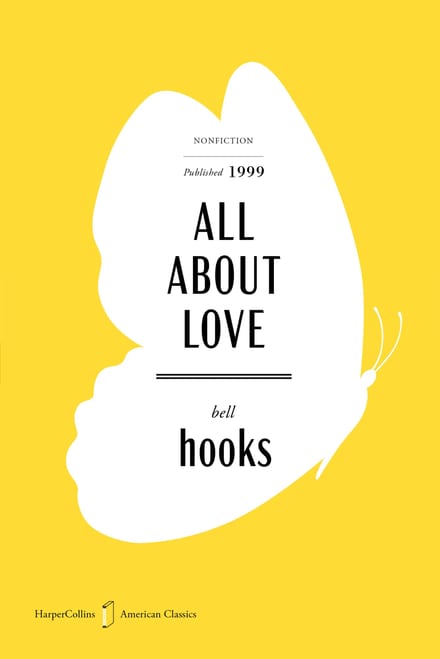
All About Love: New Visions
The full book runs ~239 pages — roughly 4 hours of reading. You get the key ideas here in 4 minutes.
The key ideas
- Define love as action—care, honesty, respect, accountability chosen daily.
- Reject love that coexists with abuse or control.
- Trace your love confusion back to childhood conditioning.
- Practice self-love first; give yourself what you crave from others.
- Resist a culture of consumerism, domination, and fear.
- Build love through community, friendship, and vulnerable partnership.
The summary
Almost nobody can tell you what love actually is. It saturates our songs and films, usually as a male-dominated fantasy, yet it barely enters serious public conversation, and without a shared definition people flail. They mistake a rush of feeling for love, or need for it, or even abuse for it. bell hooks borrows the definition she finds most useful, from M. Scott Peck: love is “the will to extend one’s self for the purpose of nurturing one’s own or another’s spiritual growth.” The key word is will. Love is an intention and an action, which means it is a choice. We do not love instinctively; we decide to. And anything you can choose, you can learn to do better.
That single shift changes everything, because love is as love does. If love were only a feeling, a parent could beat a child and still call it love, or a partner could lie and control and still claim the word. Defined as care, respect, and accountability in action, love simply cannot share a room with abuse. Most of our relationships fall short of that standard not because we are bad but because no one ever taught us the practice.
Childhood is our first, flawed school for love
We learn love before we can think critically about it. If affection came wrapped in punishment, you absorbed the idea that love and pain belong together. If it was handed over only when you performed, you learned love is conditional. If the adults around you lied, you learned that honesty is negotiable. Those early lessons follow you into every partnership you’ll ever have. hooks’s remedy is for parents to treat love as something they do: discipline aimed at responsibility rather than mere punishment, and steady respect for a child’s rights. She tells of a friend who wouldn’t give her daughter an allowance, convinced the girl would spend it all on candy—because that was the expectation her own upbringing had installed in her. Persuaded to trust the child instead, she watched her daughter save the money carefully and buy no candy at all. When we love children, our every action says they are not our property.
Honesty and self-love do the hard work
Love demands honesty, and our culture quietly teaches the opposite. Under patriarchal norms, men learn to lie for power and control, women to lie for manipulation or feigned weakness, and both build false selves that make genuine connection impossible. Honesty is simply the ground that trust and intimacy grow from.
Before any of that can work with another person, though, you have to be able to love yourself, and hooks says this is neither innate nor easy. It means overcoming the negativity you internalized in childhood and actively practicing living consciously, self-acceptance, responsibility, and assertiveness—while refusing the lie that self-love is selfishness. Her most concrete instruction: give yourself the love you keep dreaming someone else will provide. She admits she once felt lousy about her over-forty body, judging it too fat, too this, too that, while fantasizing about a lover who would accept her exactly as she was. The absurdity was that she was withholding from herself the very acceptance she wanted from a stranger. Do not expect from anyone else the love you refuse to give yourself.
A culture built against love
Modern life runs on materialism, consumerism, and individualism, and the result is spiritual emptiness—a lovelessness that even organized religion often fails to challenge, having absorbed the same secular values. We chase fulfillment through acquisition and status, which leaves us isolated and hungry for something we can’t name. hooks’s counter is a “love ethic”: care, commitment, trust, responsibility, respect, knowledge, and a will to cooperate, applied not just to romance but to work, politics, and community. That means human connection over “me” culture, emotional depth over instant gratification.
Love also can’t survive in isolation. The nuclear family, small and often distorted by patriarchal power, is a poor container; we need extended family and, above all, friendship, where we get our earliest real experiences of mutual care, respect, and working through conflict. Sustaining that kind of community asks for forgiveness, honest communication, service, and enough comfort with solitude that you show up to others without neediness—even extending openness to strangers instead of retreating into fear.
Real love, and the fear it dissolves
Most people enter romance hoping to be rescued, chasing the myth of “falling in love” as something that happens to you and fixes what’s broken. Without doing the self-work first, they just repeat the dysfunction they learned as children. Women are told they ought to be loving, but hooks notes that patriarchal thinking leaves them no better equipped for the actual labor of love than men. True partnership is not erotic passion or fleeting intensity; it is two people recognizing each other’s real selves and committing to grow through difficulty, which takes self-awareness, honest listening, and a clear-eyed look at yourself and the person you’ve chosen.
The thing standing in the way is almost always fear—of strangers, of vulnerability, of loss, of death—stoked by a media diet of violence that keeps us anxious and obsessed with safety. Love casts out that fear. It lets you grieve without shame, live in the present without regret, release the craving for absolute control, and accept change as the price of growth. Healing, hooks insists, is never solitary; it happens in communion, through supportive community, kindred people, or a sense of the divine.
The bottom line
Love is not a feeling that lands on you but a practice you choose—care, honesty, respect, and accountability, done again and again. Named that way, it can be learned, it refuses to coexist with abuse, and it exposes how a culture of domination and consumption keeps starving us of the very thing we most want. Read this if you’re tired of mistaking intensity for connection and want a real definition of love you can actually put to work.
Frequently asked questions
What is All About Love about?
It argues that almost nobody can define love, and that the confusion lets people mistake a rush of feeling, or need, or even abuse for it. Borrowing M. Scott Peck's definition of love as "the will to extend one's self for the purpose of nurturing one's own or another's spiritual growth," the book shows that love is a choice and a practice you can learn, not something that lands on you.
What are the key takeaways from All About Love?
Because love is action rather than feeling, it cannot share a room with abuse, since "love is as love does." Childhood is our first flawed school for love, so parents should treat love as something they do. Honesty and self-love do the hard work, and you have to give yourself the love you keep hoping someone else will provide. A culture of materialism and individualism starves us of love, and the counter is a "love ethic" of care, commitment, trust, responsibility, and respect, extended to friendship and community, not just romance.
Who should read All About Love?
Anyone tired of mistaking intensity for connection who wants a real definition of love they can actually put to work.
Is All About Love worth reading?
Yes, it offers a clear, demanding definition of love and connects personal relationships to larger questions of culture, patriarchy, and community. Readers looking for light romantic advice may be surprised by its philosophical and political reach, but that scope is also what makes it stick.