Book summary
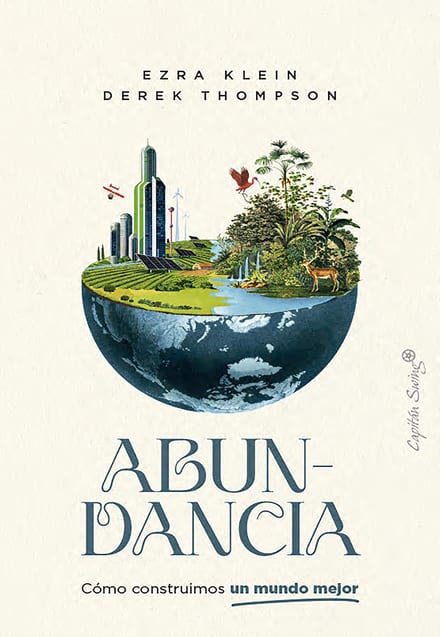
Abundance
The full book runs ~304 pages — roughly 6 hours of reading. You get the key ideas here in 4 minutes.
The key ideas
- Build more homes: the housing crisis is a construction crisis
- Judge government by outcomes delivered, not procedures followed
- Green infrastructure demands overcoming the environmental laws that once protected us
- Fund bold science; bureaucracy rewards safe, incremental research
- Deployment matters as much as discovery, as penicillin and vaccines prove
- Launch emergency-scale projects on disease, energy, and permitting now
The summary
America keeps choosing scarcity. We say we want to stop climate change, then shut down zero-carbon nuclear plants and protest solar farms. We call housing a human right, then make it excruciating to build a home in our richest cities. We say we want cures, then fund a research system that pulls scientists away from their most promising work. Ezra Klein and Derek Thompson build their whole argument on a thesis so plain it almost sounds naive: to have the future we want, we need to build and invent more of what we need. The problem isn’t that America lacks money or talent. It’s that we’ve spent fifty years writing rules to stop things from getting built—and those rules no longer tell the difference between the projects worth blocking and the ones we desperately need.
The housing shortage is a building shortage
Cities were once the great engines of opportunity, the places people moved to in order to get ahead. That machine has seized up, because homes cost too much, and they cost too much because too few get built. This is policy, not fate. The anti-growth movement of the 1960s and 70s began as a fair response to the environmental wreckage of postwar development, and it produced laws like the National Environmental Policy Act to stop harmful projects. Then homeowners learned to wield those same laws to freeze new construction and keep their own property values rising. The homelessness on the sidewalk traces straight back to the permit that was never granted.
You can see the cost of process in the numbers. San Francisco’s Tahanan affordable-housing project went up in half the time and for nearly half the cost of comparable public builds, because it used private money and skipped the regulations that come attached to government funds. Klein and Thompson call the opposite failure “everything-bagel liberalism”: loading one project with so many worthy side-goals—local hiring, small-business set-asides, extra design reviews—that it collapses under its own good intentions.
Government can move when it’s allowed to
The system isn’t slow everywhere. When a stretch of I-95 collapsed, Philadelphia rebuilt it in twelve days under an emergency declaration. Compare that to California’s high-speed rail, which started with broad support and then drowned in decades of delays, ballooning costs, and endless review until its scope had to be gutted. The gap isn’t competence; it’s whether leaders are empowered to decide and deliver, or trapped in a culture of adversarial legalism—the machinery built in the 1970s to halt government action through lawsuits and procedure.
That machinery produced what the authors call the Greens’ Dilemma. The environmental laws and activist tactics invented to stop highways and polluting plants have become the main obstacle to building the clean energy that would actually fight climate change. Solar and wind are now cheap and the technology works; what’s missing is permission to build it fast. And degrowth is no escape—forcing scarcity on people is politically impossible and only fuels a backlash that hands power to anti-climate leaders.
Science that funds only safe bets
American science is running harder and getting less. More researchers, more money, fewer genuine breakthroughs. The cause is a funding culture that rewards cautious, incremental work over risky, original ideas. Katalin Karikó’s mRNA research—the work that later made COVID-19 vaccines possible and won a Nobel—was rejected again and again by the National Institutes of Health for being too speculative. It nearly died in the grant process. Klein and Thompson argue the government should turn the scientific method on its own funding and run experiments to learn what actually produces discovery. They call it metascience, and they ask a pointed question: where are the bold new government research labs built for the 2020s?
Discovery is nothing without deployment
An invention changes nothing until it’s produced and distributed at scale, and that step is often harder than the eureka. Alexander Fleming discovered penicillin in 1928, but for more than a decade it helped almost no one, because no one could make enough of it. Only when the wartime U.S. government treated production as a national industrial project did it move: with the War Production Board’s help, output climbed from about 10 million units per plant per month in 1942 to 646 million by June 1945. The COVID-19 vaccine rollout is the modern version of that playbook—government as bottleneck detective, spreading bets across technologies, unclogging supply chains, guaranteeing a market.
None of this requires a catastrophe to begin. The Apollo program ran on political will, not steady public enthusiasm. Leaders can simply decide what matters and point state capacity at it: a Warp Speed for heart disease, an emergency review of clean-energy permitting, a decade-long coalition to wipe out diseases like malaria. The real choice is between a politics of scarcity that blames immigrants for shortages and a politics of abundance that builds.
The bottom line
America’s shortages of housing, clean power, and medical progress are self-inflicted, and the fix is to judge government by what it delivers rather than the procedure it follows. Read this if you’re tired of a rich, capable country that somehow can’t build the things it says it wants.
Fact check
Popular books repeat findings that later research has complicated. Where Abundance makes a testable claim, here's what the evidence actually shows.
Housing in America's richest cities costs too much because restrictive rules keep too little of it from being built, and loosening those rules would deliver large gains to the wider economy.
The local half holds up well. Glaeser and Gyourko show that in the most constrained metros house prices sit far above the physical cost of building the unit, and that gap functions as a regulatory tax larger than any plausible externality from new construction. The national-scale version is much shakier: the most-cited estimate, Hsieh and Moretti's finding that housing constraints cut aggregate US growth 36% between 1964 and 2009, was re-examined by Brian Greaney in 2026, who found coding errors and showed the original counterfactual actually lowers output. After his correction the gain from deregulation is positive but two orders of magnitude smaller.
Katalin Karikó's mRNA research was rejected again and again as too speculative and nearly died in the grant process.
The rejections were real and consequential. Karikó's mRNA work went years without dedicated backing, and the 2005 paper on nucleoside modification that made mRNA vaccines possible was turned down by Nature and Science before Immunity published it. But that paper was not unfunded: its PubMed record lists three NIH grants behind it, two from NIAID (AI060505, AI50484) and one from NIDCR (DE14825), held through her collaborator Drew Weissman. The accurate reading is a funding system slow and grudging toward the idea rather than absent from it.
- Bansal A. From rejection to the Nobel Prize: Karikó and Weissman's pioneering work on mRNA vaccines, and the need for diversity and inclusion in translational immunology. Front Immunol. 2023;14:1306025. PubMed
- Karikó K, Buckstein M, Ni H, Weissman D. Suppression of RNA recognition by Toll-like receptors: the impact of nucleoside modification and the evolutionary origin of RNA. Immunity. 2005;23(2):165-75. PubMed
Penicillin sat useless for over a decade after its discovery until the wartime US government treated production as a national industrial project.
The scale-up was extraordinary and it was government-run. Quinn's archival study records monthly output rising more than 250-fold in the single year to June 1944, reaching four million sterile packages a month by January 1945. The War Production Board coordinated 21 companies, five academic groups and several agencies, and got the Justice Department to grant antitrust exemptions so firms could pool technical information. Quinn's central point matches the book's: this ran on state stewardship and open information sharing, not commercial incentives.
- Quinn R. Rethinking antibiotic research and development: World War II and the penicillin collaborative. Am J Public Health. 2013;103(3):426-34. PubMed
Philadelphia rebuilt the collapsed stretch of I-95 in twelve days.
The twelve days are accurate and the speed was genuinely remarkable: the bridge over Cottman Avenue collapsed on 11 June 2023 and six lanes carried traffic again on 23 June. What opened, though, was a temporary roadway built in the median — three 11-foot lanes each way, posted at 45 mph — not the rebuilt bridge. Traffic moved onto permanent outer sections in November 2023 and the full permanent repair, including ramps, finished in late May 2024, just under a year after the collapse.
- Office of Governor Josh Shapiro. Governor Shapiro reopens I-95 in Philadelphia twelve days after collapse. Commonwealth of Pennsylvania; June 23, 2023. Source
- Pennsylvania Department of Transportation. After reopening I-95 in 12 days, Shapiro administration, federal, local partners celebrate permanent repairs less than a year after collapse. 95Revive; 2024. Source
Frequently asked questions
What is Abundance about?
It argues that America's shortages of housing, clean energy, and medical progress are self-inflicted, the result of fifty years of rules written to stop things from getting built. The case is that to have the future we want we need to build and invent more of what we need, and judge government by what it delivers rather than the procedure it follows.
What are the key takeaways from Abundance?
The housing crisis is a building shortage caused by policy, not fate, worsened by "everything-bagel liberalism" that loads projects with so many side-goals they collapse. Government can move fast when empowered, like Philadelphia rebuilding a collapsed stretch of I-95 in twelve days, but drowns when trapped in adversarial legalism. The "Greens' Dilemma" is that environmental laws built to stop pollution now block the clean energy that would fight climate change. And discovery is nothing without deployment, since penicillin and the COVID vaccines only reached scale when government treated production as a national project.
Who should read Abundance?
Anyone tired of a rich, capable country that somehow can't build the things it says it wants, especially readers interested in housing, energy, science funding, or the future of government.
Is Abundance worth reading?
Yes, it reframes familiar problems with concrete examples, from Tahanan's fast, cheap affordable housing to Katalin Kariko's repeatedly rejected mRNA grants, and offers a clear alternative to both status-quo caution and degrowth. Readers wanting detailed policy blueprints rather than a guiding thesis may want more specifics, but the argument is sharp and grounded.