Book summary
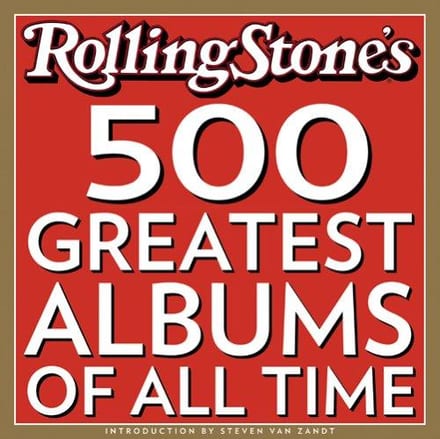
The 500 Greatest Albums of All Time
The full book runs ~224 pages — roughly 4 hours of reading. You get the key ideas here in 20 minutes.
The key ideas
- Rank influence and disruption over polish or sales figures
- Collapse genre borders: blues, punk, reggaeton, jazz, trap as equals
- Keep the canon moving; recent albums rival 1960s classics
- Center women and artists of color as undeniable voices
- Count live albums and compilations, not just studio statements
- Treat music history as sprawling conversation, not linear progress
The summary
Greatness in music is not a fixed quantity you can measure once and shelve. Rolling Stone’s ranking of 500 albums, stretching from Elvis Presley’s 1956 debut to Billie Eilish’s WHEN WE ALL FALL ASLEEP, WHERE DO WE GO? in 2019, takes that idea as its founding premise. The question behind every entry isn’t how many copies an album moved or how flawless it sounds. It’s whether the record changed something — a sound, a genre, a sense of what was possible. Judged that way, a barely-selling blues session and a chart-topping pop machine can end up neighbors.
The metric is influence, not sales
Records earn their rank by what they set in motion. The Velvet Underground & Nico sold almost nothing on release, then seeded thousands of bands. Suicide’s 1977 debut invented a corrosive synth-punk sound that nobody wanted at the time and everybody borrowed later. Big Star’s #1 Record was a commercial flop that power-pop has been quoting for fifty years. Commercial success doesn’t disqualify an album — Michael Jackson’s Thriller and Adele’s 21 both rank high — but it never guarantees a place either. What counts is the dent an album left in everything that followed it.
Genre borders don’t hold
The list refuses to rank one form of music above another. Miles Davis’s Kind of Blue and Nirvana’s Nevermind belong to the same conversation. Frank Sinatra’s In the Wee Small Hours (1955) sits within range of Kanye West’s My Beautiful Dark Twisted Fantasy (2010). Fela Kuti’s Afrobeat, Daddy Yankee’s reggaeton on Barrio Fino, Bad Bunny’s Latin trap on X 100PRE, Toots & The Maytals’ reggae, Kraftwerk’s electronics — none of them gets quarantined in a side category. John Coltrane pushing jazz to its limit on A Love Supreme, Public Enemy detonating hip-hop on It Takes a Nation of Millions to Hold Us Back, and Radiohead rebuilding rock on OK Computer are all treated as the same act: an artist taking a form as far as it will go.
The canon keeps moving
This is no shrine to the 1960s. The list argues, flatly, that the past holds no monopoly on greatness. Kendrick Lamar’s To Pimp a Butterfly (2015) stands beside Marvin Gaye’s What’s Going On (1971). Lana Del Rey’s Norman Fucking Rockwell! (2019) gets weighed against Joni Mitchell’s Blue (1971). Beyoncé’s Lemonade, Frank Ocean’s Blonde, SZA’s Ctrl, and Rosalía’s flamenco-warping EL MAL QUERER crowd the upper reaches — a signal that the story is still being written, and the newest chapters can rival the oldest.
Women and artists of color at the center
Aretha Franklin, Patti Smith, Lauryn Hill, Amy Winehouse, Nina Simone, Solange — they appear not to fill a quota but because the music demands it. Their records aren’t corralled into a separate wing of “important” work; they run straight through the top of the list as some of its most undeniable entries. Kacey Musgraves blurring country into psychedelia on Golden Hour carries the same weight as any rock landmark. The effect is to widen the story rather than police who belongs in it.
Live records and compilations count too
A studio album isn’t the only container for greatness. James Brown’s Live at the Apollo (1963) caught a performer at a pitch no studio could reproduce. The Allman Brothers Band’s At Fillmore East proved some bands only fully exist in front of a crowd. Compilations make the cut when they preserve work that never got a proper album home — Chuck Berry’s The Great Twenty-Eight, Sam Cooke’s Portrait of a Legend, Robert Johnson’s King of the Delta Blues Singers. The point is to honor the music wherever it actually lives.
The bottom line
Great albums rarely obey a formula; more often they break one, which is why a 1959 blues session and a 2019 trap record can both be essential. Read the list not as a settled hierarchy but as an argument that music history is a sprawling, ongoing conversation rather than a march from crude to refined. It’s for anyone who wants a map of how popular music got here — and a feel for where it might head next.
Frequently asked questions
What is The 500 Greatest Albums of All Time about?
It ranks 500 albums, from Elvis Presley's 1956 debut to Billie Eilish in 2019, on a single premise: greatness isn't measured by copies sold or technical polish but by whether a record changed a sound, a genre, or a sense of what was possible. Judged that way, a barely-selling blues session and a chart-topping pop machine can end up neighbors.
What are the key takeaways from The 500 Greatest Albums of All Time?
The organizing metric is influence, not sales, which is why commercial flops like The Velvet Underground & Nico and Big Star rank alongside blockbusters like Thriller. Genre borders don't hold, so jazz, hip-hop, Afrobeat, reggaeton, and rock share the same conversation. The canon keeps moving, with recent records by Kendrick Lamar and Lana Del Rey weighed against classics by Marvin Gaye and Joni Mitchell. Women and artists of color run through the center of the list, and live albums and compilations count when they preserve music at its peak.
Who should read The 500 Greatest Albums of All Time?
It's for anyone who wants a map of how popular music got here and a feel for where it might head next, rather than a settled hierarchy to memorize.
Is The 500 Greatest Albums of All Time worth reading?
It works best read as an argument that music history is a sprawling, ongoing conversation rather than a march from crude to refined, which makes its unexpected pairings genuinely illuminating. Anyone hoping for an objective, sales-based ranking or expecting the 1960s to dominate should know the list deliberately prizes influence and keeps pulling the newest records toward the top.